Showing posts with label Archbishop Makgoba. Show all posts

Monday, 9 January 2017

WORLD NEEDS PRIESTS FIT FOR PURPOSE

Billy Willson, straight A student at Kansas State University, has announced on Facebook that his first semester would be his last. His comment, which went viral, was “YOU ARE BEING SCAMMED. You may not see it today or tomorrow, but you will see it someday. You are being put thousands into debt to learn things you will never even use. Wasting 4 years of your life to be stuck at a paycheck that grows slower than the rate of inflation. Paying $200 for a $6 textbook."

Billy Willson

The Architectural Engineering under grad’s post struck a global chord. Many young adults are wondering if higher education is worth the time and money. As Billy pointed out in a BBC Trending interview, the cost of inflation is relatively small compared to fees inflation over the past three decades. 

He has a point.

The average annual increase in university tuition in the UK grew by 260% between 1980-2014. Compare this to the cost of consumer items which grew at about 120% in that period.  (And that was bad enough)

Even worse, worldwide graduates are finding that their hard-earned degrees are not an open sesame to their desired careers. Trey Foshee, one of many who commented on Billy’s Facebook post, wrote: "Years and money wasted. Very much agree. I have two degrees that I would sell back right now if they'd let me." Others mentioned professions that would be better served with on the job training.

Last year a UK education NGO reported that most graduates are employed in jobs unrelated to their degrees. Hopefully, few are in the same situation as the 35-year-old who graduated in 2010 with a master's in town planning and transport but works in a pub. 

Our South African can of worms, opened by the #FeesMustFall movement, raises several issues. The new generation of students want, among other things, a ‘decolonialised’ education, lecturers who treat them with respect and fit for purpose content.

It’s time for a paradigm shift. Do the older folk who control tertiary education have the courage to acknowledge the sheer snobbery of a system that panders to the privileged by offering unaffordable education that does not prepare students for the workplace? 

Conceived in Church
So, what has all this to do with Church?  A great deal, if one considers that "universities" were conceived and developed in 814 when Charlemagne realised he needed educated people to ensure the survival of his empire.  

Charlemagne

Every monastery and cathedral was commanded to provide free education to every boy who had the intelligence and perseverance to complete a course. Key to all this was to develop a large body of educated priests to whom the empire and communities could turn. The focus was on Latin grammar, public speaking, arithmetic, geometry, astronomy, and music.

Arithmetic, for example, was the basis for quantitative reasoning; geometry for architecture, surveying, and calculating measurements. All necessary for managing Church property and income. Astronomy was needed for calculating Easter, foretelling eclipses, and identifying the seasons.

By the second century, the church universities had expanded their curricula to develop secular leaders. For example, the cathedral school of Reims introduced Arabic numerical notation and the use of the abacus for numerical calculation. The Cathedral of Orleans specialised in classical studies, Chartres focused on the mathematical theory of music and the Norman monastery of Anselm, became known throughout northern Europe for the teaching of Law.

Birthed in a tavern 
Before I get on my soap box I must share a delightful story which showcases the birth of the modern university and the importance of faculty and students speaking truth to power.  It is told by Dr Lynn Harry NelsonEmeritus Professor of Medieval History at Kansas University. 

She writes:
One day in the Autumn of 1200, a German student decided to throw a bit of a party in his apartment for some of his friends and sent his servant, a ten-year-old boy, down to the corner tavern to get his large wine-jug filled. 


The tavern owner gave the boy sour wine and, when the boy complained, the bartender and some of the barflies beat the kid up and threw him out into the street along with his broken jug.

Why? I don't know. Perhaps it was because the German emperor had stirred up the English to start a long and bloody war with France. Or maybe it was because the barkeep liked the students' money, but not the students.

In any event, the boy dragged himself back to his master, and the student and his friends went down to the tavern and beat up everybody before they went home with a large jugful of decent wine. The barkeep asked the provost to punish the students, and the provost gathered his men, with volunteers, and blocked all the streets into the Latin Quarter. They then went hunting for the German student, slapping people around as they went. A number of masters and students were irritated by this, took to the streets, and a pitched battle ensued. The provost and his men finally withdrew, but not before they had killed five students, including the German student who had started it all, and who happened to have been the prince-bishop elect of Liege (in what is now Belgium).

The chancellor refused to help the master and students of the Latin Quarter, so they barricaded the streets leading into the Latin Quarter, and the masters held a meeting that night. They decided to organize themselves into a union, or, as it was called in the Latin of the time, a universitas. Since their students were studying to become masters themselves, the union included the students as more or less junior members. The next day, representatives of the union went to the king of France and announced themselves as spokesmen for The University of the Masters and Students of Paris.

They demanded corporate rights, privileges and protection from the king. When the king asked what they would do if he decided to say no, they replied with the famous words, "Then we shall shake the dust of the streets of Paris from the hems of our gowns." 


In effect, they were threatening to leave and to do their teaching elsewhere. King Philip realized that Paris would lose much of its attractiveness and he would lose a considerable amount of taxes if the masters, students and the people who provided services to the Latin Quarter were to leave, and so agreed to protect the members of the Universitas.

Much more happened in succeeding years. There were continuing struggles with the chancellor and provost, and even among the students and masters themselves, but in the end, the union of masters and students was recognized by all. They gained powers -- the right to establish the curriculum, the requirements, and the standards of accomplishment; the right to debate any subject and uphold in debate any subject; the right to choose their own members; protection from local police; the right of each member to keep his license to teach as soon as he had been admitted to full membership; and others. These rights were often won in open battles in which people -- masters and students -- died, but they were rights that faculty still guard jealously today.

Church wherefore art thou?
As we ponder a changing world order, faculty and students don’t appear to be that close anymore and how does Church rate in all this?

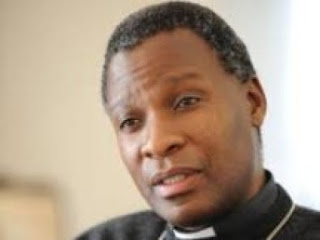
Thabo Makgoba Archbishop of Cape Town says “In times such as these, we need theologically trained leaders who will, in turn, encourage everyone in the church - clergy and lay people - to be theologically attuned,” he also told a recent synod that sound theological training provides essential grounding for the Church to face the challenges of today’s world.

The good news is that he fits the bill.


He has a BSc, a BA (Hons) in Applied Psychology and a Masters in Educational Psychology from Wits University as well as a Ph.D. on Spirituality in the South African Mining Workplace. Both a lecturer and chaplain at Wits he also served as Chancellor of the University of the Western Cape. And he gets street cred for having a son who was arrested for being involved in the recent student demos. 

Nyakallo Makgoba

Our archbishop's dream for 2017 is “that labour and business, together with civil society, traditional leaders and religious leaders will all sit together at the table of brother and sisterhood where the menu answers the question, “what is in the best interests of the majority of our people in South African society?” And that all children, yours and mine, will one day, as a result of a “New Struggle”, all live in a South Africa that has an abundance of unlimited and equal educational, health care, service delivery and economic opportunities.”

Archbishop Thabo has also strongly rejected a call by President Jacob Zuma for the Church to stay out of politics.

Just what I expect of my archbishop.  BUT where is the rest of Church in this? How good/relevant/ for purpose is the theological teaching provided from the pulpit?  Is Sunday School a good ethical foundation? Does anyone bother to tell our Confirmation candidates that a 10-minute kiss makes you crossed-eyed and causes your brain to fall out of your ears? (A survey taken among Confirmation candidates about 15 years ago revealed that many had their first sexual experiences at 12 years of age.  The majority confirmands were not virgins.)

How many of our clergy, including those from privileged backgrounds, consider a diploma in Theology good enough to equip them to equip the people in the pews.  How much training have they had in balancing reason with tradition and Scripture?  As importantly, how many read a daily newspaper, follow politics or keep up to date with scientific findings on human sexuality? Do they study developing theologies?

Just asking because I’m convinced bad theology has much to answer for as the talking heads on TV declare that we have entered a new world order. Only bad theology allows us to judge and hate those who are different. It’s bad theology to turn our backs on the marginalised.

I know it’s not easy preaching about unpopular subjects - congregations vote with their feet and their tithes. But we can’t abrogate our responsibility to archbishops and the Holy Spirit.
Charlemagne was right: We need our priests to survive the emerging world order.

 Aw shucks!


Sunday, 27 November 2016

I HAD THE WEIRDEST DREAM


I believe we talk to ourselves in our dreams. I dream often, in technicolour, and they are invariably exhausting. But this one was different. Verging on weird, it touched my soul. Not gently.

One of the problems with being a political junkie is one often loses sight of life. Between the US Presidential primaries, #FeesMust Fall and #SaveSouthAfrica I’ve barely had time to breathe. For months, I was sleep deprived as my inner alarm sounded at 3am for crucial debates.

Oh, the analysis, the commentary, the social media skirmishes!
  
My dream
Then, early this morning I dreamed I was in Israel being herded into a holding place with a large group of tourists - Muslims, Jews and Christians. There was some sort of invasion and we were in danger. At first we were fearful and then this narrator with a heavy accent took over. It was much like a Yentl movie with a talking ‘Fiddler on the roof’. (I kid you not.)


There was this, running commentary on the little miracles that were happening as we scrounged for and shared food and how we were learning to love each other in the process. Then I woke up but the heavily accented voice continued.

A deep-seated envy
Now let me be upfront. Unlike so many others, I’ve never heard God’s voice. So often I’ve had someone share: “God told me.”  Frankly, I’ve suffered serious ‘Godspeak envy’ over the years. And I’ve always wondered what God sounds like – authoritative, melodious, a choir of angels, Alanis Morrisette? (Anyone out there old enough to remember her playing God in Dogma?)  Mind you, I was consoled when my former bishop shared that he’s also been deprived.

Because I’ve never had God speak directly to me, I’m sure you’ll forgive me for getting my hopes up. No such luck. I’d fallen asleep with BBC News on and Stephen Sackur was interviewing Lithuania’s heavily accented Foreign Minister. I usually pause to check if my dreams mean anything and then shrug them off. But this one persisted. So, I hit the TV rewind button, made a strong cup of coffee and watched Hardtalk with a listening heart.


That didn’t help much. Essentially, Minister Linas Linkevicius spoke about: how populists were winning the day; how false news often precedes warfare. He was waiting to see how Donald Trump would react to reality and felt we should all make an effort to calm things down.

A demanding dream
It was time to switch off and get on with life. But the feeling persisted. My dream still demanded attention. For the first time in months, I ignored work deadlines and took stock.

The result: my God connection is worse than my jittery Wi-Fi. What spirituality??  And the wheels must have fallen off the bus somewhere along my Anglican journey. 


Fact is, all three have been sadly neglected. How easily one’s prayer life disintegrates.  What arrogance to assume that my fragile spirituality would fare any better than my drought-stricken garden. I’ve hardly attended church in the past few months.

I can’t even pretend that it will simply be a matter of rearranging my daily schedule. I’m afraid of the battle ahead. I must resume my journey.

Well timed
For starters, I acknowledge that my weird dream was well timed and apt. Part of my new daily discipline is to count my blessings and today I am reminded of a time a couple of years ago when my income had totally dried up. Having acquired religion late in life, I’ve always felt uncomfortable about praying for money but it reached a point where I capitulated: “Okay God, I give up I’m desperate.”  An hour later an email dropped to say I’d been awarded a fat government contract. 

Co-incidence or God-incidence?  

I know that when my younger son suffered a serious head injury in a motorcycle accident, although I wasn’t into religion at the time I did send arrow prayers tempered with “in case you exist God”.  

The doctors said he’d be in a wheelchair for the rest of his life but don’t tell that to the guy who plays bowls three times a week and hopes to represent Western Province one day.

Please bear with me. You’ve probably guessed by now that I’m writing this blog to myself. Know that your comments and prayers are welcome.

Let’s lighten up


When I joined the church, well into middle age, I was amazed to learn that Advent –the weeks preceding Christmas - is meant to be a mini-Lent. It is a time to take stock and get our spiritual lives in order for the day we celebrate the birth of Christ.  Who’d have thought that?

In fact, I’ve always admired the Early Church’s practical approach of adopting pagan rituals that dated thousands of years before Christ.

My own experience of Christmas had hardly been holy. My mother was one of 15 siblings, of which only one had died in childhood. All the rest had married and made children and Christmas on granny’s farm in Polokwane was not negotiable.  I can’t for the life of me remember how many cousins there were but “lots” is an apt description. Some of us kids were sent ahead of our parents during which time I was only allowed to play with the boys if I walked barefooted across a patch of paper thorns.

By Christmas day we’d formed various special interest alliances. There was, however, consensus on important matters. These ranged from the need to avoid kissing the uncle with the beer soaked moustache to an agreement not to report the family cook for sipping the pudding brandy. We all loved her. 

Of course, in that lot there was always the uncle with wandering hands but a whisper in Gran’s ear soon fixed that.  In short, our special feast day was always robust and memorable with not a church steeple in sight.

When I did become an Anglican I was a bit embarrassed by my Christmas history but soon realised that in family there is always an element of holiness. Besides, the way we Christians hurtle through the shopping and party season there’s not much time for reflection.  (Maybe my dream was a hefty Advent nudge.)

I am encouraged by an email received from our Archbishop of Cape Town, Thabo Makgoba, in which he says, “...  I want to say that whatever the challenges or sense of darkness you may have felt or be feeling this year, know that Christ the hope and light of the world has been there illuming your path. As you work through Advent to the celebration of Christmas, may you, to borrow a phrase from Advent's sister season, Lent, “bury the past in ashes.” Remember that we are people of the Resurrection and are called to spread Christ, the hope of the world, this Christmas, Epiphany and beyond.”

By the way, he is placing a recorded advent message on https://soundcloud.com/anglicanmediasa each week until Christmas.

Now, where was I?  

Oh yes, busy contemplating my spiritual navel. I’ll keep you posted.


Monday, 3 October 2016

THE EXCRUCIATING AGONY OF A CHRISTIAN CLOSET


As the dust settles on the Anglican Church in Southern Africa’s most recent synod, our Archbishop Thabo Makgoba is being quoted globally regarding the pain he is experiencing from a decision not to allow our clergy to bless same sex marriages. 

Archbishop Thabo Makgoba 


Please note that I speak of a simple blessing, not marriage, yet 16 of 22 bishops voted against this. Archbishop Thabo speaks of a double edged sword. 


Allow me to introduce a third edge...

As I write this, my own pain centres around an aspect seldom acknowledged - those gay Christians who actually believe their gender “leanings”, “temptations”, “preferences” are an abomination to be resisted. To the extent that they pray and fast their way out of their natural sexual identity in order to be saved. This, as a CNN journalist said about Aleppo, “It is what Hell is really like and then it got worse.” 
Aleppo

Marrying for Jesus

These 'good' gay Christians all too often go to the extent marrying someone of the opposite sex.

Yes, many manage to be relatively happy, they love their spouses, their children, the holiness of family. But the need to suppress their sexual drive looms larger as the years pass. Inevitably their denial of self takes its toll on the relationship and mostly on the person committed to Christ and the Church. Some soldier on. Others don’t resist temptation and are caught. Others, in their maturity have stopped reading the Bible literally and decide to do the honourable thing by confessing to their spouses.

It seldom works

Having counselled several of these committed Christians, all men admittedly, I am appalled at the excruciating pain this can cause everyone from the family to the secret gay partner.

They were Anglicans, Methodists and Lutherans and, where love, mutual respect and concern for the children were dominant elements of the marriage, I witnessed some remarkable solutions. A generosity of soul not always found in  our pews.

Other situations, involving righteous judgment and literal Scriptural interpretations, have left an unholy trail of devastation – fathers unjustly accused of pedophilia and banned from interaction with their beloved children. Off spring whose minds were poisoned and whose emotional wellbeing was mortally wounded. Vocations had to be abandoned.


I'm not gay

Let’s be clear: I’m not a Lesbian, trans or bi sexual. My children aren’t gay and I don’t’ have LGBTI siblings to campaign for. I wasn’t a gay activist before re-joining the Anglican Church 35 years after my Confirmation. I didn’t need to be one because nobody in my secular social circle was bothered with judging our gay friends or condemning them to hell. We were all too busy getting on with life.  I had no concept of the hell too many Christian gays go through.

Called to priesthood at the turkey-necked age of 51, I was far more concerned with political activism. Desmond Tutu was an important role model and the main reason I asked to be trained in Soweto. Truth be told, I had visions of becoming the Mother Theresa of the townships. What arrogance and what ignorance of God’s sense of humour. I was too old to suit the Church’s pension fund so self-supporting ministry was my only option. In other words, I had to keep earning a living as a PR consultant. 

Archbishop Emeritus Njongonkulu Ndungane

It’s how I became Archbishop Njongonkulu’s international media liaison consultant and how I jumped into the deep end of one of his signature ministries – HIV/AIDS.

It's NOT...

All this at a time when the disease was increasingly identified as punishment for homosexuality. That stigma became the incubator for millions of deaths. I thank God for ++Jongo who insisted on a communication campaign that would “shout from the roof tops that AIDS is an illness like any other, and not a punishment from God.”

A frightening number of Anglicans ignored the message.

The third edge

Inevitably my personal ministry veered into that arena. Our national Health Department was refusing to provide antiretrovirals. I was clocking up funeral services at an alarming rate and working with passionate activists, several of whom were Anglican priests and gay.  Some were infected others weren’t, all suffered the pain of being open about their sexuality in a Christian environment.


I had stepped into the realm of the "third edge”.

More broad minded?

But I was not your typical Anglican priest: I hadn’t attended church for 35 years; I was battling to curb a vocabulary learned in a news room (still am); I was a divorcee who had had two long term live-in relationships; and, I loved to party.  Perhaps it is because my gay associates felt I would be more understanding that they began recommending me to married gay men seeking counselling.

What a learning curve for me. I encountered an awful aspect of Christian cruelty, good intentions gone awry and responses that caused excruciating pain to EVERYONE in the affected family and even their extended families.

Can you begin to imagine the pain of being rejected by a Church that is part of your DNA?

And don’t for one millisecond think you can crack it with “Love the sinner, hate the sin.”  It is that very approach that gnaws at family and friends who fill our pews and share Communion. We hurt them by judging their loved ones and relegating them to hellfire. 


How we must hurt the Tutus

Leah and Desmond Tutu

Revd Mpho von Furth Tutu and her wife, Marceline

I worry about the hurt Desmond and Leah Tutu must feel because  since her marriage their daughter Revd Mpho is not licensed in Southern Africa. Yes, she could return to the USA and minister there but her parents are in their twilight years and the Desmond and Leah Tutu Foundation needs her management.  

Time to revolt?

I never bothered to become a marriage officer and I applauded priests who refused to act as marriage officers when mixed race marriages were banned. I now applaud those who either ignore the ‘gay’ rules or are heeding the call to hand in their licences.

Too many of my brother and sister priests have gone through 30 years of the Anglican Church saying “soon there will be a breakthrough.”   Too many have battled the Church’s trade-off: “be celibate and you can be licensed to be a priest”.     

If social demographics apply, some 10% of our priests are gay. Maybe more because it makes so much sense for God to call natural nurturers into our vocation.

Older and wiser

I do, however, take comfort from the fact that age invariably brings a more mature interpretation of Scripture and greater confidence in the findings of modern science as well as confidence in God’s abiding love.

As Rabbi Dr Jay Michaelson Ph.D. writes in Behold I make all things New, “God versus Gay isn’t just a false dichotomy.  It’s a rebellion against the image of God itself.”
Rabbi Dr Jay Michaelson

Allow me to share more of the rabbi’s quotes:
“As a rabbi and long-time LGBT activist, I’ve counselled many Orthodox young people who are terrified of having to choose between happiness and their religious way of life.  Families have been torn apart by this issue and as long as the false choice between God and gay persists, our brothers, sisters, cousins, and friends will continue to struggle. They will torment themselves and be excluded from their families and communities.”

“Before I came out, I was certain that being openly gay would spell the end of my religious life.  I was an Orthodox-practicing Jew which gave meaning and shape to my life.  I repressed my sexuality, acting out occasionally but regretting it afterwards.  I tried, for years, to change.  Eventually, after 10 years in the closet I had had enough. The pain, isolation, loneliness, and shame had grown so great that I was ready to forsake my religion for the sake of my happiness.”

“Coming out was the doorway to greater religious faith and joy than I had ever imagined.  My relationship with God and my religious community grew stronger. My spiritual path began to unfold; my prayer life began to awaken. My love for other human beings slowly unfurled and expanded.”

“Imagine believing that because of something you cannot change God hates you.”

“Whose fault is it that 40% of gay teenagers consider suicide – four times as many as straight kids?  Ours, of course.”

"It's not African"

I know that a number of the bishops at the synod hailed from countries far more conservative than South Africa, where same sex marriages are legal, but I quote a Nigerian, The Revd. Rowland ‘Jide’ Macaulay LLB, MTh, “Historically, Africa has always been the friendliest and most tolerant continent. Homosexuality and same-gender behaviours date back to before colonialism and the intervention of religion. The arrival of colonialism contributed to the mass hatred and also the influence of religious fundamentalism. It contributed to the debased argument for homophobia. Yet Christianity teaches and encourages Love thy neighbour as thyself.”

I am busy working on a manuscript that examines how faiths based on rebirth and karma -Buddhism, Jainism, Sikhism, and Hinduism – affirm the dignity of queer identities and sexualities. In it Devdutt Pattanaik, author of more than 30 best-selling books and lecturer on the relevance of mythology in modern times, says “the well-meaning doctrine of ‘all religions are the same in essence’ has led to the assumption that all religions are intolerant of all things LGBTIQ.” 

He adds, “When faiths affirm the dignity of the queer, they empower them psychologically, politically, and economically.” 

That third edge

 In all this let us not lose sight of the third edge of the sword the Anglican Church continues to wield. I have watched young priests grow old while waiting to be affirmed. One of the saddest stories I was told was how, many years ago, seminarians were told that a bishop was refusing to ordain single priests. 
The young man, fighting his gay sexuality, proposed marriage to a woman who knew about his personal battle, but also believed they would conquer all through prayer and faithfulness to the Church.

As it turned out, in order to have sex, and for her to conceive, he would have to read porn and then pounce on her as he was about to climax.  Of course the marriage didn't last. 

As the Lord says:
“My people, what have I done to you?”


*********
Watch Mpho Tutu van Furth speak about human sexuality and her marriage - 
https://www.youtube.com/watch?v=dsL0kBJAy2s