Showing posts with label Ndungane. Show all posts

Monday, 3 October 2016

THE EXCRUCIATING AGONY OF A CHRISTIAN CLOSET


As the dust settles on the Anglican Church in Southern Africa’s most recent synod, our Archbishop Thabo Makgoba is being quoted globally regarding the pain he is experiencing from a decision not to allow our clergy to bless same sex marriages. 
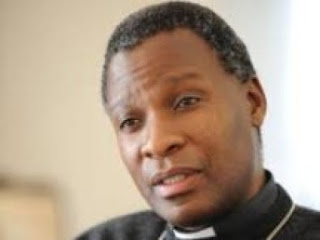
Archbishop Thabo Makgoba 


Please note that I speak of a simple blessing, not marriage, yet 16 of 22 bishops voted against this. Archbishop Thabo speaks of a double edged sword. 


Allow me to introduce a third edge...

As I write this, my own pain centres around an aspect seldom acknowledged - those gay Christians who actually believe their gender “leanings”, “temptations”, “preferences” are an abomination to be resisted. To the extent that they pray and fast their way out of their natural sexual identity in order to be saved. This, as a CNN journalist said about Aleppo, “It is what Hell is really like and then it got worse.” 
Aleppo

Marrying for Jesus

These 'good' gay Christians all too often go to the extent marrying someone of the opposite sex.

Yes, many manage to be relatively happy, they love their spouses, their children, the holiness of family. But the need to suppress their sexual drive looms larger as the years pass. Inevitably their denial of self takes its toll on the relationship and mostly on the person committed to Christ and the Church. Some soldier on. Others don’t resist temptation and are caught. Others, in their maturity have stopped reading the Bible literally and decide to do the honourable thing by confessing to their spouses.

It seldom works

Having counselled several of these committed Christians, all men admittedly, I am appalled at the excruciating pain this can cause everyone from the family to the secret gay partner.

They were Anglicans, Methodists and Lutherans and, where love, mutual respect and concern for the children were dominant elements of the marriage, I witnessed some remarkable solutions. A generosity of soul not always found in  our pews.

Other situations, involving righteous judgment and literal Scriptural interpretations, have left an unholy trail of devastation – fathers unjustly accused of pedophilia and banned from interaction with their beloved children. Off spring whose minds were poisoned and whose emotional wellbeing was mortally wounded. Vocations had to be abandoned.


I'm not gay

Let’s be clear: I’m not a Lesbian, trans or bi sexual. My children aren’t gay and I don’t’ have LGBTI siblings to campaign for. I wasn’t a gay activist before re-joining the Anglican Church 35 years after my Confirmation. I didn’t need to be one because nobody in my secular social circle was bothered with judging our gay friends or condemning them to hell. We were all too busy getting on with life.  I had no concept of the hell too many Christian gays go through.

Called to priesthood at the turkey-necked age of 51, I was far more concerned with political activism. Desmond Tutu was an important role model and the main reason I asked to be trained in Soweto. Truth be told, I had visions of becoming the Mother Theresa of the townships. What arrogance and what ignorance of God’s sense of humour. I was too old to suit the Church’s pension fund so self-supporting ministry was my only option. In other words, I had to keep earning a living as a PR consultant. 

Archbishop Emeritus Njongonkulu Ndungane

It’s how I became Archbishop Njongonkulu’s international media liaison consultant and how I jumped into the deep end of one of his signature ministries – HIV/AIDS.

It's NOT...

All this at a time when the disease was increasingly identified as punishment for homosexuality. That stigma became the incubator for millions of deaths. I thank God for ++Jongo who insisted on a communication campaign that would “shout from the roof tops that AIDS is an illness like any other, and not a punishment from God.”

A frightening number of Anglicans ignored the message.

The third edge

Inevitably my personal ministry veered into that arena. Our national Health Department was refusing to provide antiretrovirals. I was clocking up funeral services at an alarming rate and working with passionate activists, several of whom were Anglican priests and gay.  Some were infected others weren’t, all suffered the pain of being open about their sexuality in a Christian environment.


I had stepped into the realm of the "third edge”.

More broad minded?

But I was not your typical Anglican priest: I hadn’t attended church for 35 years; I was battling to curb a vocabulary learned in a news room (still am); I was a divorcee who had had two long term live-in relationships; and, I loved to party.  Perhaps it is because my gay associates felt I would be more understanding that they began recommending me to married gay men seeking counselling.

What a learning curve for me. I encountered an awful aspect of Christian cruelty, good intentions gone awry and responses that caused excruciating pain to EVERYONE in the affected family and even their extended families.

Can you begin to imagine the pain of being rejected by a Church that is part of your DNA?

And don’t for one millisecond think you can crack it with “Love the sinner, hate the sin.”  It is that very approach that gnaws at family and friends who fill our pews and share Communion. We hurt them by judging their loved ones and relegating them to hellfire. 


How we must hurt the Tutus

Leah and Desmond Tutu

Revd Mpho von Furth Tutu and her wife, Marceline

I worry about the hurt Desmond and Leah Tutu must feel because  since her marriage their daughter Revd Mpho is not licensed in Southern Africa. Yes, she could return to the USA and minister there but her parents are in their twilight years and the Desmond and Leah Tutu Foundation needs her management.  

Time to revolt?

I never bothered to become a marriage officer and I applauded priests who refused to act as marriage officers when mixed race marriages were banned. I now applaud those who either ignore the ‘gay’ rules or are heeding the call to hand in their licences.

Too many of my brother and sister priests have gone through 30 years of the Anglican Church saying “soon there will be a breakthrough.”   Too many have battled the Church’s trade-off: “be celibate and you can be licensed to be a priest”.     

If social demographics apply, some 10% of our priests are gay. Maybe more because it makes so much sense for God to call natural nurturers into our vocation.

Older and wiser

I do, however, take comfort from the fact that age invariably brings a more mature interpretation of Scripture and greater confidence in the findings of modern science as well as confidence in God’s abiding love.

As Rabbi Dr Jay Michaelson Ph.D. writes in Behold I make all things New, “God versus Gay isn’t just a false dichotomy.  It’s a rebellion against the image of God itself.”
Rabbi Dr Jay Michaelson

Allow me to share more of the rabbi’s quotes:
“As a rabbi and long-time LGBT activist, I’ve counselled many Orthodox young people who are terrified of having to choose between happiness and their religious way of life.  Families have been torn apart by this issue and as long as the false choice between God and gay persists, our brothers, sisters, cousins, and friends will continue to struggle. They will torment themselves and be excluded from their families and communities.”

“Before I came out, I was certain that being openly gay would spell the end of my religious life.  I was an Orthodox-practicing Jew which gave meaning and shape to my life.  I repressed my sexuality, acting out occasionally but regretting it afterwards.  I tried, for years, to change.  Eventually, after 10 years in the closet I had had enough. The pain, isolation, loneliness, and shame had grown so great that I was ready to forsake my religion for the sake of my happiness.”

“Coming out was the doorway to greater religious faith and joy than I had ever imagined.  My relationship with God and my religious community grew stronger. My spiritual path began to unfold; my prayer life began to awaken. My love for other human beings slowly unfurled and expanded.”

“Imagine believing that because of something you cannot change God hates you.”

“Whose fault is it that 40% of gay teenagers consider suicide – four times as many as straight kids?  Ours, of course.”

"It's not African"

I know that a number of the bishops at the synod hailed from countries far more conservative than South Africa, where same sex marriages are legal, but I quote a Nigerian, The Revd. Rowland ‘Jide’ Macaulay LLB, MTh, “Historically, Africa has always been the friendliest and most tolerant continent. Homosexuality and same-gender behaviours date back to before colonialism and the intervention of religion. The arrival of colonialism contributed to the mass hatred and also the influence of religious fundamentalism. It contributed to the debased argument for homophobia. Yet Christianity teaches and encourages Love thy neighbour as thyself.”

I am busy working on a manuscript that examines how faiths based on rebirth and karma -Buddhism, Jainism, Sikhism, and Hinduism – affirm the dignity of queer identities and sexualities. In it Devdutt Pattanaik, author of more than 30 best-selling books and lecturer on the relevance of mythology in modern times, says “the well-meaning doctrine of ‘all religions are the same in essence’ has led to the assumption that all religions are intolerant of all things LGBTIQ.” 

He adds, “When faiths affirm the dignity of the queer, they empower them psychologically, politically, and economically.” 

That third edge

 In all this let us not lose sight of the third edge of the sword the Anglican Church continues to wield. I have watched young priests grow old while waiting to be affirmed. One of the saddest stories I was told was how, many years ago, seminarians were told that a bishop was refusing to ordain single priests. 
The young man, fighting his gay sexuality, proposed marriage to a woman who knew about his personal battle, but also believed they would conquer all through prayer and faithfulness to the Church.

As it turned out, in order to have sex, and for her to conceive, he would have to read porn and then pounce on her as he was about to climax.  Of course the marriage didn't last. 

As the Lord says:
“My people, what have I done to you?”


*********
Watch Mpho Tutu van Furth speak about human sexuality and her marriage - 
https://www.youtube.com/watch?v=dsL0kBJAy2s


Friday, 15 July 2016

WE ARE IN A DITCH DOLLS!


If ever there was proof that God has a sense of humour it was when I was ordained to priesthood. When I hit the half century mark Church wasn’t on my bucket list, I was saving for a world cruise on the QE2. God was more likely to be mentioned when I stubbed my toe and Jesus didn’t really appeal other than to discuss whether he and Mary Magdalene had had sex.

Nonetheless, as I began attending services at St Martin’s-in-the-Veld, Joburg, I had that ‘new convert’s’ romantic perception of religion and clergy. Probably a hang-over from my convent boarding school days when the only posters we stuck on our walls were of the pope and various saints.


So I was quite shocked when a woman who had dealings with the higher echelons of the Anglican Church in Southern Africa made disparaging remarks about clergy who “slept around” and “reallocated” funds.

It was the best thing that could have happened to me.

With my rose tinted glasses relegated to the dustbin and a healthy dose of cynicism I came to understand that Church is, at best, a messy organisation – a peculiar balance of humanity at its best and its worst. If you are looking for miracles, look no further than your nearest parish and how it has survived personality clashes and varying levels of competence, humility and servanthood.

Ignorance is…
But the years passed and I’ve been jogging along with a sense of ‘knowing the Church’.  Then the One with the quirky sense of humour had yet another belly laugh as I began writing my mystery series.   Having worked as Archbishop Njongo’s media liaison person for seven years and been a Susan Howatch fan, my first novel was inevitably set within Church. The main protagonist is a former PR guru testing a calling to a monastic vocation but who has to solve a couple of murders with the help of the folk running the agency.  Alec Fergusson is white middle aged and a doddle for me to write about.

A strange thing
Then, as I began the next novel, a strange thing happened. Alec began taking a back seat as Archbishop Shakes Khumalo assumed centre stage. At first I wasn’t too bothered. After all I’d spent many years within the ANC, I’d trained for priesthood in Soweto, I’d worked for Archbishop Njongo. It also helped that Shakes spent several years in the UK where he studied Law.

Of course I could write from a black archbishop's perspective.

But as Shakes drew me into his worldview I came to understand how much I still have to learn. How patient my black friends and associates have been with me all these years and why I have to rely on black editors to help keep Shakes credible.

There’s no turning back. The series belongs to Shakes and its meant to be a fun read. But against the backdrop of the #blacklivesmatter vs #alllivesmatter debate and at a deeply personal level, I know that I have to dig ever deeper into his world.  Not because it will make him more credible but because I must.

A wake up call
My unease increased when I shared this Facebook post,


and a dear friend responded ‘Black lives matter’.

That brought me up short.

The following morning at around 4:27 I watched a CNN interview with Dr Brian Williams, the black trauma surgeon who had treated the Dallas policemen shot during a Black Lives Matter protest march.  

Emphasising that he didn’t want to detract from the pain of the slain officers’ families, Dr Williams told how he too feared for his life outside the hospital. He spoke of the need for more open discussion about race. “How can we understand each other better,” he asked. “We need to stop talking over each other, to truly listen to the other side, to not shut each other out.”

Other interviews followed and, as the slow winter dawn stretched across Kommetjie, I came to understand that until and unless we erase the vulnerability of and dehumanisation of black people, all lives can’t matter.

As with all cataclysmic events an iconic picture emerges. My bet is that this is the one that will epitomise the Black Lives Matter movement.


Facebook user R. Alex Haynes posted: “This is my best friend that I have known since we were 8 (20 years now). “Her name is Leshia and she has a 5-year-old son. She went to Baton Rouge because she wanted to look her son in the eyes to tell him she fought for his freedom and rights. They haven’t released her as of yet but she’s fine.”

Hopefully, the US discussions on racism will spill over into South Africa where the sin of differentiation and privilege bubbles and boils.

Where is Church in all this?
The Anglican (Episcopal) Church in Southern Africa has transformed, If I’d made Shakes white, he wouldn’t have been credible.  But I am acutely conscious of the cringe-worthy unconscious racism that still exists among clergy and laity alike.  It’s a spin-off of privilege, the sense of white is right and better. (Anyone tried to introduce choruses in a traditionally white parish lately?  ever wondered why so few black parishioners serve on committees?)

Of course there are exceptions but, while we Anglicans don’t usually  sink to the depths of the preacher from another denomination who told his congregation that white people were better off because they work harder, we have at many levels yet to truly listen to each other. To respect each other. To see God in each other.


Because I haven’t made the Shakes series a soapbox for racism it is in the detail of his life that I am made aware of his daily realities. The white suffragan bishop who disapproves of any efforts to “Africanise” the Church. The difficulty he has in dealing with an apartheid era security operative and his guilt for abandoning his Sowetan boyhood friends on his journey to success – first as an advocate and then as a church man.

Yet again, God has nudged me out of my comfort zone.

Not the Samaritan
I felt this as I preached on the Good Samaritan last Sunday. I’d filled an emergency pulpit gap and was relieved to find it such an easy reading. But no matter how I leaned on past interpretations this nagging voice kept saying “it’s about being in the ditch.”  I realised that for too long I’d viewed myself, my congregants and my Church as the Samaritan – duty bound to minister to those in need and less privileged.


The Revd Dr Marcia Mount Shoop

In the US the Revd Dr Marcia Mount Shoop, preached that same day on the same reading at the Grace Covenant Presbyterian Church in Asheville North Carolina .  A consultant, author, and theologian who focuses on healing and spiritual growth around issues of violence, race, power, privilege and loss, she was far more eloquent than I was in Ocean View Cape Town.

A moral ambivalence
Addressing white supremacy and the moral ambivalence of white dominant institutions around race and power question she urged, “Brothers and sisters in Christ, we are at a crossroads as a nation and as a faith. The road behind us is washed out—we cannot go back, we cannot un-see what we have seen, we cannot deny the blood on our hands, we cannot deny the moral ambivalence around the very category of full humanity that rests at the foundation of our most hallowed institutions—our justice system, our education system, our government, our economic system, and yes, even the church.”

She spoke of how duty is an attempt to tidy up the ambiguity of our human situation. “And while our human minds like simple, clear, non-negotiable answers to life’s most complicated questions, ambiguity abides—and calls us to a deeper place from which to define our morality, our responsibility, indeed our humanity. Far deeper than our learned reflexes of duty is our blood chilling vulnerability: mine, yours, ours.”

Snoop elaborated, “And while the normative culture of mainline Christianity has taught us the language of helping the “least of these,” white culture, white patriarchal culture has told us lies: that we can somehow secure our safety, our well-being on the backs of others and make ourselves less vulnerable than everyone else. As white dominant institutions, Mainline churches have not often considered our own profound vulnerability.

“What if we are not the Good Samaritan? What if we are naked, barely conscious, and beaten within an inch of our lives on the side of the road? ….. What if being Jesus followers is less about being the one with the power to help and more about telling the truth of just how vulnerable we really are? This is not duty. This is not pity. This is our humanity.

“White culture has distorted our shared humanity and our full humanity because it formed us with an expectation of safety and self-protection. White culture has tried to tell us we can erase our vulnerability, our grief, our fragility, our uniqueness, our idiosyncrasy—and from this attempted erasure we have learned repetitive, dehumanizing habits. We are habituated to ask “How can we help?” But rarely do we ask, “How can we change? How can we be the change?”

“White supremacy is a powerful demon that must be exorcised. This does not mean all white people are bad, this means the culture spawned by white supremacy is a disease that afflicts us all—it permeates our instincts, our muscle twitches, our gut reactions, our intimacy, our self-understanding. Jesus, help us, help us not be afraid to tell you the truth of our affliction.”

For her full sermon go to: http://ow.ly/bwPj302gNlI

Or maybe we should all simply watch this 14 year old white boy's You Tube video:
http://ow.ly/QNpX302h0tI

Thursday, 26 November 2015

MAKE LOVE, NOT WAR


One of the wonderful advantages of only becoming “churchy” after the age of 50 is that it was much like travelling to a new country.


Your senses are in top gear. You get excited about stuff the locals take for granted. You ask: why? You take measure when others feel that’s unacceptable, simply because it’s never been done before. Change doesn’t bother you because you have no norm.

Preconceptions take a dive
For example, I like so many whiteys, had assumed that Anglican Church services would be far less formal in the townships than in the leafy suburbs. Wrong! In Soweto the best of British liturgy rules. Our Sunday altar party would be at least a dozen people, all superbly trained by their guilds.

Our choir was about 30 strong. Although African choruses were integral we also sang those ‘deep English’ hymns from old green hymn books, mostly passed down from parishes on the other side of town that had replaced them with Songs of Fellowship.

Another fallacy is that a black skin guarantees a wonderful singing voice. Not true. The objective is to worship God with the voice you’ve been given.

Incense was mandatory. The swinging of the thurible an art form.

A 45 minute sermon was par for the course and never warranted surreptitious glances at one’s watch.

My misconceptions included an assumption that my parishioners would be far more enthralled by a darker skinned Jesus.

When I suggested we should retouch a large mural so that Jesus would look less like an Oxford don dressed for a Nativity play and more like a darker skinned Middle Eastern Jew, the refusal was gentle but firm.

Fact is, the extra white Jesus is deeply loved. Those early missionaries who worked so hard at branding colonial standards as superior did a pretty good job. They were subsequently affirmed by apartheid, advertising, the education system, movies, nursery rhymes and even toys. 

What some scientist think Jesus looked like

In a country where the colour of one’s skin is still a major differentiator a Messiah of a darker hue doesn’t stand much of a chance. Sure, some parishes have painted their statues dark brown but the pointed Caucasian nose is a dead giveaway. 

The Queen is also loved
I remember taking a BBC TV crew to film a typical Anglican Eucharist in Soweto. The opening hymn (in their honour) was God Save the Queen and the choir, which was at least 60 strong, opted for a black tie and evening dress code. The film crew’s intention was to get a few good shots and then head back to the pool at their Sandton Hotel. 

I had to explain that the parish and gone to extraordinary lengths for their visit, including items by the Sunday School and a major feast afterwards. Initially, they were a bit grumpy but as we headed home three hours later it was declared ‘an experience of a life time’.

Meanwhile, through Archbishop Njongo, I was working closely with Canon Ted Karpf and the Revd Jape Heath in the HIV/AIDS and gay arenas.

Confession time (once again).
Although I’d grown up in a family that regarded homosexuality as nothing to get excited about, few of my gay and lesbian friends had ever shown affection in public. There was a dinner party to which Jape arrived late. His partner had joined us earlier and they kissed each other hello. It was a Damascus moment. 


As I registered my discomfort and was ashamed I suddenly understood how awful it must be for same-sex couples to have to refrain from everyday gestures of affection and the level of trust I’d been afforded in that moment.

I’d always understood how incredibly difficult it was for gay priests to honour the Church’s call for celibacy – usually from married heterosexual clergy. But never quite how this stretched to the daily fabric of their lives.

It didn’t help that HIV/AIDS was still largely viewed as God’s punishment for homosexuality and depraved promiscuity.

An inside job
Ironically, the likes of Njongo, Ted and Jape were being hugely undermined by their own Church.

That brings me to another facet of Anglicanism. Some call it ‘diversity’ others speak of ‘schizophrenia’.

Somebody once told me that theologically the pulpit tends to be 19 years ahead of the pew. For me the fissures were less between clergy and laity and mostly between clergy and clergy.

People in the pews tend to take what they are dished.

The three pillars of Anglicanism, i.e. Scripture, reason and tradition are not adopted or applied in equal measure across the Church. The same priests who laugh off St Paul's injunction that women should cover their heads and are horrified by the Old Testament custom of offering one’s virgin daughter to an overnight visitor, continue to interpret other sacred texts literally.

Instead of examining our sacred texts by taking into consideration who wrote them, the circumstances as the time, the audience and the agenda they ignore reason and wield verses like weapons.

Schism. what schism?
Within our global Anglican Communion we used to laugh off our differences and speak of bonds of affection. We scorned suggestions of a schism because historically the Anglican Church has shown a remarkable ability to accommodate differences.

Jongo would often urge his clergy and laity to come out of their corners of difference and find strength in diversity. He had every right to, having proved this could be done.

I’ve told how at the 1998 Lambeth Conference he’d chaired a 30 hour session, on homosexuality. Sixty bishops of diverse theologies, cultures and traditions had hammered out a proposal on the anvil of their pain. Yet the one and a half hour plenary session that followed ignored their 180 hours of input and produced ‘Resolution I.10: Human Sexuality’.

The resolution upholds faithfulness in marriage between a man and a woman in lifelong union, and believes that abstinence is right for those who are not called to marriage i.e. gay priests must be celibate. It also refuses “to advise the legitimising or blessing of same sex unions or ordaining those involved in same gender unions.”

Behold the chasm
Subsequently 182 bishops would see fit to apologise to gay and lesbian Anglicans in a ‘Pastoral Statement’ but the pain and the resolution remain. That fissure would turn into a chasm.

I was working for Jongo and picked up stories of how several African bishops and their entourages had been financed by American conservatives who had set up camp just outside Canterbury. At the end of every meeting with the Archbishop they would meet to strategise for the next day.

Williams, an academic, a renowned theologian, poet, author and social activist would prove a babe in the political woods.

Despite him having persuaded a gay priest in a relationship to withdraw his controversial candidacy for Bishop of Reading, 250 bishops out of 800 boycotted Lambeth 2008 in protest against his perceived liberal sympathies. 

Photo: Reuters
Instead they hived off to Jerusalem where they held a seven day Global African Future Conference (GAFCON) to address the rise of secularism, HIV/AIDS and poverty.

Notably, Welby has indefinitely postponed the 2018 Lambeth and we continue to tip-toe around that awful word “schism”. We can afford to. Each of the 38 provinces that make up the global Communion does its own thing anyway.

More recently Rowan Williams, has admitted he has "no problem" with legal parity for same-sex couples. But he feels the State rushed into "redefining" marriage without giving the Church enough time to think about it.

His biography, Rowan's Rule, by Rupert Shortt tells how the Archbishop, now a baron, was tackled by a disappointed friend at the Hay Festival: "A venerable Roman Catholic priest and scholar confronted Rowan after the ceremony for 'letting us down', by which he meant gay and pro-gay Catholics hoping for a lead from the Anglicans.

Rowan clasped his head in his hands – a characteristic gesture – in apparent acknowledgement that his questioner (also an old friend) had a point."

He would share with Shortt, "Let me just say that I think the present situation doesn't look very sustainable."

Gay marriage
On gay marriage, he said: "I have no problem with legal parity for same-sex couples. But I'm not sure it's an appropriate use of the state's power to change a social institution. It felt as though we were being bundled into redefining a word without sufficient time to reflect."

On the failure of General Synod to pass the legislation on women bishops (It has since changed its mind), Shortt writes: "Rowan fell into a pit of depression on returning to Lambeth, during which he hardly spoke to anyone but [his wife] Jane – invariably a model of calm as well as charm."

The book also tells of the massive emotional toll Williams suffered over the sexuality battle. In 2005 he had slumped against a doorway during a bishops' meeting and said to a colleague, 'I can't tell you how much I hate this job.'

Shortt’s own recent comment is, "It seems to me that the Church of England has got to the point on the formal affirmation of same-sex relationships that it had reached with remarried divorcees 40 years ago. A once rigid discipline is being gradually relaxed.

"Some traditionalists will see this as yet another example of the way Anglicans have buckled in response to changing attitudes in society at large. But that is not where Rowan Williams is coming from. The pro-gay arguments he voiced in the 1980s and 90s sprang from a belief that church teaching on sexuality might evolve for solid theological reasons, not through a desperation to keep up with the times at any cost.

In describing current teaching as very unstable, Dr Williams is echoing opinions also voiced by other retired archbishops.”

More important things
With millions of refugees needing help, terrorism and police brutality you’d think we Christians would stop worrying how people choose to express love. 

This week I presided at the funeral of a parish stalwart. His last words to his children were: “Love each other, don’t fight.” 

A prophet for our times.


You may find these interesting: 

At COP21, the UN climate summit in Paris, Archbishop Thabo Makgoba joined other members of the international ecumenical grouping, the ACT Alliance, in handing over petitions signed by 1,7 million people, urging political leaders to take decisive action to curb global warming and deliver a strong, fair deal that helps poor countries adapt to their changing climate. In the photo with Archbishop Thabo is Cristiana Figueres, who as executive secretary of the UN Framework Convention on Climate Change is the UN's top official dealing with the issue.


Arcbishop Thabo Makgoba's reflection on Advent : http://archbishop.anglicanchurchsa.org/2015/11/audio-archbishop-thabos-reflections-on.html

Rupert Shortt speaking about difficulties Christians are experiencing across the world //ow.ly/V5TRd