Showing posts with label Theology. Show all posts

Monday, 1 February 2016

NO VOCATION UNDER THE DUVET


Writing this blog has been a wake-up call.

I have always fallen short in the retentive memory department and I really battle to recognise people until I have had a lot of interaction with them.

The former translates into cramming for school exams, struggling to remember names in my congregations, forgetting birthdays and the dates of life’s milestones. The latter is a mild form of ‘face blindness’ which is why it didn’t help when the Lesotho police once put me in the same room as a man who had held a gun to my head the night before.
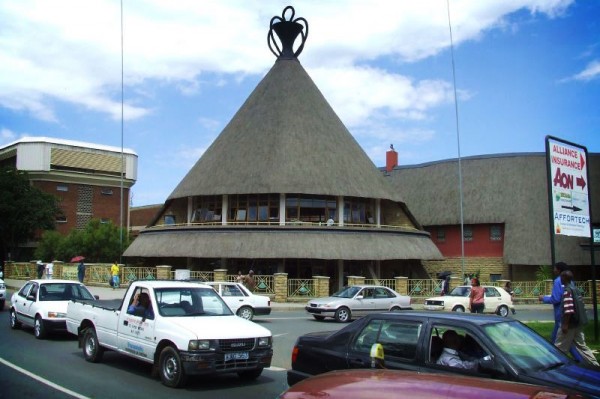


I’d helped them capture him and his accomplices but he’d changed his distinctive tee shirt and red shoes which I would have recognised like a shot. He was also too far from me in the large room to pick out his distinctive body odour which I still recall 40 years later.

Of course the cops had to let him go.

Reams have been written about face-blindness, which in its extreme form is called prosopagnosia and is a neurological disorder. Who knows, my mother may have dropped me on my head as a baby but I’m pretty certain that both deficiencies are the outcome of being an adored only child primarily focussed on future achievement and self.

It hurts


Problem is, I hurt people, as in when I confused two women in my parish. The one had visited me in my home with her husband but I mistook another for her the following Sunday.


It’s why when I shop in our local mall I smile and greet all shop assistants – many of my parish work there. I also do a lot of nodding and eye contact as I wander for shop to shop. If anyone half smiles at me I do a proper greeting. (Father Christmas and I should open a charm school together.)

A fuzzy past


As I blogged my journey towards Anglicanism and my rather unusual priesthood, I was forced to work out dates and remember details that were part of the blur of my past. Looking back, I am amazed that my lifelong friends have stuck with me. (Spare a thought too for the rectors I have worked under and my bishops.)

The now

The blog was also a whole lot more. It forced me to take measure of the present. One in which I, a ‘retired priest’, pick and choose my involvement with Church. I commiserate with friends who still have to attend Council meetings and synods as well as deal with pew politics. I pontificate on Facebook. Twitter, Google+ and in the blogosphere.


By the 20th post it was becoming increasingly more difficult to write. Besides being thoroughly bored with myself, the blog was a convenient distraction from the relevance of my present relationship with God and my chosen Church.

I’d forgotten the key lesson I’d learned so many years ago from the Mother’s Union at St James in Diepkloof, Soweto: There is no retirement from God or ministry. Vocational seasons may end but you can’t spend the Winter of your life in bed with a duvet over your head.


The blog posts proved a soul-jolting alert that I had allowed myself to drop into a quagmire of complacency. I’d forgotten the long hard journey I’d undergone to reach an understanding that my prime vocation lies in my talent for communication, not parish ministry.

I’d forgotten, and hadn’t even blogged about, the long battle to accept that editing the Southern Anglican magazine, serving as the archbishop’s international media person and using my writing skills was my vocation.

In recent years I’ve effectively relegated my vocation to ‘the good old days’.

As I reached blog post 32 it was like pushing a wheelbarrow full of rocks. December offered the excuse to take a break. Blog 33 wasn’t any easier, particularly within my personal anger of yet another Anglican delay regarding homosexuality. When I re-read that rant I knew it was less about my relationship with Anglicanism and a whole lot to do with spending the winter of my vocation under a duvet.

For what it’s worth, herewith the result of my reflections. If anything they prove, yet again, that there are no coincidences. They are God-incidences. And, yes, God does have a sense of humour.

The first step was to acknowledge that my vocation is not to swan in and out of my parish on high days and when the rector is on leave. I may have to use Google a whole lot more these days but I can still write.

So, if writing and editing is my ministry where do I stand?

Ever stood on a rake and had the handle swat your nose? That’s what happened to me as I reviewed 2015, which I’d come to regard as annus horribilis. I’d lost my main source of income as the publisher I worked for had his own problems. There was a mad scramble to survive financially.

True to form, I tackled the problem myself with only the occasional desperate arrow prayer. (I’m superstitious about praying for money.) Eventually things got so bad, I conceded that I could do with some Godly assistance. (A smidgeon off a grovel.)

Call it luck or a God-incidence, shortly afterwards I was commissioned by the Church of Sweden to edit a remarkable book. Called 'Behold I make all things new'. Its contributors present a compelling case for reinterpreting the Jewish, Christian and Muslim sacred texts with regard to homosexuality.

I’d lived through the reinterpretation of the Bible to prove that apartheid was not God’s will. I’d watched Anglican theologians reinterpret Scripture to allow women to be ordained into priesthood. I had seen the pain Christians inflict on God-loving homosexuals. In short, I jumped at the chance to edit that book.

Besides providing a welcome editing fee, it has proved a personal blessing and I can’t wait for it to be published. (I will keep you posted).

In January this year I finished my mystery novel. Far from holy, it is also in the publishing pipeline and is set in the Anglican Church. Its main character is Archbishop Sibonelo Shakespeare Khumalo (his mother was an English teacher) and some of you may have met him on his Facebook account.

Shakes has a lesbian daughter who expects him to live up to his promise to preside over her marriage service and a wife that reads the bible far more literally than he does. But his immediate challenge is that he needs to solve a couple of murders to stop a campaign to defrock him.

It’s meant to be a fun read. The God-incidence is that the writing of it has forced me to walk in the shoes of an Anglican archbishop who is torn between his personal life, current theology and the need to avoid schism.

Needless to say, I was so busy with both books that the ‘vocation thing’ lost priority. Besides, there are two other books in the pipeline, I manage three Facebooks accounts, two Twitter accounts, this blog, a LinkedIn account and I potter in Google+.

I’ve hit the pause button. Please pray for me as I try to discern if God has deftly recalled me into a vocation of communication or if I am just interpreting that ‘call in the night’ to suit myself.

Meanwhile, I am encouraged by Rabbi Meir Baal Hanes who says: ‘Any interpretation of scripture which leads to hatred or disdain of other people is illegitimate.’

In the same vein, Karen Armstrong, the moving spirit behind the worldwide launching of a Charter of Compassion in November 2009, has stated: ‘If your understanding of the divine made you kinder, more empathetic, and impelled you to express sympathy in concrete acts of loving-kindness, this was good theology. But if your notion of God made you unkind, belligerent, cruel, self-righteous, or if it led you to kill in God's name, it was bad theology.’


Tuesday, 8 December 2015

DON'T EXPECT STARBUCKS TO SERVE UP JESUS


When I launched this blog in April I had no idea what it would entail, emotionally or the effort it would take to feed it regularly. I don't have a retentive memory so digging into my past hasn't always been easy.

As an extrovert and ENTJ I am not naturally inclined to contemplate my navel, tending always to be planning forward. Besides, for the past year I've been writing a novel, editing and marketing a book on theology as well as earning a living as a journalist and as a PR professional.

Dolls there just hasn't been enough time in my days!

Bored with myself
Thirty-one posts later I decided to review what I have done and emerged thoroughly bored with myself. I am also aware of the temptation to linger in my Soweto period, because it was such a wonderful entry to priesthood.

As always in ministry, the season had to end.

I'd originally been designated to St James in Diepkloof for six months but managed to stretch that to two years. My ministry was focused on HIV/AIDS, my parish was vibrant, I was running a PR agency and serving as Archbishop Jongo's media liaison person. Eventually I would come to understand the gospel references to ‘the spirit being willing but the flesh being weak’.

Burnout was on the horizon.

A course for the horse


Brian Germond, My incredibly understanding bishop, sent me to St Michaels and All Angels in Weltevreden Park. Although the parish was quite a distance from my home its new rector, the Revd Dr Tim Long, had also recently emerged from a township.

He and his wife Kirstie had lived and served at St Bernard Mizeki in Atteridgeville in the Diocese of Pretoria. It wasn’t easy. For example when their geyser burst the wardens took a year to fix it – and this only after a threat to leave.

But, they like me, had fallen in love with their community.

So I had a boss who understood my need to dance in church. As importantly, he led me through my never ending journey of theological doubt and inquisitiveness.

Tim, a former teacher, had a doctorate in biblical studies and didn't bat an eyelid when I needed to question whether Jesus is God. He was erudite, non-judgmental and great at people development.

Back to school

Enrolling for an Honours degree in Systematic Theology was a natural progression and the Revd Dr Peter Wyngaard agreed to be my mentor. 

My Prof at UNISA was gregarious and eccentric and encouraged my journalistic approach while others bothered about me not toeing the academic line. (Being in my mid-50s I was more concerned about enjoying the process than passing cum laude although I hated missing that by a few percentages.)

Tim was assisted by a retired priest who lived on the property, three self- supporting women priests – known as ‘Tim’s harem’ – and a self- supporting man.

There would be two key aspects to the next two years. I was involved in one of the fastest growing parishes in the diocese and I was having to cope with my lost “only white woman” status. That dreadful self centered only child syndrome that I carry inside me.

Not easy 

Fortunately our ‘self-supporting’ team had all gone through the ordination process together so we were good friends. But it couldn’t have been easy for Tim. 


Self supporters tend to decided when they can take leave and just how much time to allocate to the parish. The rector isn’t treated like God’s second cousin and we also usually have a fair amount of control over where we work. 

(I sometimes envied the married women who could blame their husbands if they didn’t want to do something or move somewhere.)

In short, we are a mixed blessing and the result of an era in which the Church was battling with budgets and we were cheap labour. Most were women and many suffered under chauvinist rectors. Notably, we were not as subservient as young curates.

Go forth
Brian Germond often commented that Christianity is not a spectator sport. The study of Liberation Theology had convinced me that theology without praxis is just hot air. Tim Long who’d emerged from an Assembly of God background lived mission. With all this I was convinced that parishes that just tread water are little more than weekly side shows.

It is a gospel imperative that we draw community in and consistently expand our offerings.


Second class priests?
Looking back I think self-supporting ministry is incredibly difficult, largely because Church doesn’t know how to capitalise on this important human resource. Too often a self-supporting priest with invaluable business experience is under-used. 

Equally sad is how many self-supporters feel like second class clergy or, at best, volunteers. Part of the problem is that deep down inside few feel like ‘real priests’ unless they are given a parish to run. They are not programmed to view their paying job as an important element of their ministry.

Seldom are they reminded that ordination doesn’t hang its hat up at the office door. We are priests 24/7 even if it isn’t all sacramental. I, for example, often found myself acting as unofficial chaplain to a newspaper group I worked for. 


Through someone in that office I served a motor cycle club where the parties were wild and hearts were enormous.

One of the most difficult things about being a self-supporting are the weeks on end in which there is no break from the parish/work cycle. This has a terrible impact on families and relationships.

Integration
An interesting aspect of my move to the leafy suburbs was watching the slow integration of black families into traditionally white parishes.

St Mikes was a middle class traditionally white parish with a handful of mostly professional black parishioners. It helped that our rector had worked in a township and Tim was good at drawing black parishioners into leadership roles.

The dog thing

But they, like me, missed the traditional choruses. I also had one couple share how irritating it was at tea time when we whiteys discussed our dogs as if they were children. Another noted that we seemed to think Africa started north of the Limpopo, and excluded South Africa. I may not be guilty on the second point but mea culpa on the canine issue. I am always touched when black friends not only asked after my pets’ health but remember their names!

An easy mistake
Speaking of names. I really felt for that ANC Woman’s League representative who mixed up Oscar Pistorius’ surname with Reeva Steenkamp’s when expressing the league’s delight that he had been found guilty of murder.

Oh the high indignation and the social media tsunami among those whose grandparents used to call all male gardeners ‘John’ because black names were too difficult to learn! Besides it must have been pretty hectic outside the court as the media competed for comment.

Saved by the President
If only we South Africans could honour our Madiba legacy by giving each other a little leeway. Speaking of which, as we mark the second year since his death, I am reminded of an incident that epitomised his attitude to others.

I’d had a hectic shopping spree in Sandton City and was in danger of being late for a meeting. My car was parked in the hotel garage (Those good old Merc days when the concierge would park it for me). 


The passage to the Convention Centre, which was en-route, had been taped off for security reasons. 


Naturally I did what any woman in hurry would. I ducked under the tape and kept going. Around the next corner I bumped into President Nelson Mandela and his entourage heading for an event. 

As bodyguards  bristled the old man with twinkly eyes knew exactly what I’d done and came to my rescue by shaking my hand and asking “And how are you today?” The guards backed off and we all carried on. 

 Thank you Tata.

What would he think?

It is two years since our national hero died and Archbishop Thabo Makgoba said at a memorial service in St George’s Cathedral this week: "As someone who prayed with Madiba, I cannot help but ask myself: If he were alive today, what would he think of South Africa?”

I’m thinking that it’s up to ordinary South Africans to sustain that legacy.

Just as it’s up to Christians, not Starbucks or the local supermarket, to put Christ into Christmas.
 ***************************************

You may enjoy this video of the Nelson Mandela Commemoration service in St George's Cathedral https://youtu.be/Pg5DHxqTpFE


Thursday, 26 November 2015

MAKE LOVE, NOT WAR


One of the wonderful advantages of only becoming “churchy” after the age of 50 is that it was much like travelling to a new country.


Your senses are in top gear. You get excited about stuff the locals take for granted. You ask: why? You take measure when others feel that’s unacceptable, simply because it’s never been done before. Change doesn’t bother you because you have no norm.

Preconceptions take a dive
For example, I like so many whiteys, had assumed that Anglican Church services would be far less formal in the townships than in the leafy suburbs. Wrong! In Soweto the best of British liturgy rules. Our Sunday altar party would be at least a dozen people, all superbly trained by their guilds.

Our choir was about 30 strong. Although African choruses were integral we also sang those ‘deep English’ hymns from old green hymn books, mostly passed down from parishes on the other side of town that had replaced them with Songs of Fellowship.

Another fallacy is that a black skin guarantees a wonderful singing voice. Not true. The objective is to worship God with the voice you’ve been given.

Incense was mandatory. The swinging of the thurible an art form.

A 45 minute sermon was par for the course and never warranted surreptitious glances at one’s watch.

My misconceptions included an assumption that my parishioners would be far more enthralled by a darker skinned Jesus.

When I suggested we should retouch a large mural so that Jesus would look less like an Oxford don dressed for a Nativity play and more like a darker skinned Middle Eastern Jew, the refusal was gentle but firm.

Fact is, the extra white Jesus is deeply loved. Those early missionaries who worked so hard at branding colonial standards as superior did a pretty good job. They were subsequently affirmed by apartheid, advertising, the education system, movies, nursery rhymes and even toys. 

What some scientist think Jesus looked like

In a country where the colour of one’s skin is still a major differentiator a Messiah of a darker hue doesn’t stand much of a chance. Sure, some parishes have painted their statues dark brown but the pointed Caucasian nose is a dead giveaway. 

The Queen is also loved
I remember taking a BBC TV crew to film a typical Anglican Eucharist in Soweto. The opening hymn (in their honour) was God Save the Queen and the choir, which was at least 60 strong, opted for a black tie and evening dress code. The film crew’s intention was to get a few good shots and then head back to the pool at their Sandton Hotel. 

I had to explain that the parish and gone to extraordinary lengths for their visit, including items by the Sunday School and a major feast afterwards. Initially, they were a bit grumpy but as we headed home three hours later it was declared ‘an experience of a life time’.

Meanwhile, through Archbishop Njongo, I was working closely with Canon Ted Karpf and the Revd Jape Heath in the HIV/AIDS and gay arenas.

Confession time (once again).
Although I’d grown up in a family that regarded homosexuality as nothing to get excited about, few of my gay and lesbian friends had ever shown affection in public. There was a dinner party to which Jape arrived late. His partner had joined us earlier and they kissed each other hello. It was a Damascus moment. 


As I registered my discomfort and was ashamed I suddenly understood how awful it must be for same-sex couples to have to refrain from everyday gestures of affection and the level of trust I’d been afforded in that moment.

I’d always understood how incredibly difficult it was for gay priests to honour the Church’s call for celibacy – usually from married heterosexual clergy. But never quite how this stretched to the daily fabric of their lives.

It didn’t help that HIV/AIDS was still largely viewed as God’s punishment for homosexuality and depraved promiscuity.

An inside job
Ironically, the likes of Njongo, Ted and Jape were being hugely undermined by their own Church.

That brings me to another facet of Anglicanism. Some call it ‘diversity’ others speak of ‘schizophrenia’.

Somebody once told me that theologically the pulpit tends to be 19 years ahead of the pew. For me the fissures were less between clergy and laity and mostly between clergy and clergy.

People in the pews tend to take what they are dished.

The three pillars of Anglicanism, i.e. Scripture, reason and tradition are not adopted or applied in equal measure across the Church. The same priests who laugh off St Paul's injunction that women should cover their heads and are horrified by the Old Testament custom of offering one’s virgin daughter to an overnight visitor, continue to interpret other sacred texts literally.

Instead of examining our sacred texts by taking into consideration who wrote them, the circumstances as the time, the audience and the agenda they ignore reason and wield verses like weapons.

Schism. what schism?
Within our global Anglican Communion we used to laugh off our differences and speak of bonds of affection. We scorned suggestions of a schism because historically the Anglican Church has shown a remarkable ability to accommodate differences.

Jongo would often urge his clergy and laity to come out of their corners of difference and find strength in diversity. He had every right to, having proved this could be done.

I’ve told how at the 1998 Lambeth Conference he’d chaired a 30 hour session, on homosexuality. Sixty bishops of diverse theologies, cultures and traditions had hammered out a proposal on the anvil of their pain. Yet the one and a half hour plenary session that followed ignored their 180 hours of input and produced ‘Resolution I.10: Human Sexuality’.

The resolution upholds faithfulness in marriage between a man and a woman in lifelong union, and believes that abstinence is right for those who are not called to marriage i.e. gay priests must be celibate. It also refuses “to advise the legitimising or blessing of same sex unions or ordaining those involved in same gender unions.”

Behold the chasm
Subsequently 182 bishops would see fit to apologise to gay and lesbian Anglicans in a ‘Pastoral Statement’ but the pain and the resolution remain. That fissure would turn into a chasm.

I was working for Jongo and picked up stories of how several African bishops and their entourages had been financed by American conservatives who had set up camp just outside Canterbury. At the end of every meeting with the Archbishop they would meet to strategise for the next day.

Williams, an academic, a renowned theologian, poet, author and social activist would prove a babe in the political woods.

Despite him having persuaded a gay priest in a relationship to withdraw his controversial candidacy for Bishop of Reading, 250 bishops out of 800 boycotted Lambeth 2008 in protest against his perceived liberal sympathies. 

Photo: Reuters
Instead they hived off to Jerusalem where they held a seven day Global African Future Conference (GAFCON) to address the rise of secularism, HIV/AIDS and poverty.

Notably, Welby has indefinitely postponed the 2018 Lambeth and we continue to tip-toe around that awful word “schism”. We can afford to. Each of the 38 provinces that make up the global Communion does its own thing anyway.

More recently Rowan Williams, has admitted he has "no problem" with legal parity for same-sex couples. But he feels the State rushed into "redefining" marriage without giving the Church enough time to think about it.

His biography, Rowan's Rule, by Rupert Shortt tells how the Archbishop, now a baron, was tackled by a disappointed friend at the Hay Festival: "A venerable Roman Catholic priest and scholar confronted Rowan after the ceremony for 'letting us down', by which he meant gay and pro-gay Catholics hoping for a lead from the Anglicans.

Rowan clasped his head in his hands – a characteristic gesture – in apparent acknowledgement that his questioner (also an old friend) had a point."

He would share with Shortt, "Let me just say that I think the present situation doesn't look very sustainable."

Gay marriage
On gay marriage, he said: "I have no problem with legal parity for same-sex couples. But I'm not sure it's an appropriate use of the state's power to change a social institution. It felt as though we were being bundled into redefining a word without sufficient time to reflect."

On the failure of General Synod to pass the legislation on women bishops (It has since changed its mind), Shortt writes: "Rowan fell into a pit of depression on returning to Lambeth, during which he hardly spoke to anyone but [his wife] Jane – invariably a model of calm as well as charm."

The book also tells of the massive emotional toll Williams suffered over the sexuality battle. In 2005 he had slumped against a doorway during a bishops' meeting and said to a colleague, 'I can't tell you how much I hate this job.'

Shortt’s own recent comment is, "It seems to me that the Church of England has got to the point on the formal affirmation of same-sex relationships that it had reached with remarried divorcees 40 years ago. A once rigid discipline is being gradually relaxed.

"Some traditionalists will see this as yet another example of the way Anglicans have buckled in response to changing attitudes in society at large. But that is not where Rowan Williams is coming from. The pro-gay arguments he voiced in the 1980s and 90s sprang from a belief that church teaching on sexuality might evolve for solid theological reasons, not through a desperation to keep up with the times at any cost.

In describing current teaching as very unstable, Dr Williams is echoing opinions also voiced by other retired archbishops.”

More important things
With millions of refugees needing help, terrorism and police brutality you’d think we Christians would stop worrying how people choose to express love. 

This week I presided at the funeral of a parish stalwart. His last words to his children were: “Love each other, don’t fight.” 

A prophet for our times.


You may find these interesting: 

At COP21, the UN climate summit in Paris, Archbishop Thabo Makgoba joined other members of the international ecumenical grouping, the ACT Alliance, in handing over petitions signed by 1,7 million people, urging political leaders to take decisive action to curb global warming and deliver a strong, fair deal that helps poor countries adapt to their changing climate. In the photo with Archbishop Thabo is Cristiana Figueres, who as executive secretary of the UN Framework Convention on Climate Change is the UN's top official dealing with the issue.


Arcbishop Thabo Makgoba's reflection on Advent : http://archbishop.anglicanchurchsa.org/2015/11/audio-archbishop-thabos-reflections-on.html

Rupert Shortt speaking about difficulties Christians are experiencing across the world //ow.ly/V5TRd