Showing posts with label bishop. Show all posts

Tuesday, 8 December 2015

DON'T EXPECT STARBUCKS TO SERVE UP JESUS


When I launched this blog in April I had no idea what it would entail, emotionally or the effort it would take to feed it regularly. I don't have a retentive memory so digging into my past hasn't always been easy.

As an extrovert and ENTJ I am not naturally inclined to contemplate my navel, tending always to be planning forward. Besides, for the past year I've been writing a novel, editing and marketing a book on theology as well as earning a living as a journalist and as a PR professional.

Dolls there just hasn't been enough time in my days!

Bored with myself
Thirty-one posts later I decided to review what I have done and emerged thoroughly bored with myself. I am also aware of the temptation to linger in my Soweto period, because it was such a wonderful entry to priesthood.

As always in ministry, the season had to end.

I'd originally been designated to St James in Diepkloof for six months but managed to stretch that to two years. My ministry was focused on HIV/AIDS, my parish was vibrant, I was running a PR agency and serving as Archbishop Jongo's media liaison person. Eventually I would come to understand the gospel references to ‘the spirit being willing but the flesh being weak’.

Burnout was on the horizon.

A course for the horse


Brian Germond, My incredibly understanding bishop, sent me to St Michaels and All Angels in Weltevreden Park. Although the parish was quite a distance from my home its new rector, the Revd Dr Tim Long, had also recently emerged from a township.

He and his wife Kirstie had lived and served at St Bernard Mizeki in Atteridgeville in the Diocese of Pretoria. It wasn’t easy. For example when their geyser burst the wardens took a year to fix it – and this only after a threat to leave.

But, they like me, had fallen in love with their community.

So I had a boss who understood my need to dance in church. As importantly, he led me through my never ending journey of theological doubt and inquisitiveness.

Tim, a former teacher, had a doctorate in biblical studies and didn't bat an eyelid when I needed to question whether Jesus is God. He was erudite, non-judgmental and great at people development.

Back to school

Enrolling for an Honours degree in Systematic Theology was a natural progression and the Revd Dr Peter Wyngaard agreed to be my mentor. 

My Prof at UNISA was gregarious and eccentric and encouraged my journalistic approach while others bothered about me not toeing the academic line. (Being in my mid-50s I was more concerned about enjoying the process than passing cum laude although I hated missing that by a few percentages.)

Tim was assisted by a retired priest who lived on the property, three self- supporting women priests – known as ‘Tim’s harem’ – and a self- supporting man.

There would be two key aspects to the next two years. I was involved in one of the fastest growing parishes in the diocese and I was having to cope with my lost “only white woman” status. That dreadful self centered only child syndrome that I carry inside me.

Not easy 

Fortunately our ‘self-supporting’ team had all gone through the ordination process together so we were good friends. But it couldn’t have been easy for Tim. 


Self supporters tend to decided when they can take leave and just how much time to allocate to the parish. The rector isn’t treated like God’s second cousin and we also usually have a fair amount of control over where we work. 

(I sometimes envied the married women who could blame their husbands if they didn’t want to do something or move somewhere.)

In short, we are a mixed blessing and the result of an era in which the Church was battling with budgets and we were cheap labour. Most were women and many suffered under chauvinist rectors. Notably, we were not as subservient as young curates.

Go forth
Brian Germond often commented that Christianity is not a spectator sport. The study of Liberation Theology had convinced me that theology without praxis is just hot air. Tim Long who’d emerged from an Assembly of God background lived mission. With all this I was convinced that parishes that just tread water are little more than weekly side shows.

It is a gospel imperative that we draw community in and consistently expand our offerings.


Second class priests?
Looking back I think self-supporting ministry is incredibly difficult, largely because Church doesn’t know how to capitalise on this important human resource. Too often a self-supporting priest with invaluable business experience is under-used. 

Equally sad is how many self-supporters feel like second class clergy or, at best, volunteers. Part of the problem is that deep down inside few feel like ‘real priests’ unless they are given a parish to run. They are not programmed to view their paying job as an important element of their ministry.

Seldom are they reminded that ordination doesn’t hang its hat up at the office door. We are priests 24/7 even if it isn’t all sacramental. I, for example, often found myself acting as unofficial chaplain to a newspaper group I worked for. 


Through someone in that office I served a motor cycle club where the parties were wild and hearts were enormous.

One of the most difficult things about being a self-supporting are the weeks on end in which there is no break from the parish/work cycle. This has a terrible impact on families and relationships.

Integration
An interesting aspect of my move to the leafy suburbs was watching the slow integration of black families into traditionally white parishes.

St Mikes was a middle class traditionally white parish with a handful of mostly professional black parishioners. It helped that our rector had worked in a township and Tim was good at drawing black parishioners into leadership roles.

The dog thing

But they, like me, missed the traditional choruses. I also had one couple share how irritating it was at tea time when we whiteys discussed our dogs as if they were children. Another noted that we seemed to think Africa started north of the Limpopo, and excluded South Africa. I may not be guilty on the second point but mea culpa on the canine issue. I am always touched when black friends not only asked after my pets’ health but remember their names!

An easy mistake
Speaking of names. I really felt for that ANC Woman’s League representative who mixed up Oscar Pistorius’ surname with Reeva Steenkamp’s when expressing the league’s delight that he had been found guilty of murder.

Oh the high indignation and the social media tsunami among those whose grandparents used to call all male gardeners ‘John’ because black names were too difficult to learn! Besides it must have been pretty hectic outside the court as the media competed for comment.

Saved by the President
If only we South Africans could honour our Madiba legacy by giving each other a little leeway. Speaking of which, as we mark the second year since his death, I am reminded of an incident that epitomised his attitude to others.

I’d had a hectic shopping spree in Sandton City and was in danger of being late for a meeting. My car was parked in the hotel garage (Those good old Merc days when the concierge would park it for me). 


The passage to the Convention Centre, which was en-route, had been taped off for security reasons. 


Naturally I did what any woman in hurry would. I ducked under the tape and kept going. Around the next corner I bumped into President Nelson Mandela and his entourage heading for an event. 

As bodyguards  bristled the old man with twinkly eyes knew exactly what I’d done and came to my rescue by shaking my hand and asking “And how are you today?” The guards backed off and we all carried on. 

 Thank you Tata.

What would he think?

It is two years since our national hero died and Archbishop Thabo Makgoba said at a memorial service in St George’s Cathedral this week: "As someone who prayed with Madiba, I cannot help but ask myself: If he were alive today, what would he think of South Africa?”

I’m thinking that it’s up to ordinary South Africans to sustain that legacy.

Just as it’s up to Christians, not Starbucks or the local supermarket, to put Christ into Christmas.
 ***************************************

You may enjoy this video of the Nelson Mandela Commemoration service in St George's Cathedral https://youtu.be/Pg5DHxqTpFE


Monday, 26 October 2015

WHEN IN DOUBT BLAME GAYS AND PROMISCUITY

Ten of us were priested in St Mary’s Cathedral, Johannesburg on 29 June 2001. (This time I didn’t wear mother’s pearls). We were a strange mix of middle aged self -supporting whiteys and black full timers yet we had grown extraordinarily close. We’d studied together, survived the discernment, been deaconed and shared inevitable hurts.

My wonderful Sowetan parish was there in full force.

Our new bishop, Brian Germond (my first rector), washed our feet and dried them with white towels – one for each of us and with our names embroidered on them. I still have mine which reads ‘Moruti Loraine’. Moruti being southern Sotho and Tswana for teacher or priest. Genderless, it is far more useful as a honorific for women than ‘Father’.

As I’ve mentioned before, my son has referred to me as ‘Dad’ since my ordination which leaves some folk assuming that I am lesbian. Among many special gifts I received that day was a bunch of dried imphepha.


In African tradition the herb is burned to ward off evil spirits and it was from one of several black priests who had taken the time and trouble to teach me about his culture.

Celebrating in another language
I was determined to not just celebrate the Eucharist in English and opted to learn to do parts in Sesotho because I had spent much time in Lesotho and had a small vocabulary. Again my black friends galloped to my rescue.

Mind you, I was admonished by one priest for not opting for Zulu. I lacked the courage to confess that I was trying to clear my system of the detested Fanagalo. This Zulu-based pidgin language was used primarily on the mines and often adopted by employers to speak to their domestic help.
Looking back I am amazed at how embracing my parish was. They never made me self-conscious of my white skin or my ignorance of their cultures and traditions. Yet I must have made some terrible mistakes.

There’s the wonderful story of how the renowned Fr Trevor Huddleston, who also strove to celebrate in the vernacular, had over many years begun the Eucharist using a word that meant ‘erection’. 


No one ever had the heart to tell the much admired anti-apartheid activist.

Another culture
My rector, Fr Charles May, now also a bishop, was generous and gentle as he allowed me to assume more parish duties. One of my favourites was being sent to bless the mokoti, the traditional ceremony when a new daughter-in-law is welcomed into her husband’s parental home. 

On a Sunday before the wedding she arrives with a kist filled with gifts such as linen and pots and pans and is accompanied by female relatives and friends.
Mateli and Tembakazi’s wedding photo: Monica Dart
Photographer Monica Dart blogs about the first isiXhosa traditional wedding she was asked to shoot. She writes of her heart racing with happiness and how it felt like being in a new country. I can identify with that.

Dancing at the mokoti event or in the bridal procession and singing choruses was an exciting taste of a different spirituality. I was beginning to understand why the late Duncan Buchanan, known as ‘the dancing bishop’, had taken so much trouble to explain that it was okay to be an extrovert in the Church. 

A sad side too.
The HIV/AIDS pandemic was cutting a swathe across Africa. In South Africa the situation was exacerbated by the fact that our State President Thabo Mbeki had been persuaded by global denialists that HIV did not cause AIDS.

The pipe smoking intellectual had succeeded our beloved Madiba and was a popular choice among most whites and the business community. 


What endeared him to them were statements such as: "I am certain that South Africa will not succeed in its efforts to rebuild, reconstruct and develop herself if she does not inspire all our people, black and white, to accept that they share an equal and shared responsibility and opportunity to work together to ensure a happy future for all."

But his AIDS denialism struck terror in some of us. In 2000 Mbeki scoffed at the claim that the HIV virus could cause a deficiency syndrome i.e. AIDS in the South African context had entered an unholy era. One that would court charlatans and cost taxpayers a fortune.

Denialism would also subsequently be blamed for 
300 000 AIDS related deaths – by far the majority being black people.


Singing off the same hymn sheet was our Minister of Health. Dr Manto Tshabalala-Msimang declared the desperately-needed anti-retroviral drugs (ARVs) poison. She preached that the only solution was nutrition. Garlic, beetroot and lemons topped the list. 


                   It was great fodder for cartoonists.

Sadly, while nutrition is key for infected folk, that wisdom was tainted by denialism.

I have often wondered about that. Manto was a friend. She’d earned her medical degree in Russia and had registered some major achievements in other African countries. Did she really believe that HIV didn’t cause AIDS or was she pandering to the President to hold her cabinet post?


Although the virus was creeping into the white community many of the infected enjoyed the benefit of medical aid and had access to ARVs. For them it was becoming a manageable chronic disease. 

Moreover, their doctors and medical aids were sworn to secrecy so publicly HIV/AIDS was viewed as being suffered primarily by black, gay and promiscuous people.

Stigma a killer
What a potent brew. Its name was Stigma and it ruled supreme in religious circles where AIDS was all too often pronounced as being God’s punishment. (My, how we religious folk excel at exhorting the bible and God to underpin our own ignorance and prejudice!)

Very few Sowetans had access to medical aid. Everyone else was at the mercy of the public health system. Because of the social stigma people at risk weren’t testing. They didn’t want to be spotted at the AIDS clinic. By the time they sought help their CD4 counts were so low little could be done.

Beetroot was no help at all.

Sometimes I felt I was involved in a fast funerals franchise. In Avalon cemetery graves were being dug less than a metre apart. The space between two open graves would sometimes crumble and I had a server whose job was to stop me from falling in. It never happened but there were several close calls.

In those days funerals were usually held over a week-end so mourners could attend. This translated into traffic jams between the church and the cemetery that could hold the cortege up for over an hour. 


There were so many burials at a time that occasionally I couldn’t find ‘my’ burial site. The lay ministers had standing instructions to do the internment if I didn’t make it.

Initially I thought it was my white ignorance but felt better when I learned it had happened to Fr Charles as well.

One major mistake I did make was when a prominent parishioner died of natural causes while Fr Charles was out of town. Imagine my delight when I discovered how easy it was to spot his grave – the family awning had his surname emblazoned across the roof. Such a sensible arrangement. Problem was, so did at least a dozen others. I hadn’t realised that the deceased had owned a funeral parlour.

Back to the AIDS debacle
There were other complications. Grandmothers who should have been cared for by family in their old age were having to raise their grand-children. This was invariably on their meagre pension. 


Our orphanages were filling up.


Although government did introduce a child subsidy many grandmothers didn’t seek the much needed financial help because, as one shared with me, “I don’t want my grand-children to be known as AIDS orphans”.I am told we have about three million children orphaned by AIDS today.

Of course it is about so much more than statistics and funerals. It becomes personal as one interacts with the infected and the affected. But I was inordinately blessed to be working for an archbishop who would declare, “We must shout from the rooftops that AIDS is not a sin.” 

He'd imported Revd Ted Karpf, with the blessing of US President Bill Clinton, to head up the Anglican Church’s HIV/AIDS desk in Africa.

Njongo knew that one of our biggest challenges was ignorance among our clergy and Church leadership. To this end we added a PowerPoint presentation to our arsenal. Although it was my job to produce it I had a great deal of help from Ted and Jongo kept a beady eye on the project.

One slide showed a grandmother with half a dozen orphans under her care. (we had permission to use it.) Little did I know that it would cause me immense personal pain.

The presentation had just been approved by Jongo and was ready for use when I got an evening call from my diocese asking if I could help out. The person who was scheduled to do a Clergy Day presentation in the morning had called in sick. Was I able to talk on anything?

Yes, I could. There was much scrambling to find a projector and next morning I faced my fellow clergy, all bushy tailed and eager with our new presentation.

Big mistake! 


In that environment I was not representing Njongo, I was a newly ordained junior priest at my own Clergy Day. Looking back I should have prefaced the presentation with more humility and care.

When that slide came up. An angry priest accused me of being racist. I tried to explain that white grannies were highly unlikely to find themselves in the same situation. But the discussion escalated. There was deep resentment that I was talking about good black Anglicans being infected. I, who was so used to being accepted by my black parish, was being treated with anger and suspicion. It hurt. Badly.

I didn’t handle it well. The person who had arranged the day didn’t do too well either. A friend who tried to come to my rescue admitted afterwards said he’d been caught flatfooted.

I went home to lick my wounds and was followed shortly by a priest who I doubt had ever spent much time in a township. He had come to berate me about my ‘overt racism’ and need to respect senior clergy. 


In a way he was a blessing. Armed with my former newsroom vocabulary I was able to let off steam by kicking him out.

Nonetheless I was deeply hurt. The scar still itches. But it was an invaluable lesson in humility and PR, the game I was supposed to be so good at. 


It was also a clear signal that most clergy were woefully ignorant and not well equipped to minister in the AIDS arena. Although AIDS Committees were being formed and candles were being lit.


Later two ordinands in my diocese died, despite our bishop’s commitment to HIV/AIDS. One was a large hearty young man who had attended theology classes with me. Asked to visit him in a hospice, I didn’t recognise the skeletal patient I was directed to. He died in my arms 15 minutes later. 


I remember howling like a banshee in the middle of the street outside. Even without access to ARVs he could have been saved if we’d only known early enough.

Although by that time their parishes had AIDS Committees neither of the young men had felt they could reveal their status or ask for help.

Njongo and Ted had an uphill battle and it is a credit to them others that the World Health Organisation (WHO) would come to recognise faith based communities as key to the fight against the pandemic.


I am yet to have a parishioner come up to the altar rail and ask for special prayer because he or she has tested positive. Stigma still rules.

Sunday, 18 October 2015

ANGLICANS OPTING FOR SEPARATE BEDROOMS?


By the time I was deaconed my spirituality may have been shot but I admit to feeling I’d died and gone to heaven.

A political tango
On entering the Church I’d handed in my ANC membership card but I was still a political animal. So working as Archbishop Njongo Ndungane’s media person was more than a privilege. It was a tango with the country’s ‘Struggle’ history. An adrenaline high.

Njongo attended school at Lovedale College in Alice, cradle of many black political leaders. It was while serving a three-year sentence on Robben Island as a political prisoner that he received his calling to priesthood. Upon release he had a two year banning order slapped on him.

I initially assumed that he was such a stern critic of government’s failures to deliver on its promises to the poor because he’d come out of the PAC, a party left of the ANC. But I would come to understand that it was his equal commitment to South Africa and the Kingdom of Heaven that made him a moral force difficult to ignore.

Famously he even made Nelson Mandela mad. Criticising Madiba’s government for, among other things, failing to ensure that old-age pensioners in the Eastern Cape got their money, he reportedly said, “Madiba magic won’t be solving our problems.”

Although Thabo Mbeki had succeeded Madiba by the time I started working for Njongo, I found it exceedingly difficult dealing with the president’s director general, the Revd Frank Chikane. Clearly the ANC leadership had still not fully forgiven the Archbishop.

A new experience

In many ways Njongo’s Africanism was a new experience for me. It was less about race and more about the future. He was quick to condemn inefficiency and corruption and I revelled in drafting his speeches and press statements.

He taught me that the only ‘African time’ was ‘on time’. A lesson which stood me in great stead in township churches where they tended to be relatively empty as the service started and slowly filled in time for Communion. 


In Alexandra, where I was standing in for several weeks, I restarted my first service after 40 minutes, explaining that I wanted everyone taking Communion to have had the benefit of confession and absolution. Ninety-percent were on time the following week.
Incidentally Jongo’s first political experience was as a teenager in the Cape flats township, Langa. On a Sunday afternoon, on their way to a soccer match, he and some friends took a short cut through Freedom Square where Robert Sobukwe, founder of the PAC, was addressing a crowd.

Njongo recalls, “We stopped to listen and he captured our minds with his charisma, his authority, his directedness. He was talking about the pass laws being at the heart and core of the oppression of the black person and that we had to do something about it.”

Years later with a master’s degree in theology from King’s College London, Njongo would become bishop of Kimberley and Kuruman. Among many other achievements he represented the Anglican Church twice at the Vatican. 


The last 'normal' Lambeth

Also important for me was the fact that he had chaired the 1998 Lambeth Conference committee for human sexuality. The consequences still reverberate. It was probably our last ‘normal’ Lambeth. 2008 was boycotted by about 200 bishops. 

Now Lambeth 2018 is looking iffy.

Convened by the Archbishop of Canterbury almost every 10 years since 1867, a Lambeth Conference is, in Anglicanspeak, one of four 'instruments of unity'. The others being the Archbishop of Canterbury, the Anglican Consultative Council and the Primates’ Meeting.

Unlike the Pope, Canterbury is a figurehead and the Communion is an international association of autonomous national and regional churches. So Lambeth is not a governing body it simply expresses "the mind of the communion" on issues of the day. Its resolutions are not legally binding but historically they have been influential i.e. until now.

Not of one mind

Fact is the global Communion is not of one mind on lesbian and gay (LGBT) issues. While America has a gay bishop, Nigeria, Kenya and Uganda are pressing for the criminalisation of homosexuality.

The 1998 Conference, called by Archbishop George Carey, is where the proverbial hit the fan. 


Of the 749 bishops who attended 11 were women. 


Some Provinces had finally crossed that gender Rubicon.

The hottest topic was homosexuality. In those days agenda matters were first discussed in committees and then debated in open plenary sessions conducted on Westminster Parliamentary lines.

Our 
Archbishop Njongo chaired that committee, a 30 hour session involving 60 bishops from across the world.  

It is important to bear in mind that there can be a vast difference in how, for instance, a bishop from North America and one from Uganda interprets the Scriptures.

An anvil of pain
Years later Njongo would say, “Our work was hammered out on the anvil of pain”. 


Despite massive theological and cultural difference the committee came up with a proposal. The idea was to avoid too much detail and allow the 38 Anglican provinces to return home and discuss the matter. This was supported by another 140 bishops.

But conservative politics won the day. George Carey yielded to pressure for a fuller resolution on homosexuality. So the proposal was debated in a mere one-and-a-half hour open plenary session of 600 bishops, spouses, observers and guests. 


All in the full glare of the media! 

The result was ‘Resolution I.10: Human Sexuality’ which is often referred to as the demise of our global Communion.

In short it upholds faithfulness in marriage between a man and a woman in lifelong union. It declares that abstinence is right for those who are not called to marriage i.e. gay priests must be celibate. It also refuses “to advise the legitimising or blessing of same sex unions or ordaining those involved in same gender unions.”

The Primates (archbishops) and the Consultative Council were directed to establish a means of monitoring the work done on the subject of human sexuality in the Communion and to share statements and resources.

Resolution 1:10 was passed by a vote of 526–70. The 180 executive hours put in by Njongo’s committee were ignored. In fact an amendment stating that "homosexual practice" (not necessarily orientation) is "incompatible with Scripture" was passed by a vote of 389-190.

Subsequently 182 bishops issued a  public apology to gay and lesbian Anglicans. They included Brazil, Canada, Central Africa, Ireland, New Zealand, Scotland, South Africa and Wales.

Gay was normal
You may wonder why a heterosexual priest is so concerned about LGBT issues. Bear in mind that I was middle aged before I took out my spiritual insurance policy and joined the Church. In my circles ‘gay’ was normal. My lifelong best friend is a lesbian.

Over the years I have ministered to parents, counselled gay priests, waded through shattered heterosexual marriages entered into by gay men desperate to live by ‘Christian’ values. I have feared for the lives of guilt ridden Christian teenagers.

Resolution1:10 has been one of my biggest challenges as a priest.

More recently I edited a book for the Church of Sweden in which Jewish, Christian and Muslim theologians argued the case for reinterpreting our sacred texts. 


How I wish I’d had access to their reasoning earlier in my ministry. 


The Anglican Church continues to be affected by Resolution 1:10. 


I’m not  declaring our conservatives wrong. But surely we can all be drawn out of the corners of our conviction, just as happened in Njongo’s committee?  

As also happened with other key issues such as slavery, gender equality and apartheid.

Archbishop Justin Welby, now the symbolic head of some 80 million Anglicans worldwide, has called a meeting of all archbishops for January next year. Among other things the structure of the Church is to be reviewed.


To quote a Lambeth Palace source: The archbishop felt he could not leave his eventual successor in the same position of “spending vast amounts of time trying to keep people in the boat and never actually rowing it anywhere”.

Welby, a former oil executive who was involved in reconciliation processes in Africa before he became the symbolic head of Anglicanism. He says the Lambeth 1998 resolution must be respected as must our different cultures.

Divorce?

Amidst talk of each Province doing its own thing but still calling ourselves Anglican he was asked if are about to undergo divorce?

His reply: “It’s more like sleeping in separate bedrooms.”

Meanwhile, I’m seriously considering compiling a dictionary of Anglicanspeak. A language that has evolved from within our corridors of episcopal power over centuries. Not generally spoken by the people in the pews, the more common phrases include ‘bonds of affection’ and ‘instruments of unity. It is particularly useful when outsiders claim we are a Church in schism.

I also keep reminding myself not to confuse Church with God.


PS. You may enjoy this You Tube interview with Archbishop Justin Welby. http://ow.ly/TxA7m

Friday, 9 October 2015

ANGLICAN DITHERING ON GAY ISSUE IS CRUEL


I need to take a step back to the discernment process that led, somewhat surprisingly, to me being deaconed and then priested. Actually 'surprisingly' is too mild a term. By the time I came out of that wash I expected a resounding "No".

In our diocese you went through a fairly long 'fellowship of vocation' process. We met regularly for training and were allocated mentors. If your mentor felt you were a suitable candidate the next step was a day spent with a psychologist.

The inkblot test
Mine was a Catholic nun who began with a Rorschach inkblot test. Not sure if it is still used but this is a process whereby the subjects' perceptions of inkblots are recorded. They are then analyzed using psychological interpretation, complex algorithms or both.

To quote Wikipedia, some psychologists use this test to examine a person's personality characteristics and emotional functioning. It has been employed to detect underlying thought disorder, especially in cases where patients are reluctant to describe their thinking processes openly. 


The image card is held up and you have to quickly say what it represents to you. The presumption being that you have never seen it before.


The nun was such a nice woman I didn't have the heart to tell her I'd played the Rorschach game several times at parties, where the interpretations were far from holy. BESIDES I really, really wanted her to tell my bishop I'd make a great priest.


A Rorschach inkblot card


The system is named after the psychiatrist who introduced it back in the 30s. I also didn't have the heart to point out that he subsequently had serious doubts about its usefulness.

So I gave her nice holy interpretations like "monks dancing in a circle holding hands". To give the good sister her due, she did tell the bishop I had a tendency to view the world with rose tinted glasses. But then she also told him that I was so upset by my divorce that I'd started wetting the bed. Silly woman had read her handwritten notes incorrectly - it was my younger son who had been affected.

In all it was an interesting day. After one of many other tests she asked if I knew I had an eccentric genius IQ. Surely all only children born of doting parents know that?


Discernment committee

Ah well. At least her report got me to the next step - the discernment process. This is a full day in which you are interviewed by small teams on various aspects of your life. The teams meet at the end of the day to discern if you should be deaconed and also if you should go forward for priesthood.

I knew I'd blown in with my very first response.
Question: What will you do if you get turned down today?


The correct answer, with eyes humbly downcast, should have been: "I will accept it as God's will." But the joking retort just flew out of my mouth before I could stop it: "I'll probably have a nervous breakdown!"

In the 'good stewardship' session I admitted I was born to shop (despite being broke). In the health session I had to be honest:  instead of exercising, my preference was to lie down until the feeling passed.


Well at least the outcome proved that Church does have a sense of humour.

Shot to hell
Looking back I am aware that by the time I was deaconed my spirituality was shot to hell. Too much time and effort had gone into juggling my life and impressing folk who had no concept of my busy work load. It is a constant refrain from so many self-supported clergy.


Part of the problem was that my bishop at that time had advised me to change Spiritual Directors. The suggestion was well meant and he was among the best directors, but I'd travelled too far and too deeply with my first. I still turn to her. 

It was an important lesson. Find one that works for you and your personality type.

A short-lived deacon
I'd heard tales of desperate-to-be-priests being held in deacon limbo for years. So it was a huge relief to only wait 5 months. Frankly, except for that crossed deacon's stole and the long white dress, life as a deacon was no different from being a hard working lay minister.

The Jazz in my heart
Naturally, as a died-in-the-wool kugel, I had my chasubles and cope specially designed. One well meaning fellow ordinand did warn me that it wasn't a good idea to have a gold saxophone embroidered on the top left of the front of my green one. Advice I ignored. 


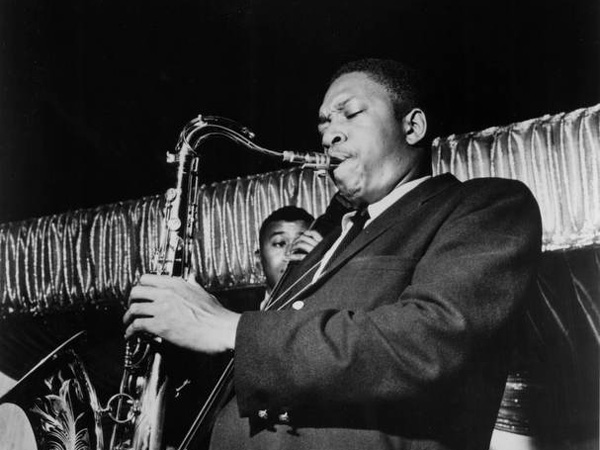
I am a John Coltrane fan and the Trinity is the jazz in my heart.

Invaluable advice that my bishop did give me was that as an extrovert I would be the exception, not the rule, among clergy. He shared that he often felt holier in a large assembly that in a silent retreat. I came to understand that no one spirituality fits all. It's okay to prefer progressive jazz to an organ recital.


Soon after I celebrated with a quarter cow and lots of chickens it was time to party again. The parish catered. I was grateful and my bank manager was happy. 

DRC makes history As I write this,  news has just filtered through that the Dutch Reformed Church in South Africa voted 102 to 88 in its synod in favour of ordaining gay ministers and blessing same sex unions. Real history in the making and placing the generally conservative protestant denomination well left of us Anglicans.  

I suspect the Methodists may just pip us to that post as well. 

In case you are wondering, the rest of our global Communion is not in step with our Episcopal cousins. Nor is it likely to be in the near future. Meanwhile the hurt and pain among our gay and lesbian clergy escalates. 

The dithering is cruel.


Monday, 5 October 2015

BISHOPS CAN BE DOLLS

The after party for my deaconing on December 1 2000, was a hoot. 

Hat's off to my family and the northern suburbs white friends who braved the journey from the Cathedral in the centre of the city to Soweto in the deep south. It was a  trip to no-man's land for most of them. Moreover, it was a Saturday evening. 

Their abiding image of Soweto was of death, carnage and violence. In fact it is a 'city', with a variety of neighbourhoods and various levels of safety. 

Diepkloof was a nice suburb. 


Some upmarket homes


and others not so posh.


Because I hired a bus to get them in and out everyone was pretty relaxed.

As I've mentioned before, my parish did me proud. The food was beautifully cooked and presented. The hall was decorated. The music and the singing was unforgettable. The St James folk had gone to inordinate lengths. (As I write this I am choked.)

A deacon's stole
Next day I wore my deacon's stole appropriately crossed in front and tucked into the girdle around my alb, which my domestic helper and I called 'that long white dress'.

(Cringe. I know. I know. I'd lost my money. We'd moved into a pretty crummy suburb and used the dog's bath for a while. But I was basically a kugel. My wonderful domestic helper travelled that long road with us. Today she manages a small business for me.) 

Back to being a deacon. 

At that time there was huge drive to push the concept of 'the ministry of all'. As lay ministers we'd visited the sick, conducted funerals (too many people were dying of AIDS related diseases). Many of us had also conducted Baptism and Confirmation classes. We'd even officiated at services with pre-consecrated wafers! Essentially we'd been doing 'deacony' stuff for quite a while before our ordination. 

I seriously wondered why one couldn't just be done and dusted straight into priesthood in one shot.  

Not by osmosis
By then I'd studied and passed 13 theological subjects but I have always been conscious of not having absorbed Anglicanism - the tradition, the vestments, the ritual - by osmosis.  

So I was delighted to discover the modern cassock alb which meant I could chuck the girdle. To this day I see nothing holy in a pall, especially for the extra chalices. It's only a useful cover to keep insects and dust out. My heart bleeds for lay folk who get themselves into a knot about these things when serving at the altar. There is such a danger of confusing ritual with worship.


Useful for keeping flies and dust out

My other world, which included working as speechwriter and media liaison officer for Archbishop  Njongo Ndungane, involved bishops, whose names I could never remember. 'Doll' did come in useful as most were very gracious.  (It's a strange fact - bishops are often less status conscious than their clergy.)

A horrific pandemic
There was also that 'AIDS' thread. Although Njongo's prime focus was development, by 2000 the HIV/AIDS pandemic was horrific. Africans were dropping dead at an alarming rate. Stigma reigned supreme. Our State President and our Health Minister were denialists. Refusing to acknowledge any connection between the HIV virus and AIDS she advocated garlic and sweet potatoes over anti-retrovirals.  They were dubbed 'a medicine from hell.'

Njongo declared the national AIDS policy "sinful" 
in 2000 led a protest march on parliament.

Meanwhile, his international advocacy role was growing apace and President Clinton invited him to a White House function on World Aids Day  on the first of December that year.


Always one to marshal expertise for his pet projects, the archbishop zoned in on Ted Karpf. The tall  Washington  priest with a Texan accent had written the liturgy for the AIDS Day service. But was better known for risking the loss of an entire congregation for insisting that a man with AIDS be allowed to attend the Eucharist and receive Communion using the chalice.   


The Rev Cannon Ted Karpf
                     
That first week the infected person was too ill to attend and nobody else pitched. In short, he experienced every priest's nightmare - an empty church.

Ted has a great turn of phrase so I'l let him share the next bit, "The night before the White House events, I learned an important life lesson: never drink scotch during a decision-making session with an Archbishop on an empty stomach. In the course of a long conversation, he suggested that I come to South Africa to help build an AIDS response.

"It was a major challenge as the province included 10 million people in seven countries, including the worst-affected in the world. Njongo argued that God had answered our prayers and it was clear what I was really called to do. I capitulated.

"The next morning at breakfast with the President, Sandy Thurman, and South African ambassador Sheila Sisulu, the President offered the Archbishop whatever support he wanted. The response was: “I want this priest, Ted Karpf, to come to South Africa to work with me.”

Ted was instructed to go to Africa where the archbishop steered him into strategic planning on how to meet the challenges of HIV/AIDS in 23 dioceses over half a dozen countries.

Above all, our new AIDS champion was to listen.

Never one to stay quiet for long, Ted soon had us all listening and responding. He and the archbishop quickly became a formidable force.
Together they developed a programme, coining the notions: We are building a generation without AIDS, as well as No one dies alone and no one cares alone.

Funded by the British government (DFID), the Americans (PEPFAR) and many others, it was until recently, the largest funded programme for faith-based AIDS work in Africa. 

An added bonus for me was a very special friendship. The spare room in our home is still referred to as 'Ted's'. (Don't get too excited, he's gay.)

Part of what brought us together was the fact that we had both discovered Anglicanism in adulthood. And he, like me, had a strong Catholic connection. 

Do you see Jesus?
Ted tells the delightful story of a great aunt, an immigrant Irish nun, a Sister of Charity. "She saw it as her mission to convert her heathen nephews and nieces. We would go to see her at her convent, and she would take us, gravely and with great care, to the sacristy in the convent. 'Do you want to see Jesus?' she would ask. 

"Then she would solemnly take the key out of the sash in her robes, go to the tabernacle box, and open it slowly. 'Do you really want to see Jesus?' 'Yes', we would answer. 


"She would reach in, and pull out the host, (a large consecrated wafer.) By now I was convinced that Jesus must be tiny, a kind of Tom Thumb. She would carefully pull out her hand, then, before we saw anything, thrust the door closed. 'You can’t see,' she said, 'because you are not Catholic'. And that was that."


There's plenty more to tell of Ted. I have an abiding memory of  him teaching me how to celebrate the Eucharist the night before I was priested. We used an ironing board, dishcloths and an excellent red wine.

Saturday, 12 September 2015

DON'T CALL THE ARCHBISHOP DOLL

The day of my interview loomed. 

Would the rector at St James in Diepkloof have me ? Was having a white, middle aged woman ordinand who needed a lot of training in keeping with his plans for the busy parish?

We set a time and he gave me directions. Along the way I took a wrong turn. No problem. Ask a policeman. 'Sure,' he said. 'Follow me.'  Which is exactly what a I did - through several suburbs. 

Sure enough we pulled up at St James but it was a Catholic Church. I explained that I was worried about being late for my important interview. 'Don't worry,' he assured. 'I'll ask another policeman.' 
Soon we were travelling through more suburbs in a convoy of two police vans and my Merc.


It proved to be third time unlucky. But, you've guessed it, we met another policeman and he had the the good sense to call my potential rector for directions. 

By now there was total buy-in to my future in the Anglican Church. I was going to be embarrassingly late so the lead van used its blue emergency lights.  I arrived at St James with three cop cars in attendance feeling like the Queen of England.

It was my first taste of what it would be like to work in Soweto. Those guys really cared.

You may recall that I had permission to only spend six months in the township but I knew there was no way I'd learn enough in that period.  Confession time. I didn't give the rector the bishop's letter which meant he could honestly say he'd never read it.

That afternoon marked the beginning of some of the best years of my life.

Another interview

There was another game changer.  

A friend in my original parish knew that I had counted among my PR clients the government of Lesotho. I'd conducted communications campaigns for two of the Mountain Kingdom's leaders besides various government departments. 

Archbishop Njongonkulu Ndungane had succeeded Desmond Tutu and needed a speech writer and media consultant. My friend recommended me.

This interview was at a classy hotel in one of Joburg's better suburbs. 

When Archbishop Ndungane was installed as archbishop one of our Sunday papers  ran a cartoon in which an extra large mitre (That high pointed headgear bishop's wear) was half way down his face. The implication being that he had a very large one to fill.  

As a huge fan of 'The Arch', as we still call the beloved Tutu, I must admit to wondering if there wasn't a great deal of truth in the cartoon. 

Archbishop Ndungane was very serious, quite shy and went to a lot of trouble explaining how the  Anglican Province of Southern Africa worked. 

While Desmond Tutu's focus had been on apartheid. His successor was deeply involved in a campaign to abolish the debt of developing countries and combating HIV/AIDS. 

He'd spent three years on Robben Island, was big on theological education and had formerly served as Bishop of Kimberly.


At one point in the interview I asked what I should call him. 'Your Grace or Archbishop.' was the reply. 

Now you have to understand that I'd been calling my chief executive clients 'doll' for years. I opted for 'Your Grace'. Initially it didn't roll off my tongue easily but growing respect helped.  


This was no Tutu. He was his own man

A hint to all ordinands, don't call your archbishop doll. It won't advance your career.

Understood by God

I got both jobs but looking back I see yet another God-incidence. 

As mentioned in my previous blog, ordinands sit at the bottom of the clerical pile. It was tough for someone who'd dealt with leaders of countries and major corporates. Archbishop Ndungane drew me into a world that included Bono, Jeffrey Sacks the world renowned economist and even (at arms length) the White House.


Bono
Prof Jeffrey Sacks


Writing speeches for him to make at the White House
                            
There was another great turnaround. 

PR practitioners have to stroke the media to get coverage for clients. I now had journalists clamouring for interviews with the Archbishop on every conceivable subject. 


Mind you, I did turn down a plea by one TV station wanting him to comment on a tagged penguin that had swum from Cape Town to Robben Island.


Indeed, working for Jongo, (which I didn't call him to his face) made my internship much easier.  Largely because I was experiencing Church in action.


I'd given up my HIV/AIDS work at the Joburg General Hospital in order to cope but  the infected and affected would remain part of my ministry. 


I cannot tell you what it meant to write speeches in which the archbishop declared 'We must shout from the roof tops that AIDS is not a sin.'  Or to be with him when the medical staff at a major AIDS research centre gave him a standing ovation.


It was the height of the AIDS pandemic and people were, as they are now, being destroyed by the stigma surrounding the immune deficiency.


A tattered spirituality


There was study, ordinand training, looking after my existing clients, working for the archbishop, serving in a new parish and finishing my house.  God was becoming a pinpoint on a distant horizon. Every now and again I'd collapse in a heap at St Benedict's, my favourite retreat house run by the Sisters of the Order of the Holy Paraclete (OHP). Filled with new resolve I'd emerge and jump straight back on my hamster wheel.

My Spiritual Director suggested that I  become an OHP tertiary. I needed the gentle, sensible, spiritual discipline. A thread to run through my perpetual busy-ness.


She knew that St Benedict, father of western monasticism, would appeal to me. He was the guy who broke ranks with the self-flagellants. Instead he embraced humanism, art and thought. His spirituality is all about balance between prayer, work and play. Hospitality is important. (Thank heavens I didn't have to give up my dinner parties.)


As a tertiary I would develop my own vows and my journey towards priesthood assumed a new rhythm and perspective. I learned to say, 'sorry I can't do that, I'm too busy.'  I knew that if God wanted me to be a priest  I would be one. 


Despite a new prayer discipline  (not too hectic but in place) my work diary worked better.


When I went through my formal discernment conference for priesthood the first question was: 'What will you do if you are rejected today?' 


The answer I once would have given (with downcast eyes) was:  'I'll accept God's will.'  Instead I was able to joke: 'I'll probably have a nervous breakdown.'  


The committee considering my physical well-being asked about my exercise regimen. I assured them that if ever I did feel that energetic, I lay down 'til the feeling passed.   


I hope St Benedict smiled when the conference voted to allow me to be ordained.  I had a permanent grin for at least a week. The ordination to the diaconate was barely two months away and I had an after party to organise. 


By then I'd learned that a genteel tea and cakes was not going to crack the nod in my new parish. Meat was essential. But I did make the awful mistake of trying to pin my darling rector down on how many to cater for. 


He kept avoiding the issue. Silly me. In Soweto you don't send invitations for an ordination party everyone is welcome (the parish roll must have had over a 1000 names). 


I had some serious shopping to do!