Showing posts with label African. Show all posts

Monday, 3 October 2016

THE EXCRUCIATING AGONY OF A CHRISTIAN CLOSET


As the dust settles on the Anglican Church in Southern Africa’s most recent synod, our Archbishop Thabo Makgoba is being quoted globally regarding the pain he is experiencing from a decision not to allow our clergy to bless same sex marriages. 
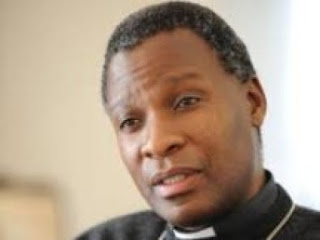
Archbishop Thabo Makgoba 


Please note that I speak of a simple blessing, not marriage, yet 16 of 22 bishops voted against this. Archbishop Thabo speaks of a double edged sword. 


Allow me to introduce a third edge...

As I write this, my own pain centres around an aspect seldom acknowledged - those gay Christians who actually believe their gender “leanings”, “temptations”, “preferences” are an abomination to be resisted. To the extent that they pray and fast their way out of their natural sexual identity in order to be saved. This, as a CNN journalist said about Aleppo, “It is what Hell is really like and then it got worse.” 
Aleppo

Marrying for Jesus

These 'good' gay Christians all too often go to the extent marrying someone of the opposite sex.

Yes, many manage to be relatively happy, they love their spouses, their children, the holiness of family. But the need to suppress their sexual drive looms larger as the years pass. Inevitably their denial of self takes its toll on the relationship and mostly on the person committed to Christ and the Church. Some soldier on. Others don’t resist temptation and are caught. Others, in their maturity have stopped reading the Bible literally and decide to do the honourable thing by confessing to their spouses.

It seldom works

Having counselled several of these committed Christians, all men admittedly, I am appalled at the excruciating pain this can cause everyone from the family to the secret gay partner.

They were Anglicans, Methodists and Lutherans and, where love, mutual respect and concern for the children were dominant elements of the marriage, I witnessed some remarkable solutions. A generosity of soul not always found in  our pews.

Other situations, involving righteous judgment and literal Scriptural interpretations, have left an unholy trail of devastation – fathers unjustly accused of pedophilia and banned from interaction with their beloved children. Off spring whose minds were poisoned and whose emotional wellbeing was mortally wounded. Vocations had to be abandoned.


I'm not gay

Let’s be clear: I’m not a Lesbian, trans or bi sexual. My children aren’t gay and I don’t’ have LGBTI siblings to campaign for. I wasn’t a gay activist before re-joining the Anglican Church 35 years after my Confirmation. I didn’t need to be one because nobody in my secular social circle was bothered with judging our gay friends or condemning them to hell. We were all too busy getting on with life.  I had no concept of the hell too many Christian gays go through.

Called to priesthood at the turkey-necked age of 51, I was far more concerned with political activism. Desmond Tutu was an important role model and the main reason I asked to be trained in Soweto. Truth be told, I had visions of becoming the Mother Theresa of the townships. What arrogance and what ignorance of God’s sense of humour. I was too old to suit the Church’s pension fund so self-supporting ministry was my only option. In other words, I had to keep earning a living as a PR consultant. 

Archbishop Emeritus Njongonkulu Ndungane

It’s how I became Archbishop Njongonkulu’s international media liaison consultant and how I jumped into the deep end of one of his signature ministries – HIV/AIDS.

It's NOT...

All this at a time when the disease was increasingly identified as punishment for homosexuality. That stigma became the incubator for millions of deaths. I thank God for ++Jongo who insisted on a communication campaign that would “shout from the roof tops that AIDS is an illness like any other, and not a punishment from God.”

A frightening number of Anglicans ignored the message.

The third edge

Inevitably my personal ministry veered into that arena. Our national Health Department was refusing to provide antiretrovirals. I was clocking up funeral services at an alarming rate and working with passionate activists, several of whom were Anglican priests and gay.  Some were infected others weren’t, all suffered the pain of being open about their sexuality in a Christian environment.


I had stepped into the realm of the "third edge”.

More broad minded?

But I was not your typical Anglican priest: I hadn’t attended church for 35 years; I was battling to curb a vocabulary learned in a news room (still am); I was a divorcee who had had two long term live-in relationships; and, I loved to party.  Perhaps it is because my gay associates felt I would be more understanding that they began recommending me to married gay men seeking counselling.

What a learning curve for me. I encountered an awful aspect of Christian cruelty, good intentions gone awry and responses that caused excruciating pain to EVERYONE in the affected family and even their extended families.

Can you begin to imagine the pain of being rejected by a Church that is part of your DNA?

And don’t for one millisecond think you can crack it with “Love the sinner, hate the sin.”  It is that very approach that gnaws at family and friends who fill our pews and share Communion. We hurt them by judging their loved ones and relegating them to hellfire. 


How we must hurt the Tutus

Leah and Desmond Tutu

Revd Mpho von Furth Tutu and her wife, Marceline

I worry about the hurt Desmond and Leah Tutu must feel because  since her marriage their daughter Revd Mpho is not licensed in Southern Africa. Yes, she could return to the USA and minister there but her parents are in their twilight years and the Desmond and Leah Tutu Foundation needs her management.  

Time to revolt?

I never bothered to become a marriage officer and I applauded priests who refused to act as marriage officers when mixed race marriages were banned. I now applaud those who either ignore the ‘gay’ rules or are heeding the call to hand in their licences.

Too many of my brother and sister priests have gone through 30 years of the Anglican Church saying “soon there will be a breakthrough.”   Too many have battled the Church’s trade-off: “be celibate and you can be licensed to be a priest”.     

If social demographics apply, some 10% of our priests are gay. Maybe more because it makes so much sense for God to call natural nurturers into our vocation.

Older and wiser

I do, however, take comfort from the fact that age invariably brings a more mature interpretation of Scripture and greater confidence in the findings of modern science as well as confidence in God’s abiding love.

As Rabbi Dr Jay Michaelson Ph.D. writes in Behold I make all things New, “God versus Gay isn’t just a false dichotomy.  It’s a rebellion against the image of God itself.”
Rabbi Dr Jay Michaelson

Allow me to share more of the rabbi’s quotes:
“As a rabbi and long-time LGBT activist, I’ve counselled many Orthodox young people who are terrified of having to choose between happiness and their religious way of life.  Families have been torn apart by this issue and as long as the false choice between God and gay persists, our brothers, sisters, cousins, and friends will continue to struggle. They will torment themselves and be excluded from their families and communities.”

“Before I came out, I was certain that being openly gay would spell the end of my religious life.  I was an Orthodox-practicing Jew which gave meaning and shape to my life.  I repressed my sexuality, acting out occasionally but regretting it afterwards.  I tried, for years, to change.  Eventually, after 10 years in the closet I had had enough. The pain, isolation, loneliness, and shame had grown so great that I was ready to forsake my religion for the sake of my happiness.”

“Coming out was the doorway to greater religious faith and joy than I had ever imagined.  My relationship with God and my religious community grew stronger. My spiritual path began to unfold; my prayer life began to awaken. My love for other human beings slowly unfurled and expanded.”

“Imagine believing that because of something you cannot change God hates you.”

“Whose fault is it that 40% of gay teenagers consider suicide – four times as many as straight kids?  Ours, of course.”

"It's not African"

I know that a number of the bishops at the synod hailed from countries far more conservative than South Africa, where same sex marriages are legal, but I quote a Nigerian, The Revd. Rowland ‘Jide’ Macaulay LLB, MTh, “Historically, Africa has always been the friendliest and most tolerant continent. Homosexuality and same-gender behaviours date back to before colonialism and the intervention of religion. The arrival of colonialism contributed to the mass hatred and also the influence of religious fundamentalism. It contributed to the debased argument for homophobia. Yet Christianity teaches and encourages Love thy neighbour as thyself.”

I am busy working on a manuscript that examines how faiths based on rebirth and karma -Buddhism, Jainism, Sikhism, and Hinduism – affirm the dignity of queer identities and sexualities. In it Devdutt Pattanaik, author of more than 30 best-selling books and lecturer on the relevance of mythology in modern times, says “the well-meaning doctrine of ‘all religions are the same in essence’ has led to the assumption that all religions are intolerant of all things LGBTIQ.” 

He adds, “When faiths affirm the dignity of the queer, they empower them psychologically, politically, and economically.” 

That third edge

 In all this let us not lose sight of the third edge of the sword the Anglican Church continues to wield. I have watched young priests grow old while waiting to be affirmed. One of the saddest stories I was told was how, many years ago, seminarians were told that a bishop was refusing to ordain single priests. 
The young man, fighting his gay sexuality, proposed marriage to a woman who knew about his personal battle, but also believed they would conquer all through prayer and faithfulness to the Church.

As it turned out, in order to have sex, and for her to conceive, he would have to read porn and then pounce on her as he was about to climax.  Of course the marriage didn't last. 

As the Lord says:
“My people, what have I done to you?”


*********
Watch Mpho Tutu van Furth speak about human sexuality and her marriage - 
https://www.youtube.com/watch?v=dsL0kBJAy2s


Monday, 26 October 2015

WHEN IN DOUBT BLAME GAYS AND PROMISCUITY

Ten of us were priested in St Mary’s Cathedral, Johannesburg on 29 June 2001. (This time I didn’t wear mother’s pearls). We were a strange mix of middle aged self -supporting whiteys and black full timers yet we had grown extraordinarily close. We’d studied together, survived the discernment, been deaconed and shared inevitable hurts.

My wonderful Sowetan parish was there in full force.

Our new bishop, Brian Germond (my first rector), washed our feet and dried them with white towels – one for each of us and with our names embroidered on them. I still have mine which reads ‘Moruti Loraine’. Moruti being southern Sotho and Tswana for teacher or priest. Genderless, it is far more useful as a honorific for women than ‘Father’.

As I’ve mentioned before, my son has referred to me as ‘Dad’ since my ordination which leaves some folk assuming that I am lesbian. Among many special gifts I received that day was a bunch of dried imphepha.


In African tradition the herb is burned to ward off evil spirits and it was from one of several black priests who had taken the time and trouble to teach me about his culture.

Celebrating in another language
I was determined to not just celebrate the Eucharist in English and opted to learn to do parts in Sesotho because I had spent much time in Lesotho and had a small vocabulary. Again my black friends galloped to my rescue.

Mind you, I was admonished by one priest for not opting for Zulu. I lacked the courage to confess that I was trying to clear my system of the detested Fanagalo. This Zulu-based pidgin language was used primarily on the mines and often adopted by employers to speak to their domestic help.
Looking back I am amazed at how embracing my parish was. They never made me self-conscious of my white skin or my ignorance of their cultures and traditions. Yet I must have made some terrible mistakes.

There’s the wonderful story of how the renowned Fr Trevor Huddleston, who also strove to celebrate in the vernacular, had over many years begun the Eucharist using a word that meant ‘erection’. 


No one ever had the heart to tell the much admired anti-apartheid activist.

Another culture
My rector, Fr Charles May, now also a bishop, was generous and gentle as he allowed me to assume more parish duties. One of my favourites was being sent to bless the mokoti, the traditional ceremony when a new daughter-in-law is welcomed into her husband’s parental home. 

On a Sunday before the wedding she arrives with a kist filled with gifts such as linen and pots and pans and is accompanied by female relatives and friends.
Mateli and Tembakazi’s wedding photo: Monica Dart
Photographer Monica Dart blogs about the first isiXhosa traditional wedding she was asked to shoot. She writes of her heart racing with happiness and how it felt like being in a new country. I can identify with that.

Dancing at the mokoti event or in the bridal procession and singing choruses was an exciting taste of a different spirituality. I was beginning to understand why the late Duncan Buchanan, known as ‘the dancing bishop’, had taken so much trouble to explain that it was okay to be an extrovert in the Church. 

A sad side too.
The HIV/AIDS pandemic was cutting a swathe across Africa. In South Africa the situation was exacerbated by the fact that our State President Thabo Mbeki had been persuaded by global denialists that HIV did not cause AIDS.

The pipe smoking intellectual had succeeded our beloved Madiba and was a popular choice among most whites and the business community. 


What endeared him to them were statements such as: "I am certain that South Africa will not succeed in its efforts to rebuild, reconstruct and develop herself if she does not inspire all our people, black and white, to accept that they share an equal and shared responsibility and opportunity to work together to ensure a happy future for all."

But his AIDS denialism struck terror in some of us. In 2000 Mbeki scoffed at the claim that the HIV virus could cause a deficiency syndrome i.e. AIDS in the South African context had entered an unholy era. One that would court charlatans and cost taxpayers a fortune.

Denialism would also subsequently be blamed for 
300 000 AIDS related deaths – by far the majority being black people.


Singing off the same hymn sheet was our Minister of Health. Dr Manto Tshabalala-Msimang declared the desperately-needed anti-retroviral drugs (ARVs) poison. She preached that the only solution was nutrition. Garlic, beetroot and lemons topped the list. 


                   It was great fodder for cartoonists.

Sadly, while nutrition is key for infected folk, that wisdom was tainted by denialism.

I have often wondered about that. Manto was a friend. She’d earned her medical degree in Russia and had registered some major achievements in other African countries. Did she really believe that HIV didn’t cause AIDS or was she pandering to the President to hold her cabinet post?


Although the virus was creeping into the white community many of the infected enjoyed the benefit of medical aid and had access to ARVs. For them it was becoming a manageable chronic disease. 

Moreover, their doctors and medical aids were sworn to secrecy so publicly HIV/AIDS was viewed as being suffered primarily by black, gay and promiscuous people.

Stigma a killer
What a potent brew. Its name was Stigma and it ruled supreme in religious circles where AIDS was all too often pronounced as being God’s punishment. (My, how we religious folk excel at exhorting the bible and God to underpin our own ignorance and prejudice!)

Very few Sowetans had access to medical aid. Everyone else was at the mercy of the public health system. Because of the social stigma people at risk weren’t testing. They didn’t want to be spotted at the AIDS clinic. By the time they sought help their CD4 counts were so low little could be done.

Beetroot was no help at all.

Sometimes I felt I was involved in a fast funerals franchise. In Avalon cemetery graves were being dug less than a metre apart. The space between two open graves would sometimes crumble and I had a server whose job was to stop me from falling in. It never happened but there were several close calls.

In those days funerals were usually held over a week-end so mourners could attend. This translated into traffic jams between the church and the cemetery that could hold the cortege up for over an hour. 


There were so many burials at a time that occasionally I couldn’t find ‘my’ burial site. The lay ministers had standing instructions to do the internment if I didn’t make it.

Initially I thought it was my white ignorance but felt better when I learned it had happened to Fr Charles as well.

One major mistake I did make was when a prominent parishioner died of natural causes while Fr Charles was out of town. Imagine my delight when I discovered how easy it was to spot his grave – the family awning had his surname emblazoned across the roof. Such a sensible arrangement. Problem was, so did at least a dozen others. I hadn’t realised that the deceased had owned a funeral parlour.

Back to the AIDS debacle
There were other complications. Grandmothers who should have been cared for by family in their old age were having to raise their grand-children. This was invariably on their meagre pension. 


Our orphanages were filling up.


Although government did introduce a child subsidy many grandmothers didn’t seek the much needed financial help because, as one shared with me, “I don’t want my grand-children to be known as AIDS orphans”.I am told we have about three million children orphaned by AIDS today.

Of course it is about so much more than statistics and funerals. It becomes personal as one interacts with the infected and the affected. But I was inordinately blessed to be working for an archbishop who would declare, “We must shout from the rooftops that AIDS is not a sin.” 

He'd imported Revd Ted Karpf, with the blessing of US President Bill Clinton, to head up the Anglican Church’s HIV/AIDS desk in Africa.

Njongo knew that one of our biggest challenges was ignorance among our clergy and Church leadership. To this end we added a PowerPoint presentation to our arsenal. Although it was my job to produce it I had a great deal of help from Ted and Jongo kept a beady eye on the project.

One slide showed a grandmother with half a dozen orphans under her care. (we had permission to use it.) Little did I know that it would cause me immense personal pain.

The presentation had just been approved by Jongo and was ready for use when I got an evening call from my diocese asking if I could help out. The person who was scheduled to do a Clergy Day presentation in the morning had called in sick. Was I able to talk on anything?

Yes, I could. There was much scrambling to find a projector and next morning I faced my fellow clergy, all bushy tailed and eager with our new presentation.

Big mistake! 


In that environment I was not representing Njongo, I was a newly ordained junior priest at my own Clergy Day. Looking back I should have prefaced the presentation with more humility and care.

When that slide came up. An angry priest accused me of being racist. I tried to explain that white grannies were highly unlikely to find themselves in the same situation. But the discussion escalated. There was deep resentment that I was talking about good black Anglicans being infected. I, who was so used to being accepted by my black parish, was being treated with anger and suspicion. It hurt. Badly.

I didn’t handle it well. The person who had arranged the day didn’t do too well either. A friend who tried to come to my rescue admitted afterwards said he’d been caught flatfooted.

I went home to lick my wounds and was followed shortly by a priest who I doubt had ever spent much time in a township. He had come to berate me about my ‘overt racism’ and need to respect senior clergy. 


In a way he was a blessing. Armed with my former newsroom vocabulary I was able to let off steam by kicking him out.

Nonetheless I was deeply hurt. The scar still itches. But it was an invaluable lesson in humility and PR, the game I was supposed to be so good at. 


It was also a clear signal that most clergy were woefully ignorant and not well equipped to minister in the AIDS arena. Although AIDS Committees were being formed and candles were being lit.


Later two ordinands in my diocese died, despite our bishop’s commitment to HIV/AIDS. One was a large hearty young man who had attended theology classes with me. Asked to visit him in a hospice, I didn’t recognise the skeletal patient I was directed to. He died in my arms 15 minutes later. 


I remember howling like a banshee in the middle of the street outside. Even without access to ARVs he could have been saved if we’d only known early enough.

Although by that time their parishes had AIDS Committees neither of the young men had felt they could reveal their status or ask for help.

Njongo and Ted had an uphill battle and it is a credit to them others that the World Health Organisation (WHO) would come to recognise faith based communities as key to the fight against the pandemic.


I am yet to have a parishioner come up to the altar rail and ask for special prayer because he or she has tested positive. Stigma still rules.

Sunday, 18 October 2015

ANGLICANS OPTING FOR SEPARATE BEDROOMS?


By the time I was deaconed my spirituality may have been shot but I admit to feeling I’d died and gone to heaven.

A political tango
On entering the Church I’d handed in my ANC membership card but I was still a political animal. So working as Archbishop Njongo Ndungane’s media person was more than a privilege. It was a tango with the country’s ‘Struggle’ history. An adrenaline high.

Njongo attended school at Lovedale College in Alice, cradle of many black political leaders. It was while serving a three-year sentence on Robben Island as a political prisoner that he received his calling to priesthood. Upon release he had a two year banning order slapped on him.

I initially assumed that he was such a stern critic of government’s failures to deliver on its promises to the poor because he’d come out of the PAC, a party left of the ANC. But I would come to understand that it was his equal commitment to South Africa and the Kingdom of Heaven that made him a moral force difficult to ignore.

Famously he even made Nelson Mandela mad. Criticising Madiba’s government for, among other things, failing to ensure that old-age pensioners in the Eastern Cape got their money, he reportedly said, “Madiba magic won’t be solving our problems.”

Although Thabo Mbeki had succeeded Madiba by the time I started working for Njongo, I found it exceedingly difficult dealing with the president’s director general, the Revd Frank Chikane. Clearly the ANC leadership had still not fully forgiven the Archbishop.

A new experience

In many ways Njongo’s Africanism was a new experience for me. It was less about race and more about the future. He was quick to condemn inefficiency and corruption and I revelled in drafting his speeches and press statements.

He taught me that the only ‘African time’ was ‘on time’. A lesson which stood me in great stead in township churches where they tended to be relatively empty as the service started and slowly filled in time for Communion. 


In Alexandra, where I was standing in for several weeks, I restarted my first service after 40 minutes, explaining that I wanted everyone taking Communion to have had the benefit of confession and absolution. Ninety-percent were on time the following week.
Incidentally Jongo’s first political experience was as a teenager in the Cape flats township, Langa. On a Sunday afternoon, on their way to a soccer match, he and some friends took a short cut through Freedom Square where Robert Sobukwe, founder of the PAC, was addressing a crowd.

Njongo recalls, “We stopped to listen and he captured our minds with his charisma, his authority, his directedness. He was talking about the pass laws being at the heart and core of the oppression of the black person and that we had to do something about it.”

Years later with a master’s degree in theology from King’s College London, Njongo would become bishop of Kimberley and Kuruman. Among many other achievements he represented the Anglican Church twice at the Vatican. 


The last 'normal' Lambeth

Also important for me was the fact that he had chaired the 1998 Lambeth Conference committee for human sexuality. The consequences still reverberate. It was probably our last ‘normal’ Lambeth. 2008 was boycotted by about 200 bishops. 

Now Lambeth 2018 is looking iffy.

Convened by the Archbishop of Canterbury almost every 10 years since 1867, a Lambeth Conference is, in Anglicanspeak, one of four 'instruments of unity'. The others being the Archbishop of Canterbury, the Anglican Consultative Council and the Primates’ Meeting.

Unlike the Pope, Canterbury is a figurehead and the Communion is an international association of autonomous national and regional churches. So Lambeth is not a governing body it simply expresses "the mind of the communion" on issues of the day. Its resolutions are not legally binding but historically they have been influential i.e. until now.

Not of one mind

Fact is the global Communion is not of one mind on lesbian and gay (LGBT) issues. While America has a gay bishop, Nigeria, Kenya and Uganda are pressing for the criminalisation of homosexuality.

The 1998 Conference, called by Archbishop George Carey, is where the proverbial hit the fan. 


Of the 749 bishops who attended 11 were women. 


Some Provinces had finally crossed that gender Rubicon.

The hottest topic was homosexuality. In those days agenda matters were first discussed in committees and then debated in open plenary sessions conducted on Westminster Parliamentary lines.

Our 
Archbishop Njongo chaired that committee, a 30 hour session involving 60 bishops from across the world.  

It is important to bear in mind that there can be a vast difference in how, for instance, a bishop from North America and one from Uganda interprets the Scriptures.

An anvil of pain
Years later Njongo would say, “Our work was hammered out on the anvil of pain”. 


Despite massive theological and cultural difference the committee came up with a proposal. The idea was to avoid too much detail and allow the 38 Anglican provinces to return home and discuss the matter. This was supported by another 140 bishops.

But conservative politics won the day. George Carey yielded to pressure for a fuller resolution on homosexuality. So the proposal was debated in a mere one-and-a-half hour open plenary session of 600 bishops, spouses, observers and guests. 


All in the full glare of the media! 

The result was ‘Resolution I.10: Human Sexuality’ which is often referred to as the demise of our global Communion.

In short it upholds faithfulness in marriage between a man and a woman in lifelong union. It declares that abstinence is right for those who are not called to marriage i.e. gay priests must be celibate. It also refuses “to advise the legitimising or blessing of same sex unions or ordaining those involved in same gender unions.”

The Primates (archbishops) and the Consultative Council were directed to establish a means of monitoring the work done on the subject of human sexuality in the Communion and to share statements and resources.

Resolution 1:10 was passed by a vote of 526–70. The 180 executive hours put in by Njongo’s committee were ignored. In fact an amendment stating that "homosexual practice" (not necessarily orientation) is "incompatible with Scripture" was passed by a vote of 389-190.

Subsequently 182 bishops issued a  public apology to gay and lesbian Anglicans. They included Brazil, Canada, Central Africa, Ireland, New Zealand, Scotland, South Africa and Wales.

Gay was normal
You may wonder why a heterosexual priest is so concerned about LGBT issues. Bear in mind that I was middle aged before I took out my spiritual insurance policy and joined the Church. In my circles ‘gay’ was normal. My lifelong best friend is a lesbian.

Over the years I have ministered to parents, counselled gay priests, waded through shattered heterosexual marriages entered into by gay men desperate to live by ‘Christian’ values. I have feared for the lives of guilt ridden Christian teenagers.

Resolution1:10 has been one of my biggest challenges as a priest.

More recently I edited a book for the Church of Sweden in which Jewish, Christian and Muslim theologians argued the case for reinterpreting our sacred texts. 


How I wish I’d had access to their reasoning earlier in my ministry. 


The Anglican Church continues to be affected by Resolution 1:10. 


I’m not  declaring our conservatives wrong. But surely we can all be drawn out of the corners of our conviction, just as happened in Njongo’s committee?  

As also happened with other key issues such as slavery, gender equality and apartheid.

Archbishop Justin Welby, now the symbolic head of some 80 million Anglicans worldwide, has called a meeting of all archbishops for January next year. Among other things the structure of the Church is to be reviewed.


To quote a Lambeth Palace source: The archbishop felt he could not leave his eventual successor in the same position of “spending vast amounts of time trying to keep people in the boat and never actually rowing it anywhere”.

Welby, a former oil executive who was involved in reconciliation processes in Africa before he became the symbolic head of Anglicanism. He says the Lambeth 1998 resolution must be respected as must our different cultures.

Divorce?

Amidst talk of each Province doing its own thing but still calling ourselves Anglican he was asked if are about to undergo divorce?

His reply: “It’s more like sleeping in separate bedrooms.”

Meanwhile, I’m seriously considering compiling a dictionary of Anglicanspeak. A language that has evolved from within our corridors of episcopal power over centuries. Not generally spoken by the people in the pews, the more common phrases include ‘bonds of affection’ and ‘instruments of unity. It is particularly useful when outsiders claim we are a Church in schism.

I also keep reminding myself not to confuse Church with God.


PS. You may enjoy this You Tube interview with Archbishop Justin Welby. http://ow.ly/TxA7m