Showing posts with label celibacy. Show all posts

Monday, 3 October 2016

THE EXCRUCIATING AGONY OF A CHRISTIAN CLOSET


As the dust settles on the Anglican Church in Southern Africa’s most recent synod, our Archbishop Thabo Makgoba is being quoted globally regarding the pain he is experiencing from a decision not to allow our clergy to bless same sex marriages. 
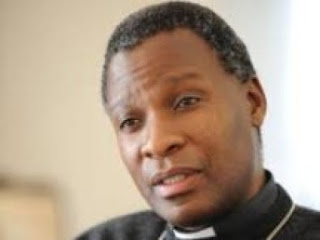
Archbishop Thabo Makgoba 


Please note that I speak of a simple blessing, not marriage, yet 16 of 22 bishops voted against this. Archbishop Thabo speaks of a double edged sword. 


Allow me to introduce a third edge...

As I write this, my own pain centres around an aspect seldom acknowledged - those gay Christians who actually believe their gender “leanings”, “temptations”, “preferences” are an abomination to be resisted. To the extent that they pray and fast their way out of their natural sexual identity in order to be saved. This, as a CNN journalist said about Aleppo, “It is what Hell is really like and then it got worse.” 
Aleppo

Marrying for Jesus

These 'good' gay Christians all too often go to the extent marrying someone of the opposite sex.

Yes, many manage to be relatively happy, they love their spouses, their children, the holiness of family. But the need to suppress their sexual drive looms larger as the years pass. Inevitably their denial of self takes its toll on the relationship and mostly on the person committed to Christ and the Church. Some soldier on. Others don’t resist temptation and are caught. Others, in their maturity have stopped reading the Bible literally and decide to do the honourable thing by confessing to their spouses.

It seldom works

Having counselled several of these committed Christians, all men admittedly, I am appalled at the excruciating pain this can cause everyone from the family to the secret gay partner.

They were Anglicans, Methodists and Lutherans and, where love, mutual respect and concern for the children were dominant elements of the marriage, I witnessed some remarkable solutions. A generosity of soul not always found in  our pews.

Other situations, involving righteous judgment and literal Scriptural interpretations, have left an unholy trail of devastation – fathers unjustly accused of pedophilia and banned from interaction with their beloved children. Off spring whose minds were poisoned and whose emotional wellbeing was mortally wounded. Vocations had to be abandoned.


I'm not gay

Let’s be clear: I’m not a Lesbian, trans or bi sexual. My children aren’t gay and I don’t’ have LGBTI siblings to campaign for. I wasn’t a gay activist before re-joining the Anglican Church 35 years after my Confirmation. I didn’t need to be one because nobody in my secular social circle was bothered with judging our gay friends or condemning them to hell. We were all too busy getting on with life.  I had no concept of the hell too many Christian gays go through.

Called to priesthood at the turkey-necked age of 51, I was far more concerned with political activism. Desmond Tutu was an important role model and the main reason I asked to be trained in Soweto. Truth be told, I had visions of becoming the Mother Theresa of the townships. What arrogance and what ignorance of God’s sense of humour. I was too old to suit the Church’s pension fund so self-supporting ministry was my only option. In other words, I had to keep earning a living as a PR consultant. 

Archbishop Emeritus Njongonkulu Ndungane

It’s how I became Archbishop Njongonkulu’s international media liaison consultant and how I jumped into the deep end of one of his signature ministries – HIV/AIDS.

It's NOT...

All this at a time when the disease was increasingly identified as punishment for homosexuality. That stigma became the incubator for millions of deaths. I thank God for ++Jongo who insisted on a communication campaign that would “shout from the roof tops that AIDS is an illness like any other, and not a punishment from God.”

A frightening number of Anglicans ignored the message.

The third edge

Inevitably my personal ministry veered into that arena. Our national Health Department was refusing to provide antiretrovirals. I was clocking up funeral services at an alarming rate and working with passionate activists, several of whom were Anglican priests and gay.  Some were infected others weren’t, all suffered the pain of being open about their sexuality in a Christian environment.


I had stepped into the realm of the "third edge”.

More broad minded?

But I was not your typical Anglican priest: I hadn’t attended church for 35 years; I was battling to curb a vocabulary learned in a news room (still am); I was a divorcee who had had two long term live-in relationships; and, I loved to party.  Perhaps it is because my gay associates felt I would be more understanding that they began recommending me to married gay men seeking counselling.

What a learning curve for me. I encountered an awful aspect of Christian cruelty, good intentions gone awry and responses that caused excruciating pain to EVERYONE in the affected family and even their extended families.

Can you begin to imagine the pain of being rejected by a Church that is part of your DNA?

And don’t for one millisecond think you can crack it with “Love the sinner, hate the sin.”  It is that very approach that gnaws at family and friends who fill our pews and share Communion. We hurt them by judging their loved ones and relegating them to hellfire. 


How we must hurt the Tutus

Leah and Desmond Tutu

Revd Mpho von Furth Tutu and her wife, Marceline

I worry about the hurt Desmond and Leah Tutu must feel because  since her marriage their daughter Revd Mpho is not licensed in Southern Africa. Yes, she could return to the USA and minister there but her parents are in their twilight years and the Desmond and Leah Tutu Foundation needs her management.  

Time to revolt?

I never bothered to become a marriage officer and I applauded priests who refused to act as marriage officers when mixed race marriages were banned. I now applaud those who either ignore the ‘gay’ rules or are heeding the call to hand in their licences.

Too many of my brother and sister priests have gone through 30 years of the Anglican Church saying “soon there will be a breakthrough.”   Too many have battled the Church’s trade-off: “be celibate and you can be licensed to be a priest”.     

If social demographics apply, some 10% of our priests are gay. Maybe more because it makes so much sense for God to call natural nurturers into our vocation.

Older and wiser

I do, however, take comfort from the fact that age invariably brings a more mature interpretation of Scripture and greater confidence in the findings of modern science as well as confidence in God’s abiding love.

As Rabbi Dr Jay Michaelson Ph.D. writes in Behold I make all things New, “God versus Gay isn’t just a false dichotomy.  It’s a rebellion against the image of God itself.”
Rabbi Dr Jay Michaelson

Allow me to share more of the rabbi’s quotes:
“As a rabbi and long-time LGBT activist, I’ve counselled many Orthodox young people who are terrified of having to choose between happiness and their religious way of life.  Families have been torn apart by this issue and as long as the false choice between God and gay persists, our brothers, sisters, cousins, and friends will continue to struggle. They will torment themselves and be excluded from their families and communities.”

“Before I came out, I was certain that being openly gay would spell the end of my religious life.  I was an Orthodox-practicing Jew which gave meaning and shape to my life.  I repressed my sexuality, acting out occasionally but regretting it afterwards.  I tried, for years, to change.  Eventually, after 10 years in the closet I had had enough. The pain, isolation, loneliness, and shame had grown so great that I was ready to forsake my religion for the sake of my happiness.”

“Coming out was the doorway to greater religious faith and joy than I had ever imagined.  My relationship with God and my religious community grew stronger. My spiritual path began to unfold; my prayer life began to awaken. My love for other human beings slowly unfurled and expanded.”

“Imagine believing that because of something you cannot change God hates you.”

“Whose fault is it that 40% of gay teenagers consider suicide – four times as many as straight kids?  Ours, of course.”

"It's not African"

I know that a number of the bishops at the synod hailed from countries far more conservative than South Africa, where same sex marriages are legal, but I quote a Nigerian, The Revd. Rowland ‘Jide’ Macaulay LLB, MTh, “Historically, Africa has always been the friendliest and most tolerant continent. Homosexuality and same-gender behaviours date back to before colonialism and the intervention of religion. The arrival of colonialism contributed to the mass hatred and also the influence of religious fundamentalism. It contributed to the debased argument for homophobia. Yet Christianity teaches and encourages Love thy neighbour as thyself.”

I am busy working on a manuscript that examines how faiths based on rebirth and karma -Buddhism, Jainism, Sikhism, and Hinduism – affirm the dignity of queer identities and sexualities. In it Devdutt Pattanaik, author of more than 30 best-selling books and lecturer on the relevance of mythology in modern times, says “the well-meaning doctrine of ‘all religions are the same in essence’ has led to the assumption that all religions are intolerant of all things LGBTIQ.” 

He adds, “When faiths affirm the dignity of the queer, they empower them psychologically, politically, and economically.” 

That third edge

 In all this let us not lose sight of the third edge of the sword the Anglican Church continues to wield. I have watched young priests grow old while waiting to be affirmed. One of the saddest stories I was told was how, many years ago, seminarians were told that a bishop was refusing to ordain single priests. 
The young man, fighting his gay sexuality, proposed marriage to a woman who knew about his personal battle, but also believed they would conquer all through prayer and faithfulness to the Church.

As it turned out, in order to have sex, and for her to conceive, he would have to read porn and then pounce on her as he was about to climax.  Of course the marriage didn't last. 

As the Lord says:
“My people, what have I done to you?”


*********
Watch Mpho Tutu van Furth speak about human sexuality and her marriage - 
https://www.youtube.com/watch?v=dsL0kBJAy2s


Sunday, 18 October 2015

ANGLICANS OPTING FOR SEPARATE BEDROOMS?


By the time I was deaconed my spirituality may have been shot but I admit to feeling I’d died and gone to heaven.

A political tango
On entering the Church I’d handed in my ANC membership card but I was still a political animal. So working as Archbishop Njongo Ndungane’s media person was more than a privilege. It was a tango with the country’s ‘Struggle’ history. An adrenaline high.

Njongo attended school at Lovedale College in Alice, cradle of many black political leaders. It was while serving a three-year sentence on Robben Island as a political prisoner that he received his calling to priesthood. Upon release he had a two year banning order slapped on him.

I initially assumed that he was such a stern critic of government’s failures to deliver on its promises to the poor because he’d come out of the PAC, a party left of the ANC. But I would come to understand that it was his equal commitment to South Africa and the Kingdom of Heaven that made him a moral force difficult to ignore.

Famously he even made Nelson Mandela mad. Criticising Madiba’s government for, among other things, failing to ensure that old-age pensioners in the Eastern Cape got their money, he reportedly said, “Madiba magic won’t be solving our problems.”

Although Thabo Mbeki had succeeded Madiba by the time I started working for Njongo, I found it exceedingly difficult dealing with the president’s director general, the Revd Frank Chikane. Clearly the ANC leadership had still not fully forgiven the Archbishop.

A new experience

In many ways Njongo’s Africanism was a new experience for me. It was less about race and more about the future. He was quick to condemn inefficiency and corruption and I revelled in drafting his speeches and press statements.

He taught me that the only ‘African time’ was ‘on time’. A lesson which stood me in great stead in township churches where they tended to be relatively empty as the service started and slowly filled in time for Communion. 


In Alexandra, where I was standing in for several weeks, I restarted my first service after 40 minutes, explaining that I wanted everyone taking Communion to have had the benefit of confession and absolution. Ninety-percent were on time the following week.
Incidentally Jongo’s first political experience was as a teenager in the Cape flats township, Langa. On a Sunday afternoon, on their way to a soccer match, he and some friends took a short cut through Freedom Square where Robert Sobukwe, founder of the PAC, was addressing a crowd.

Njongo recalls, “We stopped to listen and he captured our minds with his charisma, his authority, his directedness. He was talking about the pass laws being at the heart and core of the oppression of the black person and that we had to do something about it.”

Years later with a master’s degree in theology from King’s College London, Njongo would become bishop of Kimberley and Kuruman. Among many other achievements he represented the Anglican Church twice at the Vatican. 


The last 'normal' Lambeth

Also important for me was the fact that he had chaired the 1998 Lambeth Conference committee for human sexuality. The consequences still reverberate. It was probably our last ‘normal’ Lambeth. 2008 was boycotted by about 200 bishops. 

Now Lambeth 2018 is looking iffy.

Convened by the Archbishop of Canterbury almost every 10 years since 1867, a Lambeth Conference is, in Anglicanspeak, one of four 'instruments of unity'. The others being the Archbishop of Canterbury, the Anglican Consultative Council and the Primates’ Meeting.

Unlike the Pope, Canterbury is a figurehead and the Communion is an international association of autonomous national and regional churches. So Lambeth is not a governing body it simply expresses "the mind of the communion" on issues of the day. Its resolutions are not legally binding but historically they have been influential i.e. until now.

Not of one mind

Fact is the global Communion is not of one mind on lesbian and gay (LGBT) issues. While America has a gay bishop, Nigeria, Kenya and Uganda are pressing for the criminalisation of homosexuality.

The 1998 Conference, called by Archbishop George Carey, is where the proverbial hit the fan. 


Of the 749 bishops who attended 11 were women. 


Some Provinces had finally crossed that gender Rubicon.

The hottest topic was homosexuality. In those days agenda matters were first discussed in committees and then debated in open plenary sessions conducted on Westminster Parliamentary lines.

Our 
Archbishop Njongo chaired that committee, a 30 hour session involving 60 bishops from across the world.  

It is important to bear in mind that there can be a vast difference in how, for instance, a bishop from North America and one from Uganda interprets the Scriptures.

An anvil of pain
Years later Njongo would say, “Our work was hammered out on the anvil of pain”. 


Despite massive theological and cultural difference the committee came up with a proposal. The idea was to avoid too much detail and allow the 38 Anglican provinces to return home and discuss the matter. This was supported by another 140 bishops.

But conservative politics won the day. George Carey yielded to pressure for a fuller resolution on homosexuality. So the proposal was debated in a mere one-and-a-half hour open plenary session of 600 bishops, spouses, observers and guests. 


All in the full glare of the media! 

The result was ‘Resolution I.10: Human Sexuality’ which is often referred to as the demise of our global Communion.

In short it upholds faithfulness in marriage between a man and a woman in lifelong union. It declares that abstinence is right for those who are not called to marriage i.e. gay priests must be celibate. It also refuses “to advise the legitimising or blessing of same sex unions or ordaining those involved in same gender unions.”

The Primates (archbishops) and the Consultative Council were directed to establish a means of monitoring the work done on the subject of human sexuality in the Communion and to share statements and resources.

Resolution 1:10 was passed by a vote of 526–70. The 180 executive hours put in by Njongo’s committee were ignored. In fact an amendment stating that "homosexual practice" (not necessarily orientation) is "incompatible with Scripture" was passed by a vote of 389-190.

Subsequently 182 bishops issued a  public apology to gay and lesbian Anglicans. They included Brazil, Canada, Central Africa, Ireland, New Zealand, Scotland, South Africa and Wales.

Gay was normal
You may wonder why a heterosexual priest is so concerned about LGBT issues. Bear in mind that I was middle aged before I took out my spiritual insurance policy and joined the Church. In my circles ‘gay’ was normal. My lifelong best friend is a lesbian.

Over the years I have ministered to parents, counselled gay priests, waded through shattered heterosexual marriages entered into by gay men desperate to live by ‘Christian’ values. I have feared for the lives of guilt ridden Christian teenagers.

Resolution1:10 has been one of my biggest challenges as a priest.

More recently I edited a book for the Church of Sweden in which Jewish, Christian and Muslim theologians argued the case for reinterpreting our sacred texts. 


How I wish I’d had access to their reasoning earlier in my ministry. 


The Anglican Church continues to be affected by Resolution 1:10. 


I’m not  declaring our conservatives wrong. But surely we can all be drawn out of the corners of our conviction, just as happened in Njongo’s committee?  

As also happened with other key issues such as slavery, gender equality and apartheid.

Archbishop Justin Welby, now the symbolic head of some 80 million Anglicans worldwide, has called a meeting of all archbishops for January next year. Among other things the structure of the Church is to be reviewed.


To quote a Lambeth Palace source: The archbishop felt he could not leave his eventual successor in the same position of “spending vast amounts of time trying to keep people in the boat and never actually rowing it anywhere”.

Welby, a former oil executive who was involved in reconciliation processes in Africa before he became the symbolic head of Anglicanism. He says the Lambeth 1998 resolution must be respected as must our different cultures.

Divorce?

Amidst talk of each Province doing its own thing but still calling ourselves Anglican he was asked if are about to undergo divorce?

His reply: “It’s more like sleeping in separate bedrooms.”

Meanwhile, I’m seriously considering compiling a dictionary of Anglicanspeak. A language that has evolved from within our corridors of episcopal power over centuries. Not generally spoken by the people in the pews, the more common phrases include ‘bonds of affection’ and ‘instruments of unity. It is particularly useful when outsiders claim we are a Church in schism.

I also keep reminding myself not to confuse Church with God.


PS. You may enjoy this You Tube interview with Archbishop Justin Welby. http://ow.ly/TxA7m

Friday, 29 May 2015

NO SEX, WE’RE ANGLICAN!


Let’s take a step back.

I gave the Alpha Course a lousy rating in my previous posts. Yet the Alpha website says 27 million people have participated in courses across 169 countries. Those charismatic folk must be getting something right for a lot of people.

Why didn’t it work for me? Was it my spiritual or intellectual arrogance? Probably a good dose of both. 

Early on in my spiritual journey I underwent a Myers Briggs personality type assessment and emerged as an ‘ENTJ’. Referred to as field marshals we are said to have a natural tendency to marshal and direct. This may be expressed with the charm and finesse of a world leader or with the insensitivity of a cult leader.

In retrospect, I got far more out of Alpha than I appreciated at the time. For starters there were always questions to take back to my spiritual director, an irreverent woman with a great sense of humour. 

 As counterpoint she introduced me to Henri Nouwen who took theology out of my head and planted it in my heart. He helped me understand that I’d embarked on a lifelong relational journey, not a God 101 Course.

I was fascinated by the Dutch priest, professor, psychologist, theologian and social activist. A prolific author, he had a hectic schedule and was a sought after public speaker. Then he felt called to join a community where people with developmental disabilities live with assistants. 

 For 10 years he served as resident priest at L’Arche Daybreak near Toronto in Canada. Most importantly he was Adam’s assistant, spending up to two hours a day dressing, feeding, bathing, and shaving the severely disabled young man. It was time spent in meditation that yielded wonderful spiritual insights. Nouwen said he learned more about the spiritual life from his friends in L’Arche, than he had ever learned in classes of theology and psychology.

Henri Nouwen and Gord, a L’Arche resident, became friends. They travelled together to speaking engagements and their core message was ‘just open your heart’.

Fr Nouwen and others like Thomas Merton and Gerald Hughes helped me to understand that I’d embarked on an intensely personal relational journey. I stopped looking to Church to do the work. At best it was a supportive structure. One that offered me the sacraments, teachings and what had become invaluable fellowship. On that basis it didn’t have to be perfect.

Just as well. I was becoming increasingly aware of its quirks. As Alpha drew to a close someone in my group mentioned that it was okay to for gays to become priests as long as they didn’t have sex. I laughed. 

Then I learned that this wasn’t just an ‘Alpha’ thing. I got the same response elsewhere. It was official Church policy!
My pre-churchfriends were just as bemused. We all wondered if the married priests and bishops, who were presumably enjoying their conjugal rights, had any concept of what was being asked of gay clergy. Did they really believe that healthy humans with no vocational call to celibacy would feel obliged to obey?

Years later a married Anglican friend shared that he’d given up sex for Lent and nearly ended up wrapping his Merc around a tree. It proves my point.

Besides, the same exponents of celibacy for gay priests would often righteously opine that the reason the Catholics were having problems with paedophilia was that they didn’t allow their priests to marry.

No, I’m not lesbian although I suspect some people in my village think I am - as an in-house joke, my son calls me ‘Dad’. It’s a play on ‘Father Loraine.’ But I have counselled too many good Christians who have gone to hell and back wrestling with their sexuality. The official Anglican stance on same-sex relationships was and still is an issue that bothers me greatly.

When the Irish recently made history by voting for same-sex marriage the Catholic Archbishop of Dublin declared that the Church needed ‘a reality check’. I agree but I suspect we differ on what that reality is.


Comments are welcome.