Showing posts with label priest. Show all posts

Monday, 14 November 2016

THE RESCUE OF HALLELUJAH FROM RELIGION

Nick Baines, Bishop of Croydon, has declared the overused word hallelujah rescued from being "just a religious word" by poet and songwriter Leonard Cohen who died on November 7. 

Discussing the legendary hit song on a BBC documentary, the bishop said, "We're broken human beings all of us, so stop pretending. We can all use hallelujah because it comes from being open and transparent before God and the world while saying 'This is how it is mate' "

In death Cohen's timing was impeccable.  He couldn’t have wished for a better week in which to have an inevitable global focus on a powerful body of work – poetry and song – that stretched from the early 60s to a week in which....  


Donald Trump defied the pundits to become ‘President Elect’. 


Hillary Clinton supporters wept and demonstrated.


South Africa's Jacob Zuma survived yet another 'No Confidence Vote' as our young people marched for free higher education. 'Corruption' and 'State Capture' loomed large.    

Planet Turmoil
In short, my world was in turmoil.  My spirituality was in tatters. I was angry and disappointed. 


My solace came  as tributes poured in for the 82-year-old poet, composer and singer, I was reminded of how his hit song Hallelujah had impacted on my spiritual journey, particularly as I began my middle-aged venture into Anglicanism and priesthood.

West Wing and Shrek
Even if you are not a Cohen fan chances are you have heard the song, albeit on the popular West Wing series, watching Shrek with your kids or perhaps sung by the likes of Bob Dylan, Bon Jovi or Bono, who declared it “the best song in the world”.

Here's a short version of the lyrics:

Now I've heard there was a secret chord
That David played, and it pleased the Lord
But you don't really care for music, do you?
It goes like this
The fourth, the fifth
The minor fall, the major lift
The baffled king composing Hallelujah
Hallelujah
Hallelujah
Hallelujah
Hallelujah

Your faith was strong but you needed proof
You saw her bathing on the roof
Her beauty and the moonlight overthrew her
She tied you
To a kitchen chair
She broke your throne, and she cut your hair
And from your lips she drew the Hallelujah
Hallelujah
Hallelujah
Hallelujah
Hallelujah

You say I took the name in vain
I don't even know the name
But if I did, well really, what's it to you?
There's a blaze of light
In every word
It doesn't matter which you heard
The holy or the broken Hallelujah
Hallelujah
Hallelujah
Hallelujah
Hallelujah

I did my best, it wasn't much
I couldn't feel, so I tried to touch
I've told the truth, I didn't come to fool you
And even though
It all went wrong
I'll stand before the Lord of Song
With nothing on my tongue but Hallelujah
Hallelujah
Hallelujah
Hallelujah
Hallelujah

The perfect and the broken
Incidentally, the song is broadcast at 2am every Saturday by the Israeli Defence Force's radio channel and Cohen once said of the song's meaning: "It explains that many kinds of hallelujahs do exist, and all the perfect and broken hallelujahs have equal value."


Not a born and bred Anglican, I don’t hum hymns under my breath when washing the dishes and Cohen’s Hallelujah was the only ‘hymn’ in my arsenal when I knocked at the Church’s door. 

It would carry me through my questioning of why the Almighty needed praise. And it's interesting to note how often Cohen’s ‘psalm’ has been the focus of sermons within Judaism, Christianity and even Buddhism. (Cohen was a Buddhist monk for a time and re-entered the music world when he felt he had attained sufficient spiritual discipline.)

As Rabbi Michael Sternfield remarked at Chicago Sinai Congregation on the Day of Atonement in 2008, “One of the most overworked words in the Bibles of both Judaism and Christianity is ‘Hallelujah’, which literally means, ‘Praise God’. Even after all these years I still can’t understand why we need to praise God so much. Could God possible be so insecure that God needs to be told how great God is? Or worse, do we really believe that God is susceptible to flattery?”

Interestingly in the Jewish faith Hallelujah is a commandment to praise. In the Christian tradition, it is a word of praise.

The rabbi added that the more he listened to Cohen’s Hallelujah, “I have come to recognise the struggles many of us go through, especially on a night such as this, when we are expected to praise God but our hearts may not be in it”.

A reluctant song of praise
I agree with Rabbi Michael – Cohen’s Hallelujah is a reluctant song of praise, expressing gratitude in the midst of sorrow (and my political angst) it serves this broken time, our failures and disappointments. Maybe it’s not a song for the young who march in our cities but it resonates with my life experiences.


It also fits well with a rabbinic legend that when Moses descended from the mountain carrying the tablets with God’s Commandments. He was so distraught by how his people had behaved during his absence that he threw the tablets to the ground where they smashed into countless fragments. 


When the people repented of their idolatry new tablets were made. Legend tells us both sets were then placed in the Ark and Rabbi Michael suggests that the Ark of the Covenant is our hearts which hold both the whole and the shattered elements of our lives.

As the rabbi emphasised, “In spite of all the pain and sadness we have known, still life is good, every day is a blessing and therefore we praise and express gratitude to God, even in our darkest hours.”

Birth of the blues


Bono, singer and Christian, once shared that the invocation of David resonated because, “I’ve thought a lot about him. He was a harp player and the first God heckler ….’Why hast thou forsaken me?’ That’s the beginning of the blues.”

Maybe it’s a good time for those of us battered by recent events to do some heckling of our own.

You will find a stack of erudite comments about Hallelujah’s musical composition on Google if you are interested. For me the comfort is in the poetry and Cohen’s assurance: “This world is full of conflicts and things that cannot be reconciled but there are moments when we can transcend the dualistic system and reconcile and embrace the whole mess, and that’s what I mean by Hallelujah.”

Flowers for Hitler
Perhaps the pollsters who were embarrassed by Donald Trump’s win should reflect on Cohen’s poem Flowers for Hitler

I quote: “what is most original in a man's nature is often that which is most desperate. thus, new systems are forced on the world by men who simply cannot bear the pain of living with what is. Creators care nothing for their systems except that they be unique. if Hitler had been born in Nazi Germany he wouldn't have been content to enjoy the atmosphere.”


As the poet pointed out, what’s the use of decrying the Holocaust, a Trump win or racism, if in our own lives we are cruel to others?  If at our own dinner tables we are guilty of denigrated those who are different from us?

To the end
In October 2016, mere weeks before his death, Cohen released the album You Want It Darker. Severe back issues made it difficult for him to leave home so his son Adam placed a microphone on his dining room table and recorded him on a laptop. The album was met with rave reviews as the 82-year-old lived up to his maxim of never retiring.
Adam says he continued composing to the very end and died with his sense of humour intact.  Earlier, he reportedly said “I am ready to die," and added, "I hope it's not too uncomfortable. That's about it for me."
Typically, when that crisis passed, he confessed to a tendency to exaggerate," "I’ve always been into self-dramatisation, I intend to live forever.”

Despite his Zen leanings the songwriter requested that he be laid to rest "in a traditional Jewish rite beside his parents, grandparents and great-grandparents.” 

Maybe it’s a good time for those of us battered by recent events to examine who we are. to shout out “Hallelujah” and to heckle God for the strength to change our world.

Pass the safety pin
One last thought, I’ve decided to subscribe to the ‘Safety Pin movement’.


 Huffington Post reports:
In the wake of Donald Trump's election, many groups in the US, including African Americans, Muslims and women, are feeling scared and uneasy.
Trump, who has said he would ban all Muslims from entering the US, made sexist and insulting comments about women and racist comments about people of color in America, is a frightening prospect for many Americans who believe he is unfit for office.
So, while protests rage on across the country, one movement is using a simple yet powerful symbol to show their support for anyone who is fearful of what is to come.
By fastening a safety pin to their clothing, people are declaring themselves allies to groups who have been maligned by Trump, to show that they stand in solidarity with anyone who might be afraid.
Who knows what Donald Trump will do. Meanwhile, in South Africa the safety pin is fast emerging as a sign of solidarity against racism.
Hallelujah! That works for me.

Just in case you haven't heard Hallelujah or you would like to hear it again, here's the link: https://www.youtube.com/watch?v=YrLk4vdY28Q

Saturday, 14 November 2015

THE CORRUPTION OF A PRIEST

I’ve skipped a week in my postings. Partly because I had to fly to Jo'burg for a church committee meeting.


Mostly because I have been doing some serious soul searching.

In my previous post, I recounted how the heady ‘New South Africa/’Rainbow Nation’ era had coincided with my ordination and a ministry in Soweto. Yet, even as I was recording those happy times, our University of Cape Town students were forcing their way into the parliamentary precinct and were being fired on by police stun guns. They and other students across the country were demonstrating against proposed fee hikes. 


There was a point at which I wondered if I shouldn’t stop writing the blog post and hare across the mountain to join those kids. Would they accept a granny activist priest in their midst?

SA in demo mode
I couldn’t put this to the test. 


Our nearest township was also on the march, protesting against the arrest of a community leader who has campaigned incessantly for better policing. Our village road to Cape Town was blocked. Just as it would be a few days later when Anglicans staged a silent vigil outside St George’s Cathedral.

South Africa is in permanent demo mode. Once again we speak of end times.

 
Among the non-partisan university students arrested outside Parliament was our Archbishop Thabo Makgoba’s son, Nyakallo.


Kgotsi Chikane was another. His dad Frank is President of the Apostolic Faith Mission International and a former Director General of the presidency of South Africa. 

Notably both the high profile clergy fathers support the protests and are proud of their sons.


 Bishop Malusi Mpumlwana, General Secretary of the South African Council of Churches (right) comforts  Archbishop Thabo
Archbishop Thabo commented, “As parents we find it difficult to hold back our tears. This is a hard one… they are kids. We had a wonderful conversation with him and I told him welcome to adulthood, and I have to be strong for him,” 

He added, “I told him be strong, and not forget dad wants you to have a social conscience and equally to pass.”

A matter of principle
Yes, he worried about Nyakallo and the other kids being injured, “but otherwise they made a choice for a principle… this is a principled position and it is not about him or an ability to pay, it’s about the rest of people who are poor and have to pay.”

The following week-end our State President lambasted church leaders for their involvement. 


This confirmed my suspicion that some of the kids who were arrested while Parliament did a ‘Marie Antoinette’ and carried on with a budget speech had been cherry picked for arrest.


On social media the dominant hashtag was #FeesMustFall. Our State President announced that the proposed increase for 2016 would be put on hold. As the situation escalated government was promising to consider free tertiary education. The big question being how to fund this.

Corruption has left our state coffers very low. But deep down in my soul I know that this is about so much more than university fees.

Where were we?
Where were we adults as government steadily reduced its subsidies for tertiary institutions to the point that they have been forced to raise fees dramatically in order to survive? Why didn’t we protest?

Where were we when black students, two decades after Nelson Mandela was sworn in, were being made to feel like second class citizens on their campus?

Where were we when our politicians slurped at the trough of excess?

What did we, white and black parents, do to correct racist remarks at the dinner table. How many priests, pastors, imams and rabbis have preached on racism or corruption in recent years?

What have I done to stem corruption other than to post remarks on social media? In fact, to my eternal shame, I’ve contributed to our system of bribes.

My corruption
I own two semi-detached student houses and two cottages behind the University of Johannesburg and one Friday afternoon several years ago I was called by my house manager. The City Power guys were there to disconnect the electricity. I’d forgotten to pay the bill. The accounts office was closed so there was no way she could rush there and pay.

I explained to the disconnection guy that I had 17 students who needed to cook, bath, study and watch TV that week-end. That I was in Cape Town. He was sympathetic and had a solution. For R600 he would postpone the disconnection until the Monday afternoon which would give us time to sort the problem out.

It took a few minutes to call a hardware store proprietor a block or two from the student houses and he was happy to lend us R600. Problem solved. All was well.

Not quite.

No right to cast stones

I hadn’t hesitated to do what I had preached and pontificated against. I was no better than the guys who had strategically timed their visit to the student houses. Only a lousy steward would have forgotten to pay the bill. My own value system had been corrupted.

It was a humbling and deeply troubling experience.

An architect friend used to speak about God being in the detail of a design. I believe it is equally true of our lives and of our national well-being.

Stepping off my soap box
Okay, I’ll get off my soap box but I must share that I have since my previous blog post experienced real pain. 


How did I allow the cocoon of self-interest to be spun? At my age do I still have time to make a difference? Or do I sit back and pray that our youth will do better than I did?

I don’t have an answer but I do know that I am increasingly proud to see the Anglican Church in Southern Africa don the mantle of prophetic ministry.

It seems that Archbishops are tempered by the challenges they face – Desmond Tutu by apartheid, Njongo Ndungane by Third World Debt and HIV/AIDS, Thabo Makgoba by our education crisis and corruption.

I am reminded of the folly of denying that Church and politics are first cousins, perhaps even more intimately related. It is when we allow politics to drive religion that the wheels fall off.

#AllLivesMatter
To quote Archbishop Thabo: “Covenant is entirely ubuntu-shaped – we find our humanity through the humanity of others – we flourish through promoting the flourishing of others. SePedi has a proverb for this: Mphiri o tee ga o lle – one bangle makes no sound. But working in harmony can create a beautiful symphony!"

#WeAllHaveAPartToPlay
The challenge is to identify our roles and to play our part.

Addressing a protesting crowd outside Parliament in September Archbishop Thabo said, "We need to stop marching against corruption. Yes, you heard me right. We need to stop debating and discussing anti-corruption. We need to start being pro-courage." 


He reminded that courage is not the absence of fear but the conquering of it. 


I assure myself that if we could overcome apartheid the struggle against corruption can also be won. And methinks its time to re-read some Liberation Theology.

Audio links you may find interesting:
In April Archbishop Desmond Tutu issued  a stern warning to Government http://ow.ly/UCRVe

Archbishop Thabo speaks to radio host Tim Modise about courage: http://ow.ly/UCWcd

Nyakallo Makgoba speaks to AM Live about being arrested http://ow.ly/UDKcA

Sunday, 18 October 2015

ANGLICANS OPTING FOR SEPARATE BEDROOMS?


By the time I was deaconed my spirituality may have been shot but I admit to feeling I’d died and gone to heaven.

A political tango
On entering the Church I’d handed in my ANC membership card but I was still a political animal. So working as Archbishop Njongo Ndungane’s media person was more than a privilege. It was a tango with the country’s ‘Struggle’ history. An adrenaline high.

Njongo attended school at Lovedale College in Alice, cradle of many black political leaders. It was while serving a three-year sentence on Robben Island as a political prisoner that he received his calling to priesthood. Upon release he had a two year banning order slapped on him.

I initially assumed that he was such a stern critic of government’s failures to deliver on its promises to the poor because he’d come out of the PAC, a party left of the ANC. But I would come to understand that it was his equal commitment to South Africa and the Kingdom of Heaven that made him a moral force difficult to ignore.

Famously he even made Nelson Mandela mad. Criticising Madiba’s government for, among other things, failing to ensure that old-age pensioners in the Eastern Cape got their money, he reportedly said, “Madiba magic won’t be solving our problems.”

Although Thabo Mbeki had succeeded Madiba by the time I started working for Njongo, I found it exceedingly difficult dealing with the president’s director general, the Revd Frank Chikane. Clearly the ANC leadership had still not fully forgiven the Archbishop.

A new experience

In many ways Njongo’s Africanism was a new experience for me. It was less about race and more about the future. He was quick to condemn inefficiency and corruption and I revelled in drafting his speeches and press statements.

He taught me that the only ‘African time’ was ‘on time’. A lesson which stood me in great stead in township churches where they tended to be relatively empty as the service started and slowly filled in time for Communion. 


In Alexandra, where I was standing in for several weeks, I restarted my first service after 40 minutes, explaining that I wanted everyone taking Communion to have had the benefit of confession and absolution. Ninety-percent were on time the following week.
Incidentally Jongo’s first political experience was as a teenager in the Cape flats township, Langa. On a Sunday afternoon, on their way to a soccer match, he and some friends took a short cut through Freedom Square where Robert Sobukwe, founder of the PAC, was addressing a crowd.

Njongo recalls, “We stopped to listen and he captured our minds with his charisma, his authority, his directedness. He was talking about the pass laws being at the heart and core of the oppression of the black person and that we had to do something about it.”

Years later with a master’s degree in theology from King’s College London, Njongo would become bishop of Kimberley and Kuruman. Among many other achievements he represented the Anglican Church twice at the Vatican. 


The last 'normal' Lambeth

Also important for me was the fact that he had chaired the 1998 Lambeth Conference committee for human sexuality. The consequences still reverberate. It was probably our last ‘normal’ Lambeth. 2008 was boycotted by about 200 bishops. 

Now Lambeth 2018 is looking iffy.

Convened by the Archbishop of Canterbury almost every 10 years since 1867, a Lambeth Conference is, in Anglicanspeak, one of four 'instruments of unity'. The others being the Archbishop of Canterbury, the Anglican Consultative Council and the Primates’ Meeting.

Unlike the Pope, Canterbury is a figurehead and the Communion is an international association of autonomous national and regional churches. So Lambeth is not a governing body it simply expresses "the mind of the communion" on issues of the day. Its resolutions are not legally binding but historically they have been influential i.e. until now.

Not of one mind

Fact is the global Communion is not of one mind on lesbian and gay (LGBT) issues. While America has a gay bishop, Nigeria, Kenya and Uganda are pressing for the criminalisation of homosexuality.

The 1998 Conference, called by Archbishop George Carey, is where the proverbial hit the fan. 


Of the 749 bishops who attended 11 were women. 


Some Provinces had finally crossed that gender Rubicon.

The hottest topic was homosexuality. In those days agenda matters were first discussed in committees and then debated in open plenary sessions conducted on Westminster Parliamentary lines.

Our 
Archbishop Njongo chaired that committee, a 30 hour session involving 60 bishops from across the world.  

It is important to bear in mind that there can be a vast difference in how, for instance, a bishop from North America and one from Uganda interprets the Scriptures.

An anvil of pain
Years later Njongo would say, “Our work was hammered out on the anvil of pain”. 


Despite massive theological and cultural difference the committee came up with a proposal. The idea was to avoid too much detail and allow the 38 Anglican provinces to return home and discuss the matter. This was supported by another 140 bishops.

But conservative politics won the day. George Carey yielded to pressure for a fuller resolution on homosexuality. So the proposal was debated in a mere one-and-a-half hour open plenary session of 600 bishops, spouses, observers and guests. 


All in the full glare of the media! 

The result was ‘Resolution I.10: Human Sexuality’ which is often referred to as the demise of our global Communion.

In short it upholds faithfulness in marriage between a man and a woman in lifelong union. It declares that abstinence is right for those who are not called to marriage i.e. gay priests must be celibate. It also refuses “to advise the legitimising or blessing of same sex unions or ordaining those involved in same gender unions.”

The Primates (archbishops) and the Consultative Council were directed to establish a means of monitoring the work done on the subject of human sexuality in the Communion and to share statements and resources.

Resolution 1:10 was passed by a vote of 526–70. The 180 executive hours put in by Njongo’s committee were ignored. In fact an amendment stating that "homosexual practice" (not necessarily orientation) is "incompatible with Scripture" was passed by a vote of 389-190.

Subsequently 182 bishops issued a  public apology to gay and lesbian Anglicans. They included Brazil, Canada, Central Africa, Ireland, New Zealand, Scotland, South Africa and Wales.

Gay was normal
You may wonder why a heterosexual priest is so concerned about LGBT issues. Bear in mind that I was middle aged before I took out my spiritual insurance policy and joined the Church. In my circles ‘gay’ was normal. My lifelong best friend is a lesbian.

Over the years I have ministered to parents, counselled gay priests, waded through shattered heterosexual marriages entered into by gay men desperate to live by ‘Christian’ values. I have feared for the lives of guilt ridden Christian teenagers.

Resolution1:10 has been one of my biggest challenges as a priest.

More recently I edited a book for the Church of Sweden in which Jewish, Christian and Muslim theologians argued the case for reinterpreting our sacred texts. 


How I wish I’d had access to their reasoning earlier in my ministry. 


The Anglican Church continues to be affected by Resolution 1:10. 


I’m not  declaring our conservatives wrong. But surely we can all be drawn out of the corners of our conviction, just as happened in Njongo’s committee?  

As also happened with other key issues such as slavery, gender equality and apartheid.

Archbishop Justin Welby, now the symbolic head of some 80 million Anglicans worldwide, has called a meeting of all archbishops for January next year. Among other things the structure of the Church is to be reviewed.


To quote a Lambeth Palace source: The archbishop felt he could not leave his eventual successor in the same position of “spending vast amounts of time trying to keep people in the boat and never actually rowing it anywhere”.

Welby, a former oil executive who was involved in reconciliation processes in Africa before he became the symbolic head of Anglicanism. He says the Lambeth 1998 resolution must be respected as must our different cultures.

Divorce?

Amidst talk of each Province doing its own thing but still calling ourselves Anglican he was asked if are about to undergo divorce?

His reply: “It’s more like sleeping in separate bedrooms.”

Meanwhile, I’m seriously considering compiling a dictionary of Anglicanspeak. A language that has evolved from within our corridors of episcopal power over centuries. Not generally spoken by the people in the pews, the more common phrases include ‘bonds of affection’ and ‘instruments of unity. It is particularly useful when outsiders claim we are a Church in schism.

I also keep reminding myself not to confuse Church with God.


PS. You may enjoy this You Tube interview with Archbishop Justin Welby. http://ow.ly/TxA7m

Friday, 9 October 2015

ANGLICAN DITHERING ON GAY ISSUE IS CRUEL


I need to take a step back to the discernment process that led, somewhat surprisingly, to me being deaconed and then priested. Actually 'surprisingly' is too mild a term. By the time I came out of that wash I expected a resounding "No".

In our diocese you went through a fairly long 'fellowship of vocation' process. We met regularly for training and were allocated mentors. If your mentor felt you were a suitable candidate the next step was a day spent with a psychologist.

The inkblot test
Mine was a Catholic nun who began with a Rorschach inkblot test. Not sure if it is still used but this is a process whereby the subjects' perceptions of inkblots are recorded. They are then analyzed using psychological interpretation, complex algorithms or both.

To quote Wikipedia, some psychologists use this test to examine a person's personality characteristics and emotional functioning. It has been employed to detect underlying thought disorder, especially in cases where patients are reluctant to describe their thinking processes openly. 


The image card is held up and you have to quickly say what it represents to you. The presumption being that you have never seen it before.


The nun was such a nice woman I didn't have the heart to tell her I'd played the Rorschach game several times at parties, where the interpretations were far from holy. BESIDES I really, really wanted her to tell my bishop I'd make a great priest.


A Rorschach inkblot card


The system is named after the psychiatrist who introduced it back in the 30s. I also didn't have the heart to point out that he subsequently had serious doubts about its usefulness.

So I gave her nice holy interpretations like "monks dancing in a circle holding hands". To give the good sister her due, she did tell the bishop I had a tendency to view the world with rose tinted glasses. But then she also told him that I was so upset by my divorce that I'd started wetting the bed. Silly woman had read her handwritten notes incorrectly - it was my younger son who had been affected.

In all it was an interesting day. After one of many other tests she asked if I knew I had an eccentric genius IQ. Surely all only children born of doting parents know that?


Discernment committee

Ah well. At least her report got me to the next step - the discernment process. This is a full day in which you are interviewed by small teams on various aspects of your life. The teams meet at the end of the day to discern if you should be deaconed and also if you should go forward for priesthood.

I knew I'd blown in with my very first response.
Question: What will you do if you get turned down today?


The correct answer, with eyes humbly downcast, should have been: "I will accept it as God's will." But the joking retort just flew out of my mouth before I could stop it: "I'll probably have a nervous breakdown!"

In the 'good stewardship' session I admitted I was born to shop (despite being broke). In the health session I had to be honest:  instead of exercising, my preference was to lie down until the feeling passed.


Well at least the outcome proved that Church does have a sense of humour.

Shot to hell
Looking back I am aware that by the time I was deaconed my spirituality was shot to hell. Too much time and effort had gone into juggling my life and impressing folk who had no concept of my busy work load. It is a constant refrain from so many self-supported clergy.


Part of the problem was that my bishop at that time had advised me to change Spiritual Directors. The suggestion was well meant and he was among the best directors, but I'd travelled too far and too deeply with my first. I still turn to her. 

It was an important lesson. Find one that works for you and your personality type.

A short-lived deacon
I'd heard tales of desperate-to-be-priests being held in deacon limbo for years. So it was a huge relief to only wait 5 months. Frankly, except for that crossed deacon's stole and the long white dress, life as a deacon was no different from being a hard working lay minister.

The Jazz in my heart
Naturally, as a died-in-the-wool kugel, I had my chasubles and cope specially designed. One well meaning fellow ordinand did warn me that it wasn't a good idea to have a gold saxophone embroidered on the top left of the front of my green one. Advice I ignored. 


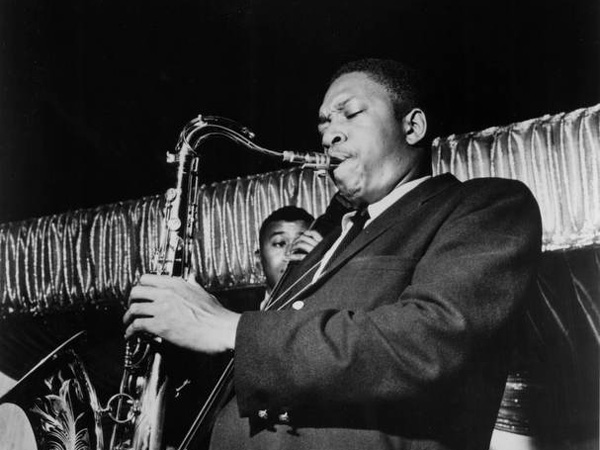
I am a John Coltrane fan and the Trinity is the jazz in my heart.

Invaluable advice that my bishop did give me was that as an extrovert I would be the exception, not the rule, among clergy. He shared that he often felt holier in a large assembly that in a silent retreat. I came to understand that no one spirituality fits all. It's okay to prefer progressive jazz to an organ recital.


Soon after I celebrated with a quarter cow and lots of chickens it was time to party again. The parish catered. I was grateful and my bank manager was happy. 

DRC makes history As I write this,  news has just filtered through that the Dutch Reformed Church in South Africa voted 102 to 88 in its synod in favour of ordaining gay ministers and blessing same sex unions. Real history in the making and placing the generally conservative protestant denomination well left of us Anglicans.  

I suspect the Methodists may just pip us to that post as well. 

In case you are wondering, the rest of our global Communion is not in step with our Episcopal cousins. Nor is it likely to be in the near future. Meanwhile the hurt and pain among our gay and lesbian clergy escalates. 

The dithering is cruel.


Monday, 5 October 2015

BISHOPS CAN BE DOLLS

The after party for my deaconing on December 1 2000, was a hoot. 

Hat's off to my family and the northern suburbs white friends who braved the journey from the Cathedral in the centre of the city to Soweto in the deep south. It was a  trip to no-man's land for most of them. Moreover, it was a Saturday evening. 

Their abiding image of Soweto was of death, carnage and violence. In fact it is a 'city', with a variety of neighbourhoods and various levels of safety. 

Diepkloof was a nice suburb. 


Some upmarket homes


and others not so posh.


Because I hired a bus to get them in and out everyone was pretty relaxed.

As I've mentioned before, my parish did me proud. The food was beautifully cooked and presented. The hall was decorated. The music and the singing was unforgettable. The St James folk had gone to inordinate lengths. (As I write this I am choked.)

A deacon's stole
Next day I wore my deacon's stole appropriately crossed in front and tucked into the girdle around my alb, which my domestic helper and I called 'that long white dress'.

(Cringe. I know. I know. I'd lost my money. We'd moved into a pretty crummy suburb and used the dog's bath for a while. But I was basically a kugel. My wonderful domestic helper travelled that long road with us. Today she manages a small business for me.) 

Back to being a deacon. 

At that time there was huge drive to push the concept of 'the ministry of all'. As lay ministers we'd visited the sick, conducted funerals (too many people were dying of AIDS related diseases). Many of us had also conducted Baptism and Confirmation classes. We'd even officiated at services with pre-consecrated wafers! Essentially we'd been doing 'deacony' stuff for quite a while before our ordination. 

I seriously wondered why one couldn't just be done and dusted straight into priesthood in one shot.  

Not by osmosis
By then I'd studied and passed 13 theological subjects but I have always been conscious of not having absorbed Anglicanism - the tradition, the vestments, the ritual - by osmosis.  

So I was delighted to discover the modern cassock alb which meant I could chuck the girdle. To this day I see nothing holy in a pall, especially for the extra chalices. It's only a useful cover to keep insects and dust out. My heart bleeds for lay folk who get themselves into a knot about these things when serving at the altar. There is such a danger of confusing ritual with worship.


Useful for keeping flies and dust out

My other world, which included working as speechwriter and media liaison officer for Archbishop  Njongo Ndungane, involved bishops, whose names I could never remember. 'Doll' did come in useful as most were very gracious.  (It's a strange fact - bishops are often less status conscious than their clergy.)

A horrific pandemic
There was also that 'AIDS' thread. Although Njongo's prime focus was development, by 2000 the HIV/AIDS pandemic was horrific. Africans were dropping dead at an alarming rate. Stigma reigned supreme. Our State President and our Health Minister were denialists. Refusing to acknowledge any connection between the HIV virus and AIDS she advocated garlic and sweet potatoes over anti-retrovirals.  They were dubbed 'a medicine from hell.'

Njongo declared the national AIDS policy "sinful" 
in 2000 led a protest march on parliament.

Meanwhile, his international advocacy role was growing apace and President Clinton invited him to a White House function on World Aids Day  on the first of December that year.


Always one to marshal expertise for his pet projects, the archbishop zoned in on Ted Karpf. The tall  Washington  priest with a Texan accent had written the liturgy for the AIDS Day service. But was better known for risking the loss of an entire congregation for insisting that a man with AIDS be allowed to attend the Eucharist and receive Communion using the chalice.   


The Rev Cannon Ted Karpf
                     
That first week the infected person was too ill to attend and nobody else pitched. In short, he experienced every priest's nightmare - an empty church.

Ted has a great turn of phrase so I'l let him share the next bit, "The night before the White House events, I learned an important life lesson: never drink scotch during a decision-making session with an Archbishop on an empty stomach. In the course of a long conversation, he suggested that I come to South Africa to help build an AIDS response.

"It was a major challenge as the province included 10 million people in seven countries, including the worst-affected in the world. Njongo argued that God had answered our prayers and it was clear what I was really called to do. I capitulated.

"The next morning at breakfast with the President, Sandy Thurman, and South African ambassador Sheila Sisulu, the President offered the Archbishop whatever support he wanted. The response was: “I want this priest, Ted Karpf, to come to South Africa to work with me.”

Ted was instructed to go to Africa where the archbishop steered him into strategic planning on how to meet the challenges of HIV/AIDS in 23 dioceses over half a dozen countries.

Above all, our new AIDS champion was to listen.

Never one to stay quiet for long, Ted soon had us all listening and responding. He and the archbishop quickly became a formidable force.
Together they developed a programme, coining the notions: We are building a generation without AIDS, as well as No one dies alone and no one cares alone.

Funded by the British government (DFID), the Americans (PEPFAR) and many others, it was until recently, the largest funded programme for faith-based AIDS work in Africa. 

An added bonus for me was a very special friendship. The spare room in our home is still referred to as 'Ted's'. (Don't get too excited, he's gay.)

Part of what brought us together was the fact that we had both discovered Anglicanism in adulthood. And he, like me, had a strong Catholic connection. 

Do you see Jesus?
Ted tells the delightful story of a great aunt, an immigrant Irish nun, a Sister of Charity. "She saw it as her mission to convert her heathen nephews and nieces. We would go to see her at her convent, and she would take us, gravely and with great care, to the sacristy in the convent. 'Do you want to see Jesus?' she would ask. 

"Then she would solemnly take the key out of the sash in her robes, go to the tabernacle box, and open it slowly. 'Do you really want to see Jesus?' 'Yes', we would answer. 


"She would reach in, and pull out the host, (a large consecrated wafer.) By now I was convinced that Jesus must be tiny, a kind of Tom Thumb. She would carefully pull out her hand, then, before we saw anything, thrust the door closed. 'You can’t see,' she said, 'because you are not Catholic'. And that was that."


There's plenty more to tell of Ted. I have an abiding memory of  him teaching me how to celebrate the Eucharist the night before I was priested. We used an ironing board, dishcloths and an excellent red wine.