Sunday, 27 November 2016

I HAD THE WEIRDEST DREAM


I believe we talk to ourselves in our dreams. I dream often, in technicolour, and they are invariably exhausting. But this one was different. Verging on weird, it touched my soul. Not gently.

One of the problems with being a political junkie is one often loses sight of life. Between the US Presidential primaries, #FeesMust Fall and #SaveSouthAfrica I’ve barely had time to breathe. For months, I was sleep deprived as my inner alarm sounded at 3am for crucial debates.

Oh, the analysis, the commentary, the social media skirmishes!
  
My dream
Then, early this morning I dreamed I was in Israel being herded into a holding place with a large group of tourists - Muslims, Jews and Christians. There was some sort of invasion and we were in danger. At first we were fearful and then this narrator with a heavy accent took over. It was much like a Yentl movie with a talking ‘Fiddler on the roof’. (I kid you not.)


There was this, running commentary on the little miracles that were happening as we scrounged for and shared food and how we were learning to love each other in the process. Then I woke up but the heavily accented voice continued.

A deep-seated envy
Now let me be upfront. Unlike so many others, I’ve never heard God’s voice. So often I’ve had someone share: “God told me.”  Frankly, I’ve suffered serious ‘Godspeak envy’ over the years. And I’ve always wondered what God sounds like – authoritative, melodious, a choir of angels, Alanis Morrisette? (Anyone out there old enough to remember her playing God in Dogma?)  Mind you, I was consoled when my former bishop shared that he’s also been deprived.

Because I’ve never had God speak directly to me, I’m sure you’ll forgive me for getting my hopes up. No such luck. I’d fallen asleep with BBC News on and Stephen Sackur was interviewing Lithuania’s heavily accented Foreign Minister. I usually pause to check if my dreams mean anything and then shrug them off. But this one persisted. So, I hit the TV rewind button, made a strong cup of coffee and watched Hardtalk with a listening heart.


That didn’t help much. Essentially, Minister Linas Linkevicius spoke about: how populists were winning the day; how false news often precedes warfare. He was waiting to see how Donald Trump would react to reality and felt we should all make an effort to calm things down.

A demanding dream
It was time to switch off and get on with life. But the feeling persisted. My dream still demanded attention. For the first time in months, I ignored work deadlines and took stock.

The result: my God connection is worse than my jittery Wi-Fi. What spirituality??  And the wheels must have fallen off the bus somewhere along my Anglican journey. 


Fact is, all three have been sadly neglected. How easily one’s prayer life disintegrates.  What arrogance to assume that my fragile spirituality would fare any better than my drought-stricken garden. I’ve hardly attended church in the past few months.

I can’t even pretend that it will simply be a matter of rearranging my daily schedule. I’m afraid of the battle ahead. I must resume my journey.

Well timed
For starters, I acknowledge that my weird dream was well timed and apt. Part of my new daily discipline is to count my blessings and today I am reminded of a time a couple of years ago when my income had totally dried up. Having acquired religion late in life, I’ve always felt uncomfortable about praying for money but it reached a point where I capitulated: “Okay God, I give up I’m desperate.”  An hour later an email dropped to say I’d been awarded a fat government contract. 

Co-incidence or God-incidence?  

I know that when my younger son suffered a serious head injury in a motorcycle accident, although I wasn’t into religion at the time I did send arrow prayers tempered with “in case you exist God”.  

The doctors said he’d be in a wheelchair for the rest of his life but don’t tell that to the guy who plays bowls three times a week and hopes to represent Western Province one day.

Please bear with me. You’ve probably guessed by now that I’m writing this blog to myself. Know that your comments and prayers are welcome.

Let’s lighten up


When I joined the church, well into middle age, I was amazed to learn that Advent –the weeks preceding Christmas - is meant to be a mini-Lent. It is a time to take stock and get our spiritual lives in order for the day we celebrate the birth of Christ.  Who’d have thought that?

In fact, I’ve always admired the Early Church’s practical approach of adopting pagan rituals that dated thousands of years before Christ.

My own experience of Christmas had hardly been holy. My mother was one of 15 siblings, of which only one had died in childhood. All the rest had married and made children and Christmas on granny’s farm in Polokwane was not negotiable.  I can’t for the life of me remember how many cousins there were but “lots” is an apt description. Some of us kids were sent ahead of our parents during which time I was only allowed to play with the boys if I walked barefooted across a patch of paper thorns.

By Christmas day we’d formed various special interest alliances. There was, however, consensus on important matters. These ranged from the need to avoid kissing the uncle with the beer soaked moustache to an agreement not to report the family cook for sipping the pudding brandy. We all loved her. 

Of course, in that lot there was always the uncle with wandering hands but a whisper in Gran’s ear soon fixed that.  In short, our special feast day was always robust and memorable with not a church steeple in sight.

When I did become an Anglican I was a bit embarrassed by my Christmas history but soon realised that in family there is always an element of holiness. Besides, the way we Christians hurtle through the shopping and party season there’s not much time for reflection.  (Maybe my dream was a hefty Advent nudge.)

I am encouraged by an email received from our Archbishop of Cape Town, Thabo Makgoba, in which he says, “...  I want to say that whatever the challenges or sense of darkness you may have felt or be feeling this year, know that Christ the hope and light of the world has been there illuming your path. As you work through Advent to the celebration of Christmas, may you, to borrow a phrase from Advent's sister season, Lent, “bury the past in ashes.” Remember that we are people of the Resurrection and are called to spread Christ, the hope of the world, this Christmas, Epiphany and beyond.”

By the way, he is placing a recorded advent message on https://soundcloud.com/anglicanmediasa each week until Christmas.

Now, where was I?  

Oh yes, busy contemplating my spiritual navel. I’ll keep you posted.


Tuesday, 22 November 2016

WHAT DO THE POPE, TRUMP, ZUMA & JESUS HAVE IN COMMON?


Take a bow Fake News.


I know you’ve been around since that darned snake whispered in Eve’s ear and she passed the false info to her hubby, but you are now possibly more famous than the Kardashians.

Admittedly, when you consider the fake stories even cynical journalists have fallen for, social media has given you wings that an Archangel would give her halo for. As the Trump dust settles and the pundits analyse the USA presidential election to death, you have emerged as the villain of a bitter campaign that kicked sand in pollster and commentator faces alike. 

A convenient scapegoat
Amidst wails of “information warfare”, warnings that “the first casualty of war is truth” and talk of “the collapse of world order”, you Fake News are the perfect scapegoat. 


It’s frightfully biblical my dear, and we must not forget the clever role you played in Pilate’s condemnation of Jesus. The baying mob who influenced his decision was as misinformed as so many electorates are today.

A global phenomenon
In modern time your undue influence spreads well beyond the good old US of A. 


Take, for instance, your story about Jacob Zuma’s presidential pardon of Oscar Pistorius. It made headlines in respected newspapers across the world. 


I can imagine your glee when you tricked the social media fraternity into believing that dear Pope Francis had endorsed The Donald. Then there’s the old, but often repeated, one about the pastor who is about to be crucified by Isis. We’ve gone through that dramatic countdown so many times I’m surprised Hollywood hasn’t made the movie. Who knows how many shares and amens it’s had on Facebook. All the while fueling anti-Islamic hysteria.

 Feeling neglected?
There is one arena where you haven’t attracted the attention you probably think you deserve – the Anglican Church. While pundits pontificate and Google and Facebook threaten to shut your bogus news accounts, I’m wondering how many sermons you have featured in? It seems that, along with other insidious sins like racism, gender violence and cyber bullying, you are seldom taught in a Confirmation class. Nor are the adults in our pews reminded of our Christian responsibility in all this.

Words of a conservative
I must give the Executive Director of the Billy Graham Center for Evangelism at Wheaton College, his due. Eighteen months ago, Dr Ed Stetzer wrote about an ‘Embarrassing Week for Christians Sharing Fake News’.

Dr Ed Stetzer
His opening gambit was: “Don't believe everything you read on the Internet. You embarrass us all when you do.”  He has even written a series called "Faux Christian Controversy of the Week". 

As he says, “it just keeps happening”.

Two 'news' stories doing the rounds that week were: ‘Pastor Arrested for Refusing a Same-Sex Marriage’ and a report about a homosexual man who had filed a $70 million lawsuit against Bible publishers Zondervan and Thomas Nelson, alleging that their version of the Bible referred to homosexuality as a sin and violated his constitutional rights.

What to do
Essentially, Ed Stetzer’s message is: Stop it!  Importantly, he offers practical advice:

If something sounds crazy, check the URLThe lawsuit story was on NBC.com.co
Did you notice the extra .co on the end? That’s the giveaway. It’s a fake site. (I often Google the gist of the headline and add ‘Hoax? And http://www.snopes.com/,  which features trending false stories, is a great help.)

Dr Setzer reminds that it’s OUR job—yes OURS—to check the facts. Our websites should do that as well, but most are more concerned with gaining page views than earning credibility.

He adds, “There are real issues about religious liberty right now. Posting links to fake ones just make all of us look gullible.” (By implication we'd be easily fooled by theology as well.)

So, if you realise you have posted a fake story, here are a few things you can do:
1. Be humble and post a retraction. As he points out “Integrity is important for the Christian. The Scriptures are clear, especially in Proverbs 2:20-21 which says:
So, follow the way of good people,
and keep to the paths of the righteous.
For the upright will inhabit the land,
and those of integrity will remain in it;

Later, Proverbs 28:18 says:
The one who lives with integrity will be helped,
but one who distorts right and wrong
will suddenly fall.

We are duty bound to protect our friends from being tricked as we were.

2. Don’t excuse a falsehood by saying, “Well, it might be true.” Or, “Well, there is something like that." "Or, well, it will be true soon." Or even, “It should be true.”
No, if you were wrong, say it and move on.

3. Be less gullible next time.
Wisdom is valuable:
Get wisdom—
how much better it is than gold!
And get understanding—
it is preferable to silver. (Prov 16:16)

"But," you may think, "I'm not wise. I get fooled by this stuff all the time." That's okay, Scripture accounts for people like us. James 1:5 says:“Now if any of you lacks wisdom, he should ask God, who gives to all generously and without criticizing, and it will be given to him.”, Thanksgiving

Finally, the Bible makes it clear: Lying is wrong. Don't lie, even if you don't mean to. And make it right if you do.

Thank-you Dr Ed.

Talking turkey:


This weekend an emotional Brian Stelter, CNN’s host of ‘Reliable Sources’, predicted that many Thanksgiving dinners would be ruined by people whipping out their iPhones to prove a fake point. He urged viewers to be more discerning and to help each other to resist you Fake News. Facebook users, he said, should refuse to be used, journalists must be more vigilant.

A South African pundit was saying much the same on Aljazeera and President Obama was warning European heads of state of the dire consequences of social media propaganda.

Better than real news?
Interestingly, in the last weeks of the US election campaign revealed that you – whether claiming that the Pope had endorsed Trump, or that Clinton sold weapons to Isis – actually outperformed real news, with more shares, reactions and comments.


Another widely shared story used a young picture of Donald Trump with variations on a quote he reportedly gave People magazine in 1998:  “If I were to run, I’d run as a Republican. They’re the dumbest group of voters in the country. They believe anything on Fox News. I could lie and they’d still eat it up. I bet my numbers would be terrific.”

It’s a serious situation and we can’t just tweet about it or angst on Facebook. Social media has enabled you, Fake News, to assume pandemic proportions but it’s far from a new phenomenon and I believe it’s time for all of us to take ownership of the situation to fend you off.

Not my fault.


We can’t afford to do the Garden of Eden thing, where Adam blames Eve and Eve blames the snake and we blame you. Because just as countries across the globe are experiencing a swing to conservatism and populist leaders the Anglican Church could be sharing that experience.


The KISS principle (keep it simple stupid)
According to Harry Farley, a Junior Staff Writer for Christian Today, conservative Anglican churches have bucked the trend of decline to show an increase in attendance over the past five years.

He claims the Church of England, as a whole, has seen a seven percent drop in the number of people at weekly services since 2010. But those churches with stricter teaching on issues such as the infallibility of the Bible, women priests and same-sex marriage report a dramatic increase in regular attendance.

If he is right, it means people don’t want reasoned religion. They don’t want to unpack the Bible by taking author, history and culture into consideration. They want their Christianity packaged as a no-nonsense brand.

Just checking
I’m waiting for the outcome of a global conference that is exploring the growth and decline of our Anglican communion. 

The key resource being a published study prepared by an international team of researchers across the five continents. There are 12 detailed case studies of Anglican churches in Australia, Congo, England, Ghana, Kenya, Nigeria, Singapore, South Africa, South America, South India, South Korea, and the US.

Grace Davie, professor emeritus of sociology at the University of Exeter, describes the book as “a veritable goldmine”, adding: “it contains a huge amount of mostly numerical information on the Anglican Communion in all its fullness.

“Quite rightly it eschews easy generalisations, probing instead the complex and evolving mosaic that constitutes modern Anglicanism. Almost every reader will be surprised about something.”

Guilty as charged
Not sure whether you’ve noticed but I have quoted conservative Christians to make this blog’s point. Yet I have previously slammed their stance on homosexuality and same-sex marriage. Have I cherry picked to suit myself?  We all do it, determined to stay in the corners of our diversity unless it suits us.

It’s time to break that cycle.

I’d like to suggest that the starting point in the task of eradicating the Fake News pandemic is for religions to renew its focus on teaching about the importance of truth.  We must stretch across the raging river of diversity.

We also need to stop using the Scriptures like a hoax site or a literal dictation from heaven. From an Anglican perspective, good theological education comes to mind. It should also be compulsory for our priests to follow news in order to identify relevant issues.

Let us remember that Anglicanism rests on the pillars of Faith, Scripture and Reason. Fortunately, or unfortunately, this makes it complex and not for the faint hearted. It’s why the Anglican Church always seems to be teetering on the edge of schism.

I also think it’s high time education curricula included social media and aspects such as cyber bullying and soft porn. To be sandwiched between ethics and how to fact check information.


Bizarre
So much for us to do, so little time.  I think I’ll pop outside and smell a rose or two if the drought hasn’t killed them off. 

Besides, I need to meditate on a comment regarding Fake News in South Africa. William Bird of Media Monitoring Africa, says, "Much of our news is so bizarre that it could actually be fake." 


Monday, 14 November 2016

THE RESCUE OF HALLELUJAH FROM RELIGION

Nick Baines, Bishop of Croydon, has declared the overused word hallelujah rescued from being "just a religious word" by poet and songwriter Leonard Cohen who died on November 7. 

Discussing the legendary hit song on a BBC documentary, the bishop said, "We're broken human beings all of us, so stop pretending. We can all use hallelujah because it comes from being open and transparent before God and the world while saying 'This is how it is mate' "

In death Cohen's timing was impeccable.  He couldn’t have wished for a better week in which to have an inevitable global focus on a powerful body of work – poetry and song – that stretched from the early 60s to a week in which....  


Donald Trump defied the pundits to become ‘President Elect’. 


Hillary Clinton supporters wept and demonstrated.


South Africa's Jacob Zuma survived yet another 'No Confidence Vote' as our young people marched for free higher education. 'Corruption' and 'State Capture' loomed large.    

Planet Turmoil
In short, my world was in turmoil.  My spirituality was in tatters. I was angry and disappointed. 


My solace came  as tributes poured in for the 82-year-old poet, composer and singer, I was reminded of how his hit song Hallelujah had impacted on my spiritual journey, particularly as I began my middle-aged venture into Anglicanism and priesthood.

West Wing and Shrek
Even if you are not a Cohen fan chances are you have heard the song, albeit on the popular West Wing series, watching Shrek with your kids or perhaps sung by the likes of Bob Dylan, Bon Jovi or Bono, who declared it “the best song in the world”.

Here's a short version of the lyrics:

Now I've heard there was a secret chord
That David played, and it pleased the Lord
But you don't really care for music, do you?
It goes like this
The fourth, the fifth
The minor fall, the major lift
The baffled king composing Hallelujah
Hallelujah
Hallelujah
Hallelujah
Hallelujah

Your faith was strong but you needed proof
You saw her bathing on the roof
Her beauty and the moonlight overthrew her
She tied you
To a kitchen chair
She broke your throne, and she cut your hair
And from your lips she drew the Hallelujah
Hallelujah
Hallelujah
Hallelujah
Hallelujah

You say I took the name in vain
I don't even know the name
But if I did, well really, what's it to you?
There's a blaze of light
In every word
It doesn't matter which you heard
The holy or the broken Hallelujah
Hallelujah
Hallelujah
Hallelujah
Hallelujah

I did my best, it wasn't much
I couldn't feel, so I tried to touch
I've told the truth, I didn't come to fool you
And even though
It all went wrong
I'll stand before the Lord of Song
With nothing on my tongue but Hallelujah
Hallelujah
Hallelujah
Hallelujah
Hallelujah

The perfect and the broken
Incidentally, the song is broadcast at 2am every Saturday by the Israeli Defence Force's radio channel and Cohen once said of the song's meaning: "It explains that many kinds of hallelujahs do exist, and all the perfect and broken hallelujahs have equal value."


Not a born and bred Anglican, I don’t hum hymns under my breath when washing the dishes and Cohen’s Hallelujah was the only ‘hymn’ in my arsenal when I knocked at the Church’s door. 

It would carry me through my questioning of why the Almighty needed praise. And it's interesting to note how often Cohen’s ‘psalm’ has been the focus of sermons within Judaism, Christianity and even Buddhism. (Cohen was a Buddhist monk for a time and re-entered the music world when he felt he had attained sufficient spiritual discipline.)

As Rabbi Michael Sternfield remarked at Chicago Sinai Congregation on the Day of Atonement in 2008, “One of the most overworked words in the Bibles of both Judaism and Christianity is ‘Hallelujah’, which literally means, ‘Praise God’. Even after all these years I still can’t understand why we need to praise God so much. Could God possible be so insecure that God needs to be told how great God is? Or worse, do we really believe that God is susceptible to flattery?”

Interestingly in the Jewish faith Hallelujah is a commandment to praise. In the Christian tradition, it is a word of praise.

The rabbi added that the more he listened to Cohen’s Hallelujah, “I have come to recognise the struggles many of us go through, especially on a night such as this, when we are expected to praise God but our hearts may not be in it”.

A reluctant song of praise
I agree with Rabbi Michael – Cohen’s Hallelujah is a reluctant song of praise, expressing gratitude in the midst of sorrow (and my political angst) it serves this broken time, our failures and disappointments. Maybe it’s not a song for the young who march in our cities but it resonates with my life experiences.


It also fits well with a rabbinic legend that when Moses descended from the mountain carrying the tablets with God’s Commandments. He was so distraught by how his people had behaved during his absence that he threw the tablets to the ground where they smashed into countless fragments. 


When the people repented of their idolatry new tablets were made. Legend tells us both sets were then placed in the Ark and Rabbi Michael suggests that the Ark of the Covenant is our hearts which hold both the whole and the shattered elements of our lives.

As the rabbi emphasised, “In spite of all the pain and sadness we have known, still life is good, every day is a blessing and therefore we praise and express gratitude to God, even in our darkest hours.”

Birth of the blues


Bono, singer and Christian, once shared that the invocation of David resonated because, “I’ve thought a lot about him. He was a harp player and the first God heckler ….’Why hast thou forsaken me?’ That’s the beginning of the blues.”

Maybe it’s a good time for those of us battered by recent events to do some heckling of our own.

You will find a stack of erudite comments about Hallelujah’s musical composition on Google if you are interested. For me the comfort is in the poetry and Cohen’s assurance: “This world is full of conflicts and things that cannot be reconciled but there are moments when we can transcend the dualistic system and reconcile and embrace the whole mess, and that’s what I mean by Hallelujah.”

Flowers for Hitler
Perhaps the pollsters who were embarrassed by Donald Trump’s win should reflect on Cohen’s poem Flowers for Hitler

I quote: “what is most original in a man's nature is often that which is most desperate. thus, new systems are forced on the world by men who simply cannot bear the pain of living with what is. Creators care nothing for their systems except that they be unique. if Hitler had been born in Nazi Germany he wouldn't have been content to enjoy the atmosphere.”


As the poet pointed out, what’s the use of decrying the Holocaust, a Trump win or racism, if in our own lives we are cruel to others?  If at our own dinner tables we are guilty of denigrated those who are different from us?

To the end
In October 2016, mere weeks before his death, Cohen released the album You Want It Darker. Severe back issues made it difficult for him to leave home so his son Adam placed a microphone on his dining room table and recorded him on a laptop. The album was met with rave reviews as the 82-year-old lived up to his maxim of never retiring.
Adam says he continued composing to the very end and died with his sense of humour intact.  Earlier, he reportedly said “I am ready to die," and added, "I hope it's not too uncomfortable. That's about it for me."
Typically, when that crisis passed, he confessed to a tendency to exaggerate," "I’ve always been into self-dramatisation, I intend to live forever.”

Despite his Zen leanings the songwriter requested that he be laid to rest "in a traditional Jewish rite beside his parents, grandparents and great-grandparents.” 

Maybe it’s a good time for those of us battered by recent events to examine who we are. to shout out “Hallelujah” and to heckle God for the strength to change our world.

Pass the safety pin
One last thought, I’ve decided to subscribe to the ‘Safety Pin movement’.


 Huffington Post reports:
In the wake of Donald Trump's election, many groups in the US, including African Americans, Muslims and women, are feeling scared and uneasy.
Trump, who has said he would ban all Muslims from entering the US, made sexist and insulting comments about women and racist comments about people of color in America, is a frightening prospect for many Americans who believe he is unfit for office.
So, while protests rage on across the country, one movement is using a simple yet powerful symbol to show their support for anyone who is fearful of what is to come.
By fastening a safety pin to their clothing, people are declaring themselves allies to groups who have been maligned by Trump, to show that they stand in solidarity with anyone who might be afraid.
Who knows what Donald Trump will do. Meanwhile, in South Africa the safety pin is fast emerging as a sign of solidarity against racism.
Hallelujah! That works for me.

Just in case you haven't heard Hallelujah or you would like to hear it again, here's the link: https://www.youtube.com/watch?v=YrLk4vdY28Q

Monday, 3 October 2016

THE EXCRUCIATING AGONY OF A CHRISTIAN CLOSET


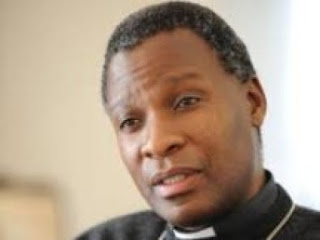
As the dust settles on the Anglican Church in Southern Africa’s most recent synod, our Archbishop Thabo Makgoba is being quoted globally regarding the pain he is experiencing from a decision not to allow our clergy to bless same sex marriages. 

Archbishop Thabo Makgoba 


Please note that I speak of a simple blessing, not marriage, yet 16 of 22 bishops voted against this. Archbishop Thabo speaks of a double edged sword. 


Allow me to introduce a third edge...

As I write this, my own pain centres around an aspect seldom acknowledged - those gay Christians who actually believe their gender “leanings”, “temptations”, “preferences” are an abomination to be resisted. To the extent that they pray and fast their way out of their natural sexual identity in order to be saved. This, as a CNN journalist said about Aleppo, “It is what Hell is really like and then it got worse.” 
Aleppo

Marrying for Jesus

These 'good' gay Christians all too often go to the extent marrying someone of the opposite sex.

Yes, many manage to be relatively happy, they love their spouses, their children, the holiness of family. But the need to suppress their sexual drive looms larger as the years pass. Inevitably their denial of self takes its toll on the relationship and mostly on the person committed to Christ and the Church. Some soldier on. Others don’t resist temptation and are caught. Others, in their maturity have stopped reading the Bible literally and decide to do the honourable thing by confessing to their spouses.

It seldom works

Having counselled several of these committed Christians, all men admittedly, I am appalled at the excruciating pain this can cause everyone from the family to the secret gay partner.

They were Anglicans, Methodists and Lutherans and, where love, mutual respect and concern for the children were dominant elements of the marriage, I witnessed some remarkable solutions. A generosity of soul not always found in  our pews.

Other situations, involving righteous judgment and literal Scriptural interpretations, have left an unholy trail of devastation – fathers unjustly accused of pedophilia and banned from interaction with their beloved children. Off spring whose minds were poisoned and whose emotional wellbeing was mortally wounded. Vocations had to be abandoned.


I'm not gay

Let’s be clear: I’m not a Lesbian, trans or bi sexual. My children aren’t gay and I don’t’ have LGBTI siblings to campaign for. I wasn’t a gay activist before re-joining the Anglican Church 35 years after my Confirmation. I didn’t need to be one because nobody in my secular social circle was bothered with judging our gay friends or condemning them to hell. We were all too busy getting on with life.  I had no concept of the hell too many Christian gays go through.

Called to priesthood at the turkey-necked age of 51, I was far more concerned with political activism. Desmond Tutu was an important role model and the main reason I asked to be trained in Soweto. Truth be told, I had visions of becoming the Mother Theresa of the townships. What arrogance and what ignorance of God’s sense of humour. I was too old to suit the Church’s pension fund so self-supporting ministry was my only option. In other words, I had to keep earning a living as a PR consultant. 

Archbishop Emeritus Njongonkulu Ndungane

It’s how I became Archbishop Njongonkulu’s international media liaison consultant and how I jumped into the deep end of one of his signature ministries – HIV/AIDS.

It's NOT...

All this at a time when the disease was increasingly identified as punishment for homosexuality. That stigma became the incubator for millions of deaths. I thank God for ++Jongo who insisted on a communication campaign that would “shout from the roof tops that AIDS is an illness like any other, and not a punishment from God.”

A frightening number of Anglicans ignored the message.

The third edge

Inevitably my personal ministry veered into that arena. Our national Health Department was refusing to provide antiretrovirals. I was clocking up funeral services at an alarming rate and working with passionate activists, several of whom were Anglican priests and gay.  Some were infected others weren’t, all suffered the pain of being open about their sexuality in a Christian environment.


I had stepped into the realm of the "third edge”.

More broad minded?

But I was not your typical Anglican priest: I hadn’t attended church for 35 years; I was battling to curb a vocabulary learned in a news room (still am); I was a divorcee who had had two long term live-in relationships; and, I loved to party.  Perhaps it is because my gay associates felt I would be more understanding that they began recommending me to married gay men seeking counselling.

What a learning curve for me. I encountered an awful aspect of Christian cruelty, good intentions gone awry and responses that caused excruciating pain to EVERYONE in the affected family and even their extended families.

Can you begin to imagine the pain of being rejected by a Church that is part of your DNA?

And don’t for one millisecond think you can crack it with “Love the sinner, hate the sin.”  It is that very approach that gnaws at family and friends who fill our pews and share Communion. We hurt them by judging their loved ones and relegating them to hellfire. 


How we must hurt the Tutus

Leah and Desmond Tutu

Revd Mpho von Furth Tutu and her wife, Marceline

I worry about the hurt Desmond and Leah Tutu must feel because  since her marriage their daughter Revd Mpho is not licensed in Southern Africa. Yes, she could return to the USA and minister there but her parents are in their twilight years and the Desmond and Leah Tutu Foundation needs her management.  

Time to revolt?

I never bothered to become a marriage officer and I applauded priests who refused to act as marriage officers when mixed race marriages were banned. I now applaud those who either ignore the ‘gay’ rules or are heeding the call to hand in their licences.

Too many of my brother and sister priests have gone through 30 years of the Anglican Church saying “soon there will be a breakthrough.”   Too many have battled the Church’s trade-off: “be celibate and you can be licensed to be a priest”.     

If social demographics apply, some 10% of our priests are gay. Maybe more because it makes so much sense for God to call natural nurturers into our vocation.

Older and wiser

I do, however, take comfort from the fact that age invariably brings a more mature interpretation of Scripture and greater confidence in the findings of modern science as well as confidence in God’s abiding love.

As Rabbi Dr Jay Michaelson Ph.D. writes in Behold I make all things New, “God versus Gay isn’t just a false dichotomy.  It’s a rebellion against the image of God itself.”
Rabbi Dr Jay Michaelson

Allow me to share more of the rabbi’s quotes:
“As a rabbi and long-time LGBT activist, I’ve counselled many Orthodox young people who are terrified of having to choose between happiness and their religious way of life.  Families have been torn apart by this issue and as long as the false choice between God and gay persists, our brothers, sisters, cousins, and friends will continue to struggle. They will torment themselves and be excluded from their families and communities.”

“Before I came out, I was certain that being openly gay would spell the end of my religious life.  I was an Orthodox-practicing Jew which gave meaning and shape to my life.  I repressed my sexuality, acting out occasionally but regretting it afterwards.  I tried, for years, to change.  Eventually, after 10 years in the closet I had had enough. The pain, isolation, loneliness, and shame had grown so great that I was ready to forsake my religion for the sake of my happiness.”

“Coming out was the doorway to greater religious faith and joy than I had ever imagined.  My relationship with God and my religious community grew stronger. My spiritual path began to unfold; my prayer life began to awaken. My love for other human beings slowly unfurled and expanded.”

“Imagine believing that because of something you cannot change God hates you.”

“Whose fault is it that 40% of gay teenagers consider suicide – four times as many as straight kids?  Ours, of course.”

"It's not African"

I know that a number of the bishops at the synod hailed from countries far more conservative than South Africa, where same sex marriages are legal, but I quote a Nigerian, The Revd. Rowland ‘Jide’ Macaulay LLB, MTh, “Historically, Africa has always been the friendliest and most tolerant continent. Homosexuality and same-gender behaviours date back to before colonialism and the intervention of religion. The arrival of colonialism contributed to the mass hatred and also the influence of religious fundamentalism. It contributed to the debased argument for homophobia. Yet Christianity teaches and encourages Love thy neighbour as thyself.”

I am busy working on a manuscript that examines how faiths based on rebirth and karma -Buddhism, Jainism, Sikhism, and Hinduism – affirm the dignity of queer identities and sexualities. In it Devdutt Pattanaik, author of more than 30 best-selling books and lecturer on the relevance of mythology in modern times, says “the well-meaning doctrine of ‘all religions are the same in essence’ has led to the assumption that all religions are intolerant of all things LGBTIQ.” 

He adds, “When faiths affirm the dignity of the queer, they empower them psychologically, politically, and economically.” 

That third edge

 In all this let us not lose sight of the third edge of the sword the Anglican Church continues to wield. I have watched young priests grow old while waiting to be affirmed. One of the saddest stories I was told was how, many years ago, seminarians were told that a bishop was refusing to ordain single priests. 
The young man, fighting his gay sexuality, proposed marriage to a woman who knew about his personal battle, but also believed they would conquer all through prayer and faithfulness to the Church.

As it turned out, in order to have sex, and for her to conceive, he would have to read porn and then pounce on her as he was about to climax.  Of course the marriage didn't last. 

As the Lord says:
“My people, what have I done to you?”


*********
Watch Mpho Tutu van Furth speak about human sexuality and her marriage - 
https://www.youtube.com/watch?v=dsL0kBJAy2s